Skip to content
The Sandman
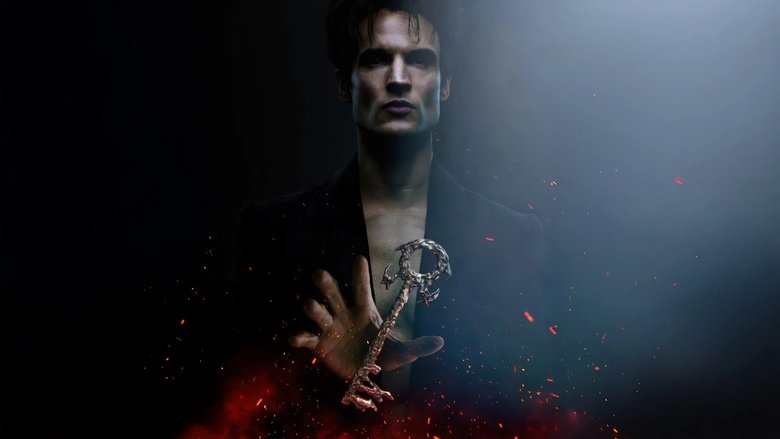
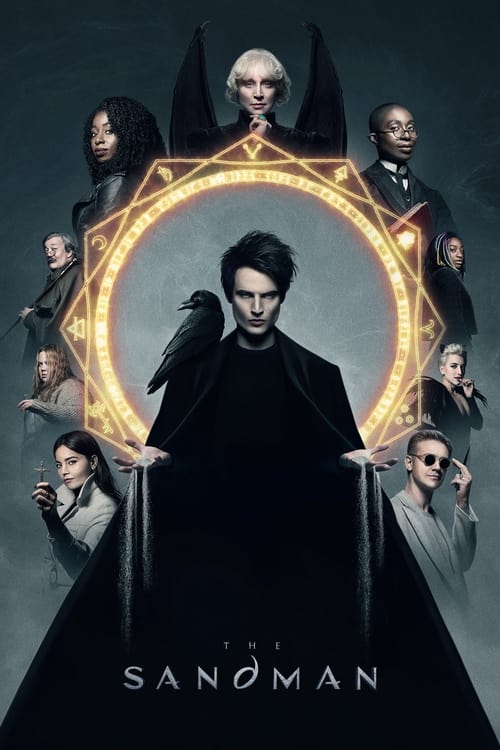
A dark fantasy odyssey through the realm behind closed eyes, where a wounded god of dreams walks ruined kingdoms of sand and starlight, learning that even eternity must change or break.
The Sandman

The Sandman

"Dream the world anew."

05 August 2022 — 31 July 2025 United States of America 2 season 23 episode Ended 7.9 (2,716)

Cast: Tom Sturridge, Vivienne Acheampong, Patton Oswalt, Boyd Holbrook, Nina Wadia

Drama Sci-Fi & Fantasy Action & Adventure Change or perish Stories, imagination and their cost Family, obligation and inherited damage Rule, sovereignty and the burden of function Mercy, cruelty and the slowness of forgiveness

Overview

The Sandman adapts Neil Gaiman's landmark DC comic, published between 1989 and 1996, into a two-season television epic developed for Netflix by Gaiman, David S. Goyer and Allan Heinberg, produced by DC Entertainment and Warner Bros. Television. It opens with an act of hubris: an occultist attempting to capture Death instead traps her younger brother, Dream of the Endless, also called Morpheus, keeper of the realm every sleeping mind visits. A century of imprisonment later, he returns to a kingdom in ruins, his tools of office scattered across worlds, his subjects fled, his authority a rumour.

The first season, premiering on 5 August 2022 with ten episodes and a bonus episode released on 19 August, follows Dream's quest to reclaim his helm, his pouch of sand and his ruby, a journey that takes him from the waking world into Hell and back into the fraying edges of his own domain, where an escaped nightmare has been building a life of its own among mortals. The second season, released in two parts on 3 and 24 July 2025 with a concluding special on 31 July, widens the frame enormously: Dream inherits a burden he never asked for, searches for a sibling who walked away from the family, and finally confronts the oldest debt in his long life.

Across both seasons the show is less a quest narrative than a portrait of a being learning, agonisingly slowly, what he owes to the people and creations in his care. Dream's family — Death, Desire, Despair, Destiny, Delirium and the absent Destruction — orbit the story as personifications of forces older than gods, and their squabbles carry the weight of cosmology. It is a series about stories told at the scale of myth, moving between a Roman poet's tragedy, a diner in a small American town, a convention hotel, a fallen angel's throne room and the shifting architecture of the Dreaming itself.
Core Meaning

The series argues that the only alternative to change is annihilation — and that this is as true for an immortal anthropomorphic idea as it is for anyone else. Dream governs perfectly and loves badly. He keeps his word, honours his function and remembers every slight for millennia, and the show patiently demonstrates that this rigidity is not strength but a form of slow suicide. His imprisonment cracks him open; everything that follows is the story of a being trying to become someone who can forgive, and discovering he may only be able to manage it by ending.

Underneath the cosmology, the show is a defence of the imagination as infrastructure. Dreams are not decoration here; they are the machinery by which people survive their lives. Hell has power only because the damned can still picture Heaven; a poet's inspiration is worth murdering for; a nightmare's rebellion is a story that has decided to write itself. The Endless are servants, not rulers — bound by rules older than they are, existing because living things need them to exist.

Finally, it is a work about responsibility as the price of power. Every catastrophe in both seasons traces back to someone refusing an obligation: a magician who will not let go, a nightmare who abandons his function, a father who kept his son alive out of pride rather than love. The series' moral arithmetic is unsentimental — kindness is a discipline, and being ancient excuses nothing.

Thematic DNA

Change or perish 25%
Stories, imagination and their cost 20%
Family, obligation and inherited damage 20%
Rule, sovereignty and the burden of function 20%
Mercy, cruelty and the slowness of forgiveness 15%

Change or perish

The spine of the whole series. Season one shows Dream restoring an order that no longer fits: he retrieves his tools, punishes his enemies and reasserts a rule that made him miserable before his capture. Season two systematically dismantles that restoration — an unwanted inheritance, a runaway sibling who chose to abandon a function entirely, and finally a family debt that cannot be paid without breaking the being who owes it. The show frames Dream's ending not as defeat but as the last available form of transformation, and its closing gesture — a successor stepping into the role changed rather than repeating it — makes the argument explicit: renewal and destruction are two halves of the same act.

Stories, imagination and their cost

Every season treats storytelling as a literal power source. Standalone chapters make the case most sharply: a captive muse produces bestsellers for a man who has stopped seeing her as a person; a nightmare given a name and a purpose becomes an author of real atrocities; a diner's occupants, stripped of the small lies that make cohabitation possible, tear each other apart. Across the run the theme darkens from wonder toward accountability — the series moves from celebrating imagination to interrogating what people do to each other in order to obtain it, and what a creator owes the things they create.

Family, obligation and inherited damage

The Endless are a dysfunctional family whose grudges rearrange reality. Season one keeps the siblings at the periphery — a sister who teaches by example, a sibling who sabotages out of boredom. Season two brings the family fully into focus: a quest to find the brother who quit, a father confronting the son he abandoned to an unbearable existence, and a court of vengeance that recognises no crime greater than blood killing blood. What begins as mythic set dressing becomes the engine of the tragedy, because the rules that bind the family cannot be argued with, only obeyed.

Rule, sovereignty and the burden of function

Dream is a monarch, and the series is unusually interested in the tedium and cruelty of governance: petitions, precedents, punishments handed down and never revisited. Hell operates by the same logic, its dominion contingent on rules rather than raw power, which is why a sovereign there can wound Dream far more effectively with a gift than with an army. Season two's central inheritance turns this into a philosophical trap — absolute authority arriving as a burden nobody wants — and by the finale the show has redefined a throne as a duty of care rather than a possession.

Mercy, cruelty and the slowness of forgiveness

Dream's punishments are extravagant and eternal: a lover consigned to Hell, a mortal granted the endless waking he begged for. The series returns again and again to these sentences, forcing him to look at what he did and to undo it, and the pattern of revisiting an old cruelty and answering it with mercy becomes the clearest measure of his growth. The final act of the series is the ultimate version of this — a mercy so complete it costs him everything, and one that immediately calls down consequences, refusing viewers the comfort of a redemption that comes for free.

Character Analysis

Dream / Morpheus

Tom Sturridge

Archetype: Tragic sovereign / reluctant antihero Key Trait: Pathological, self-wounding rigidity — he keeps every promise and forgives nothing, least of all himself

Motivation

Initially pure self-restoration: to be whole, potent and obeyed again. This mutates into duty — the Dreaming and its residents must be maintained because they depend on him. By the second season the motivation is atonement: undoing the cruelties of his own past, however much it costs, until responsibility outweighs even self-preservation.

Character Arc

He begins the series as a proud, unexamined absolute monarch, and is immediately humbled: stripped, caged and displayed for a century. Season one is restoration — reclaiming tools, realm and authority — but each victory quietly exposes how badly his rule was built, and the season's most important reversals are the ones where he chooses to undo old punishments rather than impose new ones. Season two turns the screw: he accepts an inheritance he does not want, goes looking for the sibling who proved that a function can be abandoned, and is finally brought face to face with the person he wronged most irreparably. The mercy he ultimately extends is the moral climax of the entire show and, by the rules that bind his family, also his sentence. His long-term transformation is from a being who could not change into one who can only change by ending.

Lucienne

Vivienne Acheampong

Archetype: Loyal steward / conscience Key Trait: Unflinching, unglamorous competence

Motivation

To preserve the Dreaming and its stories, including the ones never written. Her motivation deepens from custodianship into something closer to guardianship of her ruler's soul — she wants Dream to survive himself, not merely to reign.

Character Arc

Librarian of the Dreaming, gender-flipped from the comics' Lucien. She held the realm together alone through a century of her ruler's absence, and the series gives her the slow, difficult arc of a subordinate learning to speak plainly to a king. Early on she defers, hedges and is overruled; over both seasons she becomes the one voice Dream cannot dismiss, warning him about his blind spots and taking on genuine authority in the running of the realm. Her arc is a study in institutional loyalty — she serves the office rather than the man, which is precisely why she matters most when the office changes hands.

All 5 characters and cast

Symbols & Motifs

The three tools: helm, pouch of sand, ruby

Meaning:

Dream's regalia externalise the three components of his power — identity (the helm, forged from a fallen god's spine, the thing that makes him recognisable as himself), craft (the sand, raw dream-stuff, the medium he works in) and desire made real (the ruby, which shapes dreams according to a wielder's want).

Context:

The season one quest is structured entirely around recovering them, one per act. Crucially, each is retrieved by a different means — a wager, a trade, a confrontation — and the ruby's recovery reveals that the tool had been altered to hold his power, so that destroying it returns him more than it takes. The regalia's absence in Dream's later appearances signals how far the character has moved past needing them.

The Dreaming's architecture

Meaning:

The realm is an external readout of its ruler's mind: order, ruin and repair in Dream's kingdom track his psychological state precisely. A crumbling palace means an absent, wounded sovereign; a rebuilt one means restored function; a breached one means the intrusion of something he cannot control.

Context:

The show establishes the visual grammar in the opening episodes — a great house fallen to sand and empty libraries — then uses it as a barometer for the rest of the run. When outside forces tear through the realm in the second season, the damage reads simultaneously as siege, as psychological collapse and as a kingdom being made ready for someone else.

The ankh and Death's ordinary face

Meaning:

Death appears not as a skeletal terror but as a warm, unhurried young woman in an ankh pendant — the Egyptian sign of life worn by the personification of its ending. She symbolises the series' central refusal of horror-movie mortality: death as the reliable friend who shows up on time, and as the standard against which Dream's self-importance is measured.

Context:

Introduced in the widely praised sixth episode of season one, where she walks a day's worth of collections while gently telling her brother he has been ridiculous. The imagery recurs as a stabiliser across both seasons: whenever the cosmology threatens to become abstract, Death's plainness returns the story to human scale, and the second season's concluding special hands her the closing word.

The Corinthian's eyes and mouths

Meaning:

A nightmare with teeth where his eyes should be, hidden behind dark glasses — the perfect emblem of a story that has escaped its author. He is vision perverted into appetite: something built to show humanity its dark side that instead decided to feed on it.

Context:

His sunglasses are removed at moments of revelation across both seasons, and the series stages a startling reversal by having the same nightmare remade and returned to service, so that the identical image can mean predation in one season and loyal function in another.

The oldest game

Meaning:

A duel fought by transformation — each combatant naming what they become, escalating until one cannot answer. It symbolises the series' claim that imagination is a real weapon and that the last, unbeatable move is not force but hope.

Context:

Staged in Hell in the first season as the climax of Dream's most dangerous errand, watched by legions who cannot dream of anything but escape. It functions as the show's thesis statement in miniature and is quoted back thematically whenever a character survives by refusing to stop imagining a way out.

Sand

Meaning:

The literal substance of dreams and the series' image of time — pouring, shapeless, impossible to hold, capable of building anything and keeping nothing.

Context:

From the title itself to the ruined castle drifting under dunes, to the fistfuls Dream throws to open doors between worlds. Sand marks every threshold crossing in the show, and the visual motif of a form dissolving into grains recurs at the series' most consequential departures.

Memorable Quotes

You get what anybody gets. You get a lifetime.
— Death

Context

Season one, the sixth episode, The Sound of Her Wings, as Death collects a man who protests that his time has been cut short. She answers without cruelty and without negotiation while her brother watches, and the line functions as the pivot on which his self-pity finally breaks.

Meaning

The series' clearest statement of its ethics: no one is owed more time, and the value of a life is not measured by its length. It is also a rebuke aimed squarely at Dream, an immortal sulking about a century of lost autonomy while mortals accept far smaller allotments with grace.

What power would Hell have if those here imprisoned were not able to dream of Heaven?
— Dream

Context

Season one's Hell episode, A Hope in Hell, spoken to Lucifer's assembled legions when Dream is asked what power he could possibly hold in a realm not his own.

Meaning

The thesis of the entire series compressed into one sentence: imagination is not an escape from suffering but the very structure that makes suffering meaningful. It also functions as a tactical argument — Dream defeats a superior enemy by proving that even the damned are his subjects.

All 3 quotes

Episode Highlights

Sleep of the Just

S1E1

An occultist's ritual to capture Death seizes Dream instead, and the series' governing catastrophe is set in motion: a century of captivity in a glass sphere, his regalia stolen, and the waking world afflicted by a sleeping sickness because the anthropomorphic principle of dreams has been removed from circulation. The episode establishes Dream's inhuman patience and the terrible cost of his pride, since he could have bargained his way out at any point and refused for a hundred years.

Significance:

Everything in both seasons is downstream of this hour. It creates the quest structure of season one, seeds the escaped nightmares that drive the first antagonist plot, and — most importantly — introduces the flaw that will eventually destroy the protagonist: a refusal to bend that he mistakes for integrity.

A Hope in Hell

S1E4

Dream descends to Hell to retrieve his helm and is forced into the oldest game against a demon champion before Lucifer's entire court. Weakened almost to nothing, he wins by naming hope, then walks out having humiliated the ruler of Hell in her own throne room — an insult that will be repaid.

Significance:

One of the highest-rated episodes of the first season on IMDb and the show's philosophical centrepiece, defining imagination as a genuine power. It also plants the grudge that detonates at the start of season two, making it a direct structural bridge between the two halves of the series.

24/7

S1E5

A near-bottle episode set in a roadside diner where the stolen ruby's holder strips a group of strangers of every social lie, watching politeness curdle into confession, violence and self-destruction over the course of a single day. Dream barely appears; the horror is entirely human.

Significance:

Widely acclaimed by fans and critics for its pacing, concept and faithfulness to the notorious source chapter, it proved the series could abandon its fantasy machinery entirely and still work. It reframes the season's antagonist as something far more dangerous than a thief and demonstrates the show's argument that dreams and lies are load-bearing structures in ordinary life.

The Sound of Her Wings

S1E6

Two loosely joined stories: Death takes her brooding brother along on a day of collections, and Dream grants a defiant medieval man immortality on the condition that they meet once a century, watching him across six hundred years of fortune, ruin and grief. The season's most acclaimed episode, and the one that turns a quest narrative into a character study.

Significance:

The introduction of Death recalibrates the entire series' emotional register, while the centuries-spanning friendship establishes the show's true subject — whether an immortal can learn from mortals — and pays off directly in the later seasons' preoccupation with change, forgiveness and endings.

Dream of a Thousand Cats / Calliope

S1E11

A bonus episode released two weeks after the main season, pairing an animated fable of cats plotting to dream the world into a different shape with the live-action story of a Greek muse held captive by a writer who milks her for inspiration. Dream's intervention in the second half is one of his most quietly terrifying acts of judgement.

Significance:

The first half dramatises the show's core proposition — that enough dreamers can rewrite reality — while the second confronts the ugliness of artistic entitlement and marks an early instance of Dream freeing someone he once abandoned. Together they function as the series' mission statement about what stories cost and who pays.

Season of Mists

S2E1

A family conclave of the Endless shames Dream over a lover he condemned to Hell millennia earlier, and he sets out to free her, fully expecting to die for the trespass. Instead he walks into a Hell that has been emptied and finds himself handed a burden rather than a battle.

Significance:

The season premiere reframes the whole enterprise: season one was about reclaiming what Dream lost, and season two is about answering for what he did. It also introduces the ownership problem that draws gods, demons and rival pantheons into the story, escalating the scale from personal quest to cosmic politics.

The Ruler of Hell

S2E2

Lucifer's abdication and its aftermath: an empty realm, a key with no owner, and Dream trapped as the reluctant landlord of the most valuable and most poisonous piece of real estate in creation, besieged by petitioners who all want it.

Significance:

Among the highest-rated episodes of the second season, it dramatises the theme of sovereignty as a burden and forces Dream into the diplomatic, compromising register that defines his final stretch. His eventual disposition of the key demonstrates a judgement he would have been incapable of in season one.

More Devils Than Vast Hell Can Hold

S2E3

The contest for Hell reaches its climax as rival claimants — gods, orders and opportunists — press their cases in the Dreaming, and Dream must choose in a way that satisfies no one and settles old scores in the process.

Significance:

Another of the second season's best-received episodes, it resolves the inheritance arc and lets Dream perform an act of restitution toward the lover he damned. It clears the board for the second half of the season to turn inward, toward family and the debt that will end him.

Family Blood

S2E6

The culmination of the season's first part and the most consequential act of the entire series: after thousands of years of refusing, Dream grants his son Orpheus the death he has been begging for. It is an unambiguous mercy and an unforgivable crime, performed in full knowledge of what it will summon.

Significance:

The turning point of the whole show. By the laws that bind the Endless, spilling family blood carries a single penalty, and this choice calls down the Kindly Ones on the Dreaming. Every event of the final stretch — the siege, Dream's fate, the succession — flows directly from this scene, which retroactively recasts his entire arc as a man walking knowingly toward a sentence he believes he deserves.

Philosophical Questions

Can a being defined by its function ever change without ceasing to exist?

The series poses this as its central problem and answers it across two seasons in opposite directions. One sibling proves change is possible by simply abandoning the role — walking away from a function and surviving as a person. Dream cannot manage that; his identity and his office are the same object, so his transformation can only take the form of an ending and a succession. The show refuses to call either path cowardice or heroism, and the successor's first act of reflection, alone, on a role he never chose, keeps the question open rather than resolving it.

Is a mercy still just if it destroys the one who grants it?

Dream's killing of his son after thousands of years of refusals is unambiguously merciful and unambiguously fatal to him — the Endless permit no exception for familicide, however desperately the dying one begged. The series stages the act without moral commentary, then spends its final stretch watching the consequences arrive, forcing viewers to hold both truths at once: that he did the right thing, and that the universe was right to charge him for it.

What does a creator owe the things they create?

Nightmares that escape their function, a muse imprisoned by a writer, dreams that outlive their dreamers, a son abandoned to unbearable persistence — the series returns to this obligation in nearly every register it has. Its answer is unsentimental: creation is an act of responsibility, and the harm in the show is almost always done by makers who treat what they made as property rather than as something owed care.

Do dreams serve us, or do we serve them?

The cosmology insists the Endless exist because living things need them, making Dream a servant with a crown. But the diner episode shows what happens when the comfortable illusions people live inside are stripped away, and Hell's power is explicitly described as depending on the damned's ability to imagine Heaven. Across both seasons the show suggests the relationship is mutual and inescapable — imagination is not a luxury laid over life but the thing that makes life survivable.

Is immortality a privilege or an evasion?

Death's answer that everyone, without exception, gets a lifetime is set against Dream's century of sulking and against the centuries-spanning friendship in which a mortal granted endless life must watch everything he loves decay. The series consistently frames finitude as what gives choices weight, and its final movement grants its immortal protagonist the one thing his mortal friends never had to earn: an ending.

Alternative Interpretations

The ending as suicide. One reading takes Dream's fate at its most literal and bleakest: a being incapable of changing engineers his own destruction, choosing the one act guaranteed to summon a punishment he will not resist. Under this interpretation the Kindly Ones are a mechanism, not a cause — Dream's refusal to fight is the real story, and every mercy in his final arc is the behaviour of someone settling accounts before an exit he has already decided on. The show's own framing supports this: his death is presented as a choice and a planned departure rather than a defeat inflicted on him.

Full ending explanation

Cultural Impact

Gaiman's comic, published by DC between 1989 and 1996, was for three decades the emblematic unadaptable property — a sprawling, tonally promiscuous work that had defeated multiple film and television attempts. That history shaped how the Netflix series was received: much of the first season's coverage treated it less as a new show than as a verdict on whether the source could be filmed at all, and the answer was broadly affirmative. The production's insistence on shooting at real locations rather than in green-screen voids, and the BAFTA nomination its effects work received, made it a reference point for how expensive fantasy television could look without dissolving into weightless digital space.

Its cultural inheritance runs in two directions. Backwards, the comic had already reshaped fantasy publishing and the entire prestige-comics field, and the show functioned as a mainstream introduction to that lineage — the mythological syncretism, the anthropomorphic personifications, the willingness to interrupt an epic for a standalone chapter about a cat or a poet. Forwards, it arrived in an era of literary fantasy adaptations and made a persuasive case for structural faithfulness: the diner episode and the Death episode, both near-plotless by conventional television standards, became the most praised hours of the run precisely because the show declined to smooth them into serialised action.

The series' legacy is inseparable from the circumstances of its ending. Allegations of sexual misconduct against Gaiman surfaced in a July 2024 podcast, Master: The Allegations Against Neil Gaiman, and were amplified by a January 2025 New York Magazine cover story; Gaiman has denied any non-consensual or unlawful behaviour. In January 2025 it was confirmed that the show would conclude with its second season, released across July 2025, with trade reporting noting that the production's cost made a third season unlikely in any case. The result is an adaptation whose completion is genuinely bittersweet — a story about creators, their creations and what they owe them, whose own public reckoning arrived in the middle of production and permanently altered how audiences read it.

Audience Reception

Season one landed as a vindication for a property long considered unfilmable, and audience enthusiasm concentrated on exactly the episodes that departed from conventional serialised storytelling. On IMDb the season's highest-rated instalments are The Sound of Her Wings, A Hope in Hell and 24/7 — a character duologue, a riddle contest and a near-bottle chamber piece rather than any of the action-forward hours. The Sound of Her Wings sits at roughly 7.8 on IMDb, the strongest score in the run, with viewers repeatedly singling out Kirby Howell-Baptiste's Death as the adaptation's greatest success. 24/7 was widely acclaimed by fans and critics alike for its pacing, its concept and its faithfulness to a notoriously grim source chapter, though it also generated the season's most polarised reactions for sheer brutality.

Season two, released across two parts in July 2025 with a concluding special, drew a measurably cooler response. Its best-received episodes by IMDb rating are Family Blood, The Ruler of Hell and More Devils Than Vast Hell Can Hold, but the season premiere Season of Mists sits around 6.2 — well below season one's peaks — and the season as a whole rates lower than its predecessor. The dominant strand of audience criticism concerns compression: with the series confirmed as ending, a final run of twelve episodes had to carry multiple volumes' worth of story, and viewers who knew the source frequently felt that arcs which unfold over years in the comics were being resolved in a single hour.

The controversy. No discussion of the show's reception is separable from the allegations of sexual misconduct against Gaiman, raised in a July 2024 podcast and a January 2025 New York Magazine cover story, which Gaiman has denied. The confirmation that the series would end after season two split audiences between those who felt the ending was imposed and those who noted that a production this expensive was probably always going to conclude there. A meaningful portion of viewers reported difficulty separating the work from its author; others deliberately watched in support of the cast and crew.

Verdict. A first season that overachieved against very low expectations for adaptability, followed by a second that had to sprint, made under a shadow that no amount of craft could dispel. The consensus that survives is that the show found a genuinely great Death, a genuinely great Dream in Tom Sturridge, and at least three episodes that stand comparison with the best fantasy television of the decade.

Interesting Facts

  • The series was developed for Netflix by Neil Gaiman together with David S. Goyer and Allan Heinberg, and produced by DC Entertainment and Warner Bros. Television, adapting the DC comic that ran from 1989 to 1996.
  • Season one launched with ten episodes on 5 August 2022, followed by a surprise bonus episode released two weeks later on 19 August 2022, which paired an animated segment with a live-action story.
  • The first season fully adapts the comic's first two volumes, Preludes and Nocturnes and The Doll's House, with a partial adaptation of Dream Country and a tease of Season of Mists; the second season compresses multiple stories from across the rest of the run.
  • Casting Death was far harder than the producers anticipated: hundreds of actors from around the world auditioned before Kirby Howell-Baptiste was chosen for the role.
  • Gwendoline Christie plays a gender-swapped Lucifer Morningstar, a deliberate departure from the comic so that this version of the character would stand apart from other screen incarnations.
  • The visual effects work earned the show a BAFTA nomination for Best Special, Visual and Graphic Effects; Ian Markiewicz served as the show-side VFX supervisor.
  • Very few scenes were shot in a full green-screen box — filming at real locations was a stated priority so the cast and crew would have physical and spatial references to react to.
  • Gregory the Gargoyle is a fully computer-generated creature, but a puppeteer physically performed the role on set, and the team at Rodeo FX modelled his physiology and playful behaviour on dogs to make audiences love him.
  • The second season shifted to an in-house visual effects process, a notable production change from the studio-heavy pipeline of the first season.
  • Season two was released in two parts, on 3 and 24 July 2025, with a concluding special episode on 31 July 2025.
  • In January 2025 it was announced that the series would end with its second season; Netflix's decision followed sexual misconduct allegations against Gaiman, though trade reporting indicated the expensive production was likely to conclude after two seasons regardless.

Easter Eggs

Lucifer Morningstar is reimagined as a woman played by Gwendoline Christie.

A conscious act of differentiation rather than a simple gender swap: the producers wanted this Lucifer to stand apart from other screen versions of a character who originated in these very comics and went on to headline a separate long-running television series. The result is a rival who reads less as a devil than as a deposed aristocrat with a grudge.

Lucien the librarian becomes Lucienne, played by Vivienne Acheampong.

One of several re-conceived roles that give the adaptation its own identity while preserving the character's function. The change also rebalances a story whose comic original had few prominent women in positions of institutional authority, and gives Dream a permanent counterweight in his own house.

The bonus eleventh episode of season one is half animated.

Releasing an unannounced extra instalment two weeks after the main drop, and telling half of it in animation, is a nod to the source comic's own structure — Gaiman's run regularly broke from its main arc for standalone issues in radically different styles, and the show reproduced that rhythm at the level of format rather than just content.

The Endless are named in a strict alphabetical sequence — Destiny, Death, Dream, Destruction, Desire, Despair, Delirium.

A structural joke inherited from the comics that doubles as cosmology: the family's names are not titles but functions, ordered as if catalogued. The absence of one sibling from the set is felt as a gap in a pattern, which is exactly what drives a major thread of the second season.

Frequently Asked Questions

Explore More About This Movie

Dive deeper into specific aspects of the movie with our detailed analysis pages

Comments (0)

Leave a comment

No comments yet. Be the first to share your thoughts!

Similar Movies