El secreto de sus ojos
"An unsolved crime. A love story. An unwritten ending."
The Secret in Their Eyes - Symbolism & Philosophy
Symbols & Motifs
The Typewriter / The Novel
Symbolizes the attempt to make sense of the past and impose a narrative order on chaotic, painful events. For Espósito, the act of writing is an act of confronting his own ghosts, both professional and personal.
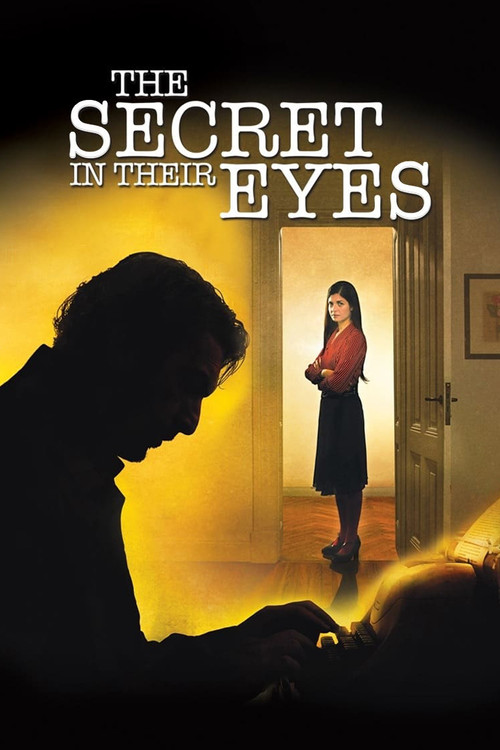
The film opens with Espósito struggling to write the first line of his novel. The recurring image of the blank page and the clacking keys of the typewriter frame the entire narrative as an exercise in memory and confession.
The Train Station
Represents moments of departure, separation, and unspoken farewells. It is a potent symbol of missed opportunities and the irreversible passage of time, particularly in Benjamín and Irene's relationship.
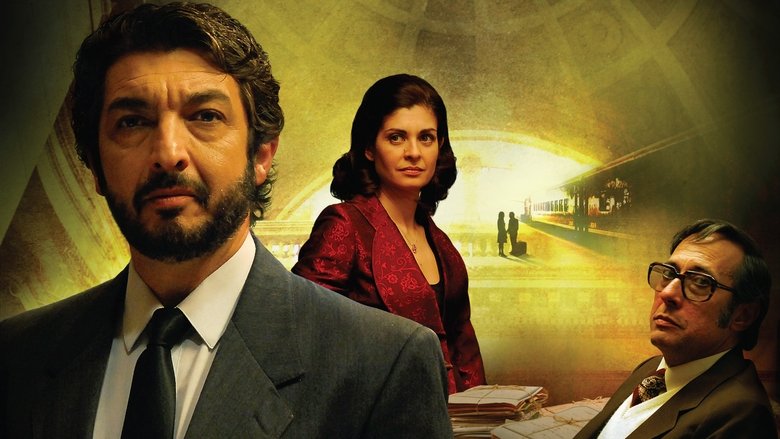
The most pivotal scene at the train station is when Benjamín leaves for a decade of self-imposed exile. He and Irene share a longing, silent goodbye through the train window, a moment that haunts him for 25 years.
The Eyes
The eyes are the central motif, representing unspoken truths, hidden emotions, and the key to solving the mystery. They reveal secrets of love, guilt, and obsession that words cannot express.
Espósito first identifies Gómez by the obsessive way he stares at Liliana in old photographs. Irene is convinced of Gómez's guilt when he looks at her during the interrogation. The title itself underscores that the most profound truths are seen, not said.
The Letter 'A'
The broken 'A' key on Espósito's typewriter symbolizes his fear and paralysis. His inability to write the word "temo" (I fear) is a metaphor for his inability to confront his feelings for Irene and the dangers of the case.
In the present, Espósito tells Irene his novel will be about a man who is afraid. At the end of the film, having found a form of closure, he types "TEMO" and then adds an "A", changing the word to "TE AMO" (I love you), signifying he has overcome his fear.
Philosophical Questions
When a justice system fails, is personal vengeance morally justifiable?
The film delves into this question through the character of Ricardo Morales. After the state not only fails to punish his wife's killer but actively protects him, Morales takes the law into his own hands. The film doesn't offer a simple answer. It presents his 25-year-long imprisonment of Gómez as a horrific, yet strangely poetic, form of justice. It forces the audience to grapple with whether his act is a righteous fulfillment of the life sentence the killer deserved or a descent into a moral abyss that consumes Morales's own life, turning him into a jailer for his own soul.
Can one ever truly escape the past, or is it an indelible part of the present?
Through its dual-timeline narrative, the film argues that the past is perpetually present. Espósito's attempt to write about the past is really an attempt to resolve his present stagnation. His unrequited love for Irene and the ghost of the unsolved case have defined his adult life. The film suggests that closure isn't about forgetting, but about understanding and confronting the past to finally make peace with it and allow for a future.
What is the nature of a 'life sentence'?
The film explores this concept on multiple levels. There is the official life sentence that Gómez evades. Then there is the 'life sentence' of grief and memory that Morales endures. Finally, there is the literal life sentence he imposes on Gómez. The film's chilling conclusion suggests the most profound life sentence is the one Morales has given himself: an existence tethered to his wife's murderer, devoid of any other meaning. It asks whether a life dedicated to hate and vengeance is a life at all.
Core Meaning
At its heart, "The Secret in Their Eyes" is a profound meditation on memory, justice, and the consuming nature of passion. Director Juan José Campanella explores the idea that the past is never truly gone and that unresolved trauma continues to shape the present. The film questions the official channels of justice, especially within a corrupt political system, and examines the lengths to which individuals will go to find their own form of closure. It posits that a person can change everything about their life except their passion—be it for another person, for a cause, or for revenge. This central idea drives the narrative, suggesting that these inescapable passions dictate our ultimate fates and define our lives, for better or for worse.