The Seventh Seal
A somber medieval fantasy where a knight's existential dread manifests as a chess game against Death amidst a plague-ravaged landscape.
The Seventh Seal
The Seventh Seal

Det sjunde inseglet

"The story of a challenge to death."

16 February 1957 Sweden 96 min ⭐ 8.2 (3,185)
Director: Ingmar Bergman
Cast: Gunnar Björnstrand, Bengt Ekerot, Nils Poppe, Max von Sydow, Bibi Andersson
Drama Fantasy
The Silence of God and the Crisis of Faith The Inevitability of Death The Search for Meaning Life as a Performance
Budget: $150,000
Box Office: $311,212

The Seventh Seal - Ending Explained

⚠️ Spoiler Analysis

The entire narrative of "The Seventh Seal" is a journey towards an inevitable conclusion: the knight's death. The chess game, which Block believes is a way to cheat Death, is ultimately revealed to be merely a delay. In a key scene, the knight confesses his chess strategy to what he thinks is a priest, only for the figure to be revealed as Death himself, who has tricked Block into revealing his tactics. This underscores the futility of trying to intellectually overcome mortality.

Block's quest for "one meaningful deed" is fulfilled when he intentionally knocks over the chessboard during a game with Death. This act, seemingly one of frustration, is a calculated distraction that allows the family of actors—Jof, Mia, and their son Mikael—to escape unnoticed. This selfless act, saving the innocent and the future they represent, becomes the meaning Block was searching for, even if it doesn't save him from his fate.

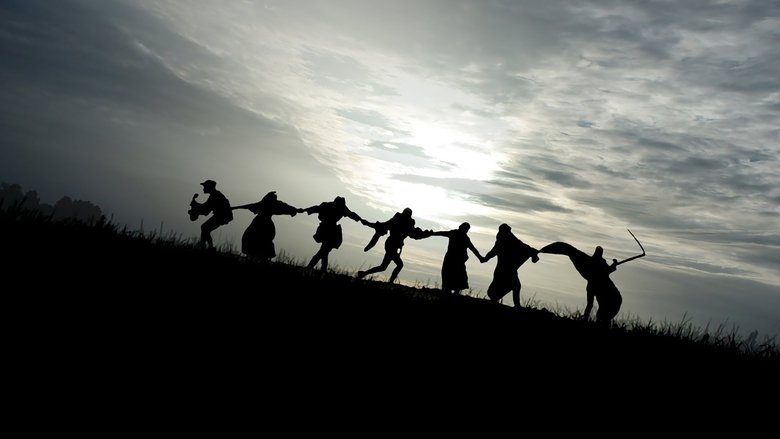
In the final act, Block and his remaining companions—his squire Jöns, the blacksmith Plog and his wife, and the mute girl—arrive at his castle and are reunited with his wife, Karin. Their somber final supper is interrupted by Death's arrival. Each character confronts their end in a way that reflects their life's philosophy. The mute girl, who has been silent the entire film, speaks her only line: "It is finished." The film concludes with Jof, from a safe distance, having a vision of Death leading the knight and his companions away in the iconic "Danse Macabre" over the horizon. The survival of Jof, Mia, and Mikael signifies that while death claims everyone, life, love, and innocence can endure.

Alternative Interpretations

While the film is widely seen as an allegory for the search for God in a meaningless world, several alternative interpretations exist. Some view the film through a psychoanalytic lens, suggesting the knight's struggle with Death is a manifestation of his internal battle with depression and a deep-seated fear of love and connection, stemming from Bergman's own childhood traumas. In this reading, the "one meaningful act" is not just about religious redemption but about overcoming internal despair to connect with others.

Another interpretation posits that the film is less about finding God and more a celebration of humanism. The cynical but compassionate squire, Jöns, who rejects God but acts with morality, and the simple, loving family of Jof and Mia, who survive through their connection to each other and to life's simple pleasures, can be seen as the film's true heroes. From this perspective, the film's message is that in the absence of divine answers, humanity must create its own meaning through love, art, and compassion. The ending, where the innocent family survives, can be interpreted not as divine intervention, but as a testament to the resilience of life and love in the face of nihilistic despair.