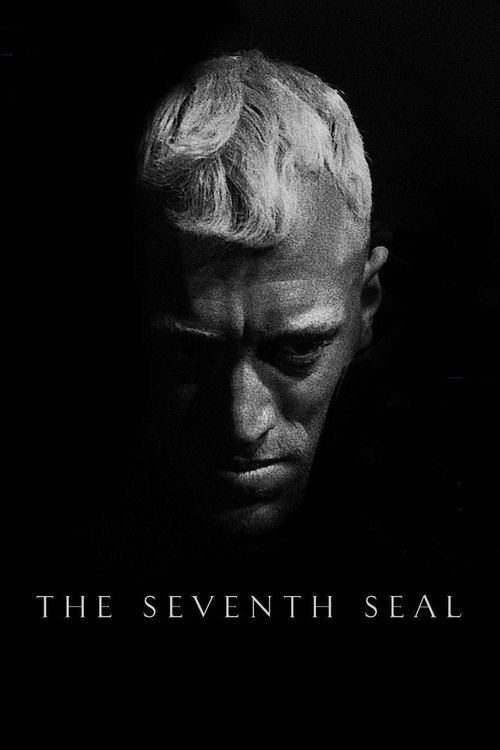
The Seventh Seal
A somber medieval fantasy where a knight's existential dread manifests as a chess game against Death amidst a plague-ravaged landscape.
The Seventh Seal

The Seventh Seal

Det sjunde inseglet

"The story of a challenge to death."

16 February 1957 Sweden 96 min ⭐ 8.2 (3,185)
Director: Ingmar Bergman
Cast: Gunnar Björnstrand, Bengt Ekerot, Nils Poppe, Max von Sydow, Bibi Andersson
Drama Fantasy
The Silence of God and the Crisis of Faith The Inevitability of Death The Search for Meaning Life as a Performance
Budget: $150,000
Box Office: $311,212

Overview

Returning from the Crusades to a Sweden decimated by the Black Death, a disillusioned knight, Antonius Block, finds himself confronted by the personification of Death. To prolong his life and find answers to his existential questions, Block challenges Death to a game of chess, believing he can remain alive as long as the game continues.

As Block and his cynical squire, Jöns, journey through the plague-stricken countryside, they encounter a variety of individuals who represent different facets of humanity: a family of simple, joyful actors, a troupe of self-flagellating religious zealots, and other desperate souls. The chess game with Death intermittently continues, serving as a recurring motif for the knight's internal struggle with faith, doubt, and the search for meaning in a world seemingly abandoned by God.

The film is an allegorical exploration of life, death, and the silence of God, using its medieval setting to pose timeless philosophical questions about human existence. Block's quest is not just to defeat Death in a game, but to perform one meaningful act before he dies, a desire that shapes his interactions with the people he meets on his final journey.
Core Meaning

The core meaning of "The Seventh Seal" revolves around the human struggle to find meaning and purpose in the face of mortality and the apparent silence of God. Director Ingmar Bergman uses the medieval setting and the plague as a backdrop for a profound existential allegory that explores the themes of faith, doubt, and the search for knowledge in a world filled with suffering. The film suggests that while the grand, ultimate answers to life's biggest questions may remain elusive, meaning can be found in small, simple acts of human connection, love, and compassion. This is exemplified in the knight's serene moment sharing wild strawberries and milk with the family of actors, a memory he cherishes as a profound sign of life's value. Ultimately, Bergman's message is not one of nihilistic despair, but rather a call to embrace life and find significance in the transient, beautiful moments of human relationship, even as death remains an inevitable certainty.

Thematic DNA

The Silence of God and the Crisis of Faith 35%
The Inevitability of Death 30%
The Search for Meaning 25%
Life as a Performance 10%

The Silence of God and the Crisis of Faith

This is the central theme of the film, embodied by the knight Antonius Block's spiritual torment. Returning from the Crusades, where he witnessed immense suffering, Block's faith is shattered. He desperately seeks knowledge, not just belief, demanding that God reveal Himself and provide answers for the meaning of life and the reason for suffering. The film's title itself refers to a passage in the Book of Revelation where the opening of the seventh seal is followed by silence in heaven, symbolizing God's absence or incommunicability in a world ravaged by plague and despair. Block's poignant confession in the church, where he unknowingly speaks to Death, encapsulates this crisis: "Why can't I kill God in me? Why does He live on in me in a humiliating way - despite my wanting to evict Him from my heart?"

The Inevitability of Death

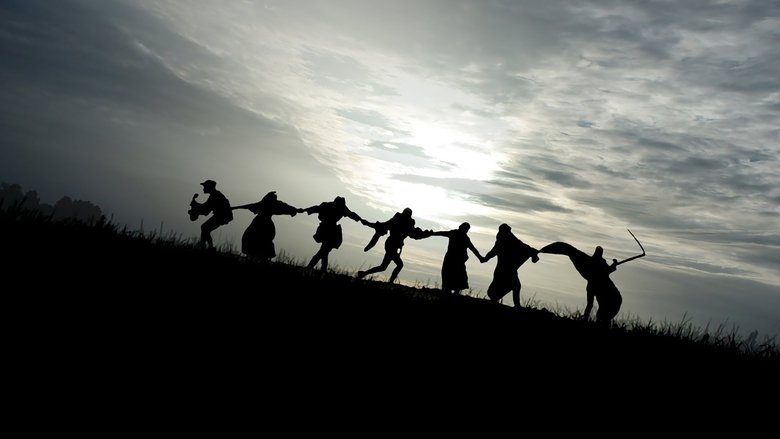
Death is a constant and personified presence throughout the film, a calm and inevitable figure who plays chess and ultimately claims everyone regardless of their station in life. The iconic imagery of the chess game between the knight and Death symbolizes humanity's struggle against its own mortality, a game that can be prolonged through wit and strategy but never won. The film's final haunting image of the "Danse Macabre" (Dance of Death), with a silhouetted procession of characters being led away by Death, reinforces the universal and inescapable nature of mortality.

The Search for Meaning

In the face of God's silence and the certainty of death, the characters in "The Seventh Seal" grapple with finding meaning in their lives. The knight, Antonius Block, seeks to perform one single meaningful act before he dies to give his life purpose. His squire, Jöns, represents a more cynical and nihilistic worldview, yet he too finds meaning in small acts of compassion, such as saving a mute girl. The film contrasts these tormented searchers with the simple family of actors, Jof and Mia, who find meaning not in grand philosophical questions but in their love for each other, their child, and the simple joys of life, like sharing a meal of wild strawberries and milk. This suggests that meaning is not necessarily found in divine revelation but in human connection.

Life as a Performance

The film frequently employs theatrical and performative elements to explore the nature of life and faith. The central characters include a troupe of travelling actors, and their on-stage performances often mirror the film's larger themes of love, death, and betrayal. The procession of flagellants is a dramatic and terrifying public performance of faith. Even the chess game with Death can be seen as a highly ritualized performance. This theme suggests that life itself is a stage where individuals play out their roles in the face of an uncertain and possibly non-existent audience (God).

Character Analysis

Antonius Block

Max von Sydow

Archetype: The Seeker/Antihero
Key Trait: Existential Anguish

Motivation

His primary motivation is to find tangible proof of God's existence and to understand the meaning of life before he dies. He tells Death he wants "knowledge, not faith, not suppositions, but knowledge." He also yearns to perform one single, meaningful act to give his seemingly futile life some value.

Character Arc

Antonius Block begins as a disillusioned and tormented knight, his faith shattered by the horrors he witnessed during the Crusades. He is intellectually arrogant, believing he can outwit Death and force an answer from God. His journey is one of increasing humility. He moves from a solitary, internal quest for divine knowledge to finding solace and purpose in a selfless act of human compassion. By the end, while he doesn't receive the divine answers he seeks, he finds peace in the memory of a simple, shared meal and in sacrificing himself to save the innocent family.

Jöns

Gunnar Björnstrand

Archetype: The Cynic/Realist
Key Trait: Sardonic Pragmatism

Motivation

Jöns is motivated by a desire to survive and to expose the hypocrisy and cruelty he sees in the world, particularly from religious figures. He finds his own meaning in earthly pleasures and in acts of immediate, practical decency rather than in abstract spiritual quests.

Character Arc

Jöns is the knight's squire and serves as a foil to Block's spiritual quest. He is a pragmatist and a cynic who has lost all faith in God and humanity. He expresses his disillusionment through sarcastic and witty remarks. While his worldview doesn't fundamentally change, his actions reveal a deep-seated morality and compassion. He saves a mute girl from a rapist, defends the actor Jof, and ultimately faces death with a defiant stoicism, representing a humanistic response to a seemingly godless world.

Death

Bengt Ekerot

Archetype: The Inevitable Force
Key Trait: Implacable

Motivation

Death's motivation is singular: to claim the lives of those whose time has come. He is a force of nature, beyond human concepts of good and evil. His participation in the chess game seems to stem from a detached curiosity about humanity's struggle with mortality.

Character Arc

Death is a static character who does not undergo any development. He is portrayed as an intelligent, patient, and impassive entity. He is not malevolent, but simply performing his duty. He engages the knight in a game of chess, seemingly amused by the man's attempts to delay the inevitable. Throughout the film, he is shown to be an unstoppable and unknowing force, admitting to the knight that he has no secrets to reveal about the afterlife.

Jof and Mia

Nils Poppe and Bibi Andersson

Archetype: The Holy Family/Innocents
Key Trait: Joyful Simplicity

Motivation

Their motivation is to live, love, and care for their child. They are not concerned with the existential questions that torment the knight. They seek to find happiness in the present moment and to survive the plague by moving from place to place.

Character Arc

Jof and Mia, along with their infant son Mikael, represent a simple, life-affirming worldview that contrasts sharply with the knight's despair. They are a loving family who find joy in their art and in each other. Jof has spiritual visions, seeing both the Virgin Mary and the final Dance of Death. They are the only main characters to escape Death, not through intellectual struggle, but through their innocence and by accepting life's simple pleasures. Their survival offers a glimmer of hope in the film's otherwise bleak landscape.

Symbols & Motifs

The Chess Game

Meaning:

The chess game symbolizes the struggle between life and death, and man's attempt to use intellect and strategy to understand and delay the inevitable. It represents the knight's existential quest for answers and meaning in the face of his own mortality. The black and white pieces can also be seen as a metaphor for the film's exploration of good and evil, faith and doubt.

Context:

The chess game is the central framing device of the film, beginning with the knight's challenge to Death on the beach and recurring at several key moments. In one scene, the knight confesses his chess strategy to a priest, who is revealed to be Death in disguise, illustrating the futility of trying to outwit mortality. The knight ultimately sacrifices his game to distract Death, allowing the family of actors to escape, thus turning the game into the vehicle for his one meaningful act.

The Dance of Death (Danse Macabre)

Meaning:

The Dance of Death is a medieval allegory about the universality of death, where people from all walks of life are led to their graves by a personified Death. It symbolizes the idea that no one, from knights to actors to blacksmiths, can escape their ultimate fate.

Context:

The film references the Danse Macabre in a fresco being painted in a church. The final, iconic shot of the film is a literal depiction of this, as Jof, the actor, has a vision of the knight and his companions being led over a hill in a grim, silent dance against the stormy sky. This image serves as the film's haunting conclusion about the finality of death.

Wild Strawberries and Milk

Meaning:

This simple meal symbolizes a moment of pure, unadulterated joy, innocence, and communion in a world filled with despair and death. It represents the beauty of a simple life and the profound meaning that can be found in human connection and the present moment, a stark contrast to the knight's tormented search for grand, divine answers. In Swedish culture, wild strawberries represent fleeting happiness.

Context:

The knight shares a meal of wild strawberries and milk with the family of actors, Jof and Mia. This scene provides Block with his only moment of true peace and contentment. He declares, "I shall remember this moment: the silence, the twilight, the bowl of strawberries, the bowl of milk... I shall carry this memory carefully in my hands as if it were a bowl brimful of fresh milk. It will be a sign to me, and a great sufficiency."

Memorable Quotes

Jag vill ha vetskap. Inte tro, inte antaganden, utan vetskap. Jag vill att Gud skall sträcka ut sin hand, visa sitt ansikte och tala till mig.

— Antonius Block

Context:

This is part of Antonius Block's confession in the church to a hooded figure he believes is a priest, but is actually Death. It's a moment of profound vulnerability where he lays bare his spiritual torment and the reason for his quest.

Meaning:

"I want knowledge. Not faith, not suppositions, but knowledge. I want God to stretch out His hand, reveal His face, and speak to me." This quote encapsulates the core of the knight's existential crisis. It highlights the central theme of the film: the struggle of a rational man who can no longer accept faith alone and demands empirical proof of God's existence in a suffering world.

Tron är ett svårt lidande, vet du det? Det är som att älska nån som är därute i mörkret men som aldrig visar sig, hur högt man än ropar.

— Antonius Block

Context:

Antonius says this to Mia, the actor's wife, while they are sharing the simple meal of strawberries and milk. It's a moment where his inner turmoil briefly surfaces amidst a scene of peace and simplicity.

Meaning:

"Faith is a torment, did you know that? It is like loving someone who is out there in the darkness but never appears, no matter how loudly you call." This line powerfully conveys the pain and frustration of belief in a silent God. It frames the knight's spiritual struggle not as an intellectual puzzle, but as a deeply emotional and unrequited love.

Jag ska minnas den här stunden. Stillheten, skymningen, skålarna med jordgubbar och mjölk, era ansikten i kvällsljuset. [...] Jag ska bära minnet mellan mina händer varsamt som en skål fylld till brädden med färsk mjölk. Och det ska vara ett tecken för mig, och en stor tillfredsställelse.

— Antonius Block

Context:

Spoken during the idyllic picnic with Jof and Mia's family. It is the knight's moment of grace, where his agonizing search for meaning is momentarily forgotten in the simple pleasure of the present.

Meaning:

"I shall remember this moment. The silence, the twilight, the bowl of strawberries and milk, your faces in the evening light. [...] I will carry this memory between my hands as carefully as a bowl filled to the brim with fresh milk. And it will be a sign for me, and a great satisfaction." This is the turning point for the knight. He realizes that meaning and salvation are not found in the supernatural, but in the small, perfect moments of human connection and earthly beauty.

Jag har inga hemligheter. [...] Jag är okunnig.

— Death

Context:

After the knight distracts Death to allow the family to escape, Death checkmates him. The knight asks if Death will now reveal his secrets, and this is Death's reply, confirming the ultimate void of knowledge that Block has been fighting against.

Meaning:

"I have no secrets. [...] I am unknowing." This revelation from Death is one of the film's most chilling and profound statements. It confirms the knight's greatest fear: that there are no answers after death, no grand revelation, only oblivion. It underscores the film's existentialist perspective that meaning must be created within life, as there is no guarantee of it beyond.

Philosophical Questions

Can faith exist without knowledge?

The film's central conflict revolves around this question. Antonius Block is a man who wants to believe, but his rational mind demands proof. He asks, "Why can't I kill God in me?" highlighting the torment of having the ingrained need for faith without the intellectual certainty to support it. The film juxtaposes his agonizing quest for knowledge with the simple, unquestioning faith of Jof, who has visions of the Virgin Mary, and the staunch atheism of Jöns. "The Seventh Seal" doesn't provide a clear answer, but suggests that the demand for absolute knowledge may be a barrier to the peace that can be found in either simple faith or humanistic acceptance.

What is the meaning of life in the face of inevitable death and suffering?

This is the quintessential existential question that the film poses. Set against the backdrop of the plague, death is not an abstract concept but a visceral, everyday reality. The knight seeks a grand, singular meaning through a divine purpose or a "meaningful deed." However, the film suggests that meaning might not be found in a single answer but in the small, transient moments of life. The scene with the wild strawberries and milk is the clearest exploration of this, offering a moment of simple, profound joy and connection as a powerful antidote to existential dread. The survival of the family of actors implies that a life lived with love and simple pleasures is, perhaps, the most meaningful response to the absurdity of existence.

What is the nature of good and evil in a world where God is silent?

The film presents a world where religious authority is often corrupt and hypocritical. The man who convinced the knight to join the Crusades is now a thief, and religious processions are driven by fear and hysteria. In this world, acts of genuine goodness come from individuals, often those who are most skeptical of religious dogma. The squire Jöns, a self-proclaimed nihilist, performs several acts of compassion. The knight, in his moment of greatest clarity, performs a selfless act to save the innocent. The film suggests that morality is not contingent on divine reward or punishment, but is a human choice made in the face of a silent universe.

Alternative Interpretations

While the film is widely seen as an allegory for the search for God in a meaningless world, several alternative interpretations exist. Some view the film through a psychoanalytic lens, suggesting the knight's struggle with Death is a manifestation of his internal battle with depression and a deep-seated fear of love and connection, stemming from Bergman's own childhood traumas. In this reading, the "one meaningful act" is not just about religious redemption but about overcoming internal despair to connect with others.

Another interpretation posits that the film is less about finding God and more a celebration of humanism. The cynical but compassionate squire, Jöns, who rejects God but acts with morality, and the simple, loving family of Jof and Mia, who survive through their connection to each other and to life's simple pleasures, can be seen as the film's true heroes. From this perspective, the film's message is that in the absence of divine answers, humanity must create its own meaning through love, art, and compassion. The ending, where the innocent family survives, can be interpreted not as divine intervention, but as a testament to the resilience of life and love in the face of nihilistic despair.

Cultural Impact

"The Seventh Seal" had a profound and lasting cultural impact, solidifying Ingmar Bergman's status as a leading figure in world cinema and helping to popularize arthouse films in America. Released during the Cold War, the film's themes of existential dread and the search for meaning in a world facing potential apocalypse resonated deeply with contemporary audiences.

Its imagery, particularly the scene of the knight playing chess with Death, has become one of the most iconic and recognizable in film history. This scene has been endlessly referenced, parodied, and paid homage to in numerous films, television shows, and other media, including Woody Allen's "Love and Death," "Bill & Ted's Bogus Journey," and "Monty Python's The Meaning of Life." The film proved that cinema could be a medium for serious philosophical inquiry, influencing countless directors who sought to explore complex existential themes in their work. Its stark, high-contrast black-and-white cinematography also set a new standard for visual storytelling in film.

Audience Reception

Audience reception for "The Seventh Seal" has been largely positive over the decades, though it is often seen as a challenging and intellectually demanding film. Viewers frequently praise its stunning, iconic cinematography and the powerful performances, especially by Max von Sydow. Many admire its courage in tackling profound philosophical and theological questions about life, death, and faith head-on. The film's allegorical nature is often cited as a strength, allowing for deep and repeated analysis. However, some viewers find the film to be emotionally cold, distant, and overly intellectual. The characters can feel more like archetypes or philosophical mouthpieces than relatable individuals, which can create a barrier for some. The pacing is deliberate and slow, which some find meandering, while others appreciate its meditative quality. Overall, it is widely regarded as a cinematic masterpiece and essential viewing for film students and enthusiasts, even if it doesn't always connect on an emotional level for every viewer.

Interesting Facts

  • The iconic image of a man playing chess with Death was inspired by a medieval church mural that director Ingmar Bergman saw as a child.
  • The film was shot in just 35 days on a very small budget.
  • The final iconic "Dance of Death" scene was improvised and shot at the end of a day when some of the main actors had already gone home. Bergman used crew members and tourists as stand-ins to create the silhouetted figures.
  • Ingmar Bergman has stated that making the film was a way for him to confront and manage his own intense fear of death.
  • The chess set used in the film was sold at an auction in 2009 for 1 million Swedish Krona (approximately $145,000 USD at the time).
  • The film's international success, particularly its winning of the Special Jury Prize at the 1957 Cannes Film Festival, helped launch the international arthouse film scene and established Bergman as a world-class director.

⚠️ Spoiler Analysis

Click to reveal detailed analysis with spoilers

Frequently Asked Questions

Explore More About This Movie

Dive deeper into specific aspects of the movie with our detailed analysis pages

Comments (0)

Leave a comment

No comments yet. Be the first to share your thoughts!