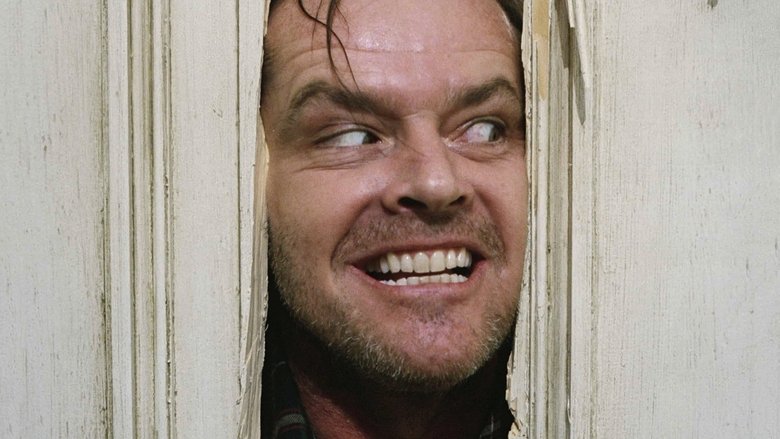
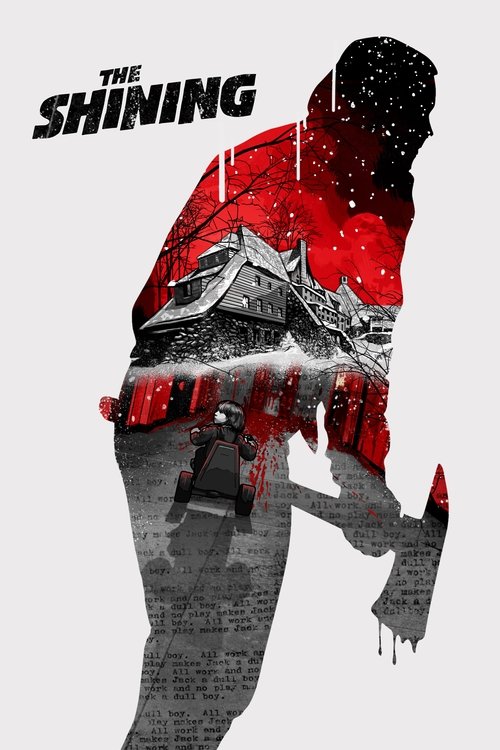
"A masterpiece of modern horror."
The Shining - Symbolism & Philosophy
Symbols & Motifs
The Hedge Maze
The maze symbolizes the inescapable and disorienting nature of the Overlook Hotel and Jack's own mind. It represents the complex family dynamics and the obstacles to connection. Ultimately, it is the site of the final confrontation, where Jack, consumed by his madness, becomes permanently lost and freezes to death, while Danny, using his intelligence, escapes. It serves as a literal and metaphorical trap.
The maze is introduced when Wendy and Danny explore it together. Jack is seen looking down upon a model of the maze inside the hotel, a shot that chillingly dissolves to show his family as tiny figures within the actual maze, symbolizing his god-like, menacing watch over them. The climax of the film takes place within the snow-covered maze as Jack hunts Danny.
The Photograph from 1921
The final, enigmatic shot of Jack in a photograph from a July 4th Ball in 1921 has multiple interpretations. Stanley Kubrick stated it suggests reincarnation—that Jack has been a part of the hotel in a past life. Another popular theory is that the hotel has "absorbed" Jack's soul into its history, making him a permanent part of its ghostly gallery after he succumbs to its evil. It reinforces the theme that Jack has "always" been the caretaker, trapped in the hotel's violent cycle.
The film's final shot slowly zooms in on the wall of historical photographs in the Overlook Hotel's Gold Room. It settles on one particular photo dated July 4, 1921, revealing Jack Torrance, smiling, at the forefront of a crowd of partygoers.
The Color Red / Blood
Red is used throughout the film to symbolize violence, danger, and the hotel's bloody history. The most iconic use is the vision of blood gushing from the elevators, a premonition of the slaughter that has occurred and will occur within the hotel's walls. The red bathroom is where Jack converses with the ghost of Grady, solidifying his murderous intent. The word "REDRUM" (murder spelled backward), written in red, is a direct warning of the impending violence.
Danny has visions of the elevators flooding with blood. He writes "REDRUM" on the bathroom door in red lipstick. Jack meets Grady in a starkly red-walled men's room. The color appears in costumes, set design, and the iconic hexagonal carpet pattern.
Mirrors and Doubles
Mirrors and doubling motifs are used to reflect the duality of characters and the deceptive nature of the Overlook. They suggest a fractured reality and the presence of the supernatural world alongside the real one. Jack's conversations with ghosts often occur while he is looking into a mirror. The most prominent example of doubling is the Grady twins, who represent the hotel's murdered past and serve as a terrifying omen for Danny.
Danny first sees the ghostly Grady twins standing in a hallway. Jack speaks to the ghost of Grady in a red bathroom filled with mirrors. The word "REDRUM" is revealed to be "MURDER" when Wendy sees its reflection in a mirror.
Philosophical Questions
Are we doomed to repeat the violent mistakes of the past?
The film relentlessly explores this question through its theme of cyclical violence. The Overlook Hotel acts as a vessel for history's horrors, compelling its inhabitants to reenact past atrocities. Grady's statement to Jack, "You've always been the caretaker," suggests a deterministic loop from which individuals cannot escape. The final shot of Jack in the 1921 photo implies that he is just the latest incarnation in this endless cycle. However, the escape of Wendy and Danny offers a sliver of hope, suggesting that while the past is a powerful force, it may be possible for future generations to break free by confronting and outwitting it.
Does evil come from within a person or from an external place?
"The Shining" masterfully maintains ambiguity on this question. Is Jack Torrance a good man corrupted by a malevolent hotel, or was he a powder keg of resentment and addiction waiting to explode? The film provides evidence for both. We know of Jack's history of alcoholism and abuse before arriving. Yet, the hotel's ghosts actively manipulate and encourage his darkest impulses. Kubrick seems to suggest that the scariest possibility is not one or the other, but a symbiosis where a person's internal darkness makes them susceptible to external evil, creating a perfect storm of horror.
What is the nature of reality when the mind is isolated?
Through Jack's descent into madness, the film questions the stability of reality itself. In the suffocating isolation of the Overlook, the lines between what is real, what is a memory, and what is a supernatural vision become completely blurred. The audience is often locked into Jack's perspective, forced to question if the ghosts are real or simply projections of his unraveling psyche. The hotel's impossible architecture further enhances this, creating a world that does not adhere to rational laws, mirroring the breakdown of Jack's own mind.
Core Meaning
The core meaning of "The Shining" delves into the fragility of the human psyche when confronted with extreme isolation and the inescapable violence of the past. Director Stanley Kubrick explores whether the evil resides within the man or the place, suggesting a terrifying synergy between the two. The Overlook Hotel acts as a pressure cooker, amplifying Jack Torrance's pre-existing weaknesses—his alcoholism, temper, and resentment—until they explode into monstrous violence.
The film serves as a chilling allegory for the cyclical nature of violence and unresolved historical trauma. By referencing the hotel's construction on a Native American burial ground and featuring imagery associated with American history, Kubrick suggests that the ghosts of the past are never truly gone and that modern society is built upon a foundation of overlooked atrocities. Ultimately, the film questions whether an individual can escape their own nature or the historical forces that have shaped their world.