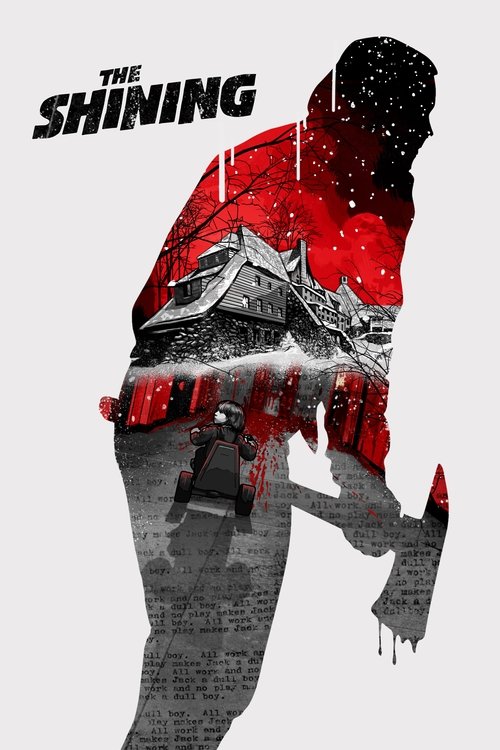
The Shining
A psychological horror descent into madness, where the chilling isolation of a grand hotel mirrors the fracturing of a man's soul.
The Shining

The Shining

"A masterpiece of modern horror."

23 May 1980 United Kingdom 144 min ⭐ 8.2 (18,221)
Director: Stanley Kubrick
Cast: Jack Nicholson, Shelley Duvall, Danny Lloyd, Scatman Crothers, Barry Nelson
Thriller Horror
Isolation and Madness The Cycle of Violence and History Breakdown of the Family The Duality of Human Nature
Budget: $19,000,000
Box Office: $44,781,695

Overview

"The Shining" follows the Torrance family—Jack, Wendy, and their young son Danny—as they move into the isolated Overlook Hotel in the Colorado Rockies for the winter. Jack, a struggling writer and recovering alcoholic, has taken a job as the off-season caretaker, hoping the seclusion will cure his writer's block. His son, Danny, possesses a psychic ability known as "the shining," which allows him to see the hotel's horrific past and future events.

As the winter snows trap the family, the hotel's supernatural forces begin to prey on Jack's sanity, exacerbating his inner demons. Danny's visions become more terrifying, revealing the hotel's history of violence, including the ghosts of twin girls and a mysterious woman in Room 237. Wendy, initially trying to hold her family together, becomes increasingly terrified by her husband's alarming transformation into a homicidal maniac bent on terrorizing them.
Core Meaning

The core meaning of "The Shining" delves into the fragility of the human psyche when confronted with extreme isolation and the inescapable violence of the past. Director Stanley Kubrick explores whether the evil resides within the man or the place, suggesting a terrifying synergy between the two. The Overlook Hotel acts as a pressure cooker, amplifying Jack Torrance's pre-existing weaknesses—his alcoholism, temper, and resentment—until they explode into monstrous violence.

The film serves as a chilling allegory for the cyclical nature of violence and unresolved historical trauma. By referencing the hotel's construction on a Native American burial ground and featuring imagery associated with American history, Kubrick suggests that the ghosts of the past are never truly gone and that modern society is built upon a foundation of overlooked atrocities. Ultimately, the film questions whether an individual can escape their own nature or the historical forces that have shaped their world.

Thematic DNA

Isolation and Madness 35%
The Cycle of Violence and History 30%
Breakdown of the Family 20%
The Duality of Human Nature 15%

Isolation and Madness

The theme of isolation is central to the film, both physically and psychologically. The Torrance family is completely cut off from the world by the winter snow. This external isolation mirrors their internal emotional distance. Jack's mind, with no external stimuli, becomes an echo chamber for his frustrations and the hotel's malevolent influence. The film meticulously documents his descent into madness, questioning whether it is a result of "cabin fever" or a supernatural possession, ultimately suggesting the isolation is the catalyst that allows his inner demons to surface.

The Cycle of Violence and History

The Overlook Hotel is a monument to past atrocities, from its construction on an "Indian burial ground" to the story of the previous caretaker, Delbert Grady, who murdered his family. The hotel seems to trap souls and repeat its violent history, with Jack stepping into the role previously played by Grady. The ghost of Grady tells Jack, "You've always been the caretaker," implying a cyclical, inescapable fate. The final shot, placing Jack in a 1921 photograph, reinforces this theme, suggesting he is merely the latest player in a long-running tragedy of violence.

Breakdown of the Family

The film presents a chilling portrait of a dysfunctional family disintegrating under pressure. Jack's resentment towards his family for hampering his artistic ambitions is evident early on. His past abuse of Danny, which Wendy brings up to a doctor, establishes a history of domestic turmoil. The hotel exploits these existing fissures, turning a troubled father into a monster who hunts his own wife and child. The maze becomes a powerful symbol of this breakdown, a place where the family unit is not a source of safety but a deadly trap.

The Duality of Human Nature

"The Shining" constantly explores the fine line between sanity and madness, good and evil. Jack Torrance begins as a seemingly normal, if flawed, man but transforms into a vessel of pure rage. The hotel itself embodies this duality: a beautiful, grand resort that harbors a dark and violent history. Even Danny represents a duality, possessing the innocence of a child alongside the paranormal wisdom of his "shining" ability. Kubrick uses mirrors throughout the film to visually represent this theme, reflecting the characters' fractured and conflicting selves.

Character Analysis

Jack Torrance

Jack Nicholson

Archetype: Antihero / Villain
Key Trait: Volatile

Motivation

Initially, his motivation is to overcome his writer's block and provide for his family. However, this is quickly supplanted by a deeper, more sinister motivation fed by the hotel: a desire for freedom from his family, whom he sees as a burden. He is seduced by the hotel's ghosts, who praise him and offer him a place of importance, motivating him to carry out their violent will.

Character Arc

Jack begins as a troubled writer and recovering alcoholic hoping for a fresh start. He is portrayed as already frustrated and resentful of his family obligations. The isolation and the hotel's supernatural influence act as a catalyst, stripping away his civility and unleashing a pre-existing rage. He transforms from a struggling family man into a full-blown antagonist, an agent of the hotel's malevolence, ultimately consumed by madness and the desire to "correct" his family.

Wendy Torrance

Shelley Duvall

Archetype: The Protector / Final Girl
Key Trait: Resilient

Motivation

Wendy's primary motivation is the protection of her son, Danny. Her actions are driven by a powerful maternal instinct. Initially, she is also motivated by a desire to keep her family intact, which is why she agrees to the isolation of the Overlook. However, as the danger escalates, her sole focus becomes survival and escape for herself and Danny.

Character Arc

Wendy starts as a submissive and anxious wife, seemingly fragile and eager to please Jack. She is deeply concerned for Danny's well-being and is aware of Jack's abusive past. As Jack's sanity deteriorates and the threat becomes real, she undergoes a significant transformation. Overcoming her terror, she becomes a resourceful and fiercely protective mother, doing whatever it takes to save her son, ultimately subduing Jack and engineering their escape.

Danny Torrance

Danny Lloyd

Archetype: The Innocent / The Seer
Key Trait: Clairvoyant

Motivation

Danny's motivation is survival. He is caught between his love for his father and his psychic awareness of the danger his father represents. He is also motivated by a need to understand the terrifying visions he experiences. His communication with Dick Hallorann provides some guidance, but ultimately, his drive is to escape the malevolent forces of the hotel that are consuming his father.

Character Arc

Danny is a young boy burdened with the psychic ability of "the shining." At the beginning, he is quiet and troubled, haunted by premonitions of the hotel's evil, which manifest through his imaginary friend, "Tony." Throughout the film, he confronts the hotel's horrors directly, from the Grady twins to Room 237. In the climax, he transitions from a passive victim of his visions to an active hero, using his wits to outsmart his father in the maze and save himself and his mother.

Dick Hallorann

Scatman Crothers

Archetype: The Mentor
Key Trait: Empathetic

Motivation

Hallorann is motivated by a sense of duty and compassion. He feels a connection to Danny because they share the same psychic gift. His motivation for returning to the hotel is purely selfless: to protect Danny and Wendy from the evil he knows resides there.

Character Arc

Dick Hallorann is the head chef at the Overlook Hotel who also possesses "the shining." He serves as a mentor and potential rescuer for Danny. He recognizes Danny's ability and warns him about the hotel's dangers, specifically Room 237. Sensing the Torrance family is in peril, he makes a heroic journey back to the hotel, only to be tragically killed by Jack shortly after his arrival, subverting the audience's expectation of him as the savior.

Symbols & Motifs

The Hedge Maze

Meaning:

The maze symbolizes the inescapable and disorienting nature of the Overlook Hotel and Jack's own mind. It represents the complex family dynamics and the obstacles to connection. Ultimately, it is the site of the final confrontation, where Jack, consumed by his madness, becomes permanently lost and freezes to death, while Danny, using his intelligence, escapes. It serves as a literal and metaphorical trap.

Context:

The maze is introduced when Wendy and Danny explore it together. Jack is seen looking down upon a model of the maze inside the hotel, a shot that chillingly dissolves to show his family as tiny figures within the actual maze, symbolizing his god-like, menacing watch over them. The climax of the film takes place within the snow-covered maze as Jack hunts Danny.

The Photograph from 1921

Meaning:

The final, enigmatic shot of Jack in a photograph from a July 4th Ball in 1921 has multiple interpretations. Stanley Kubrick stated it suggests reincarnation—that Jack has been a part of the hotel in a past life. Another popular theory is that the hotel has "absorbed" Jack's soul into its history, making him a permanent part of its ghostly gallery after he succumbs to its evil. It reinforces the theme that Jack has "always" been the caretaker, trapped in the hotel's violent cycle.

Context:

The film's final shot slowly zooms in on the wall of historical photographs in the Overlook Hotel's Gold Room. It settles on one particular photo dated July 4, 1921, revealing Jack Torrance, smiling, at the forefront of a crowd of partygoers.

The Color Red / Blood

Meaning:

Red is used throughout the film to symbolize violence, danger, and the hotel's bloody history. The most iconic use is the vision of blood gushing from the elevators, a premonition of the slaughter that has occurred and will occur within the hotel's walls. The red bathroom is where Jack converses with the ghost of Grady, solidifying his murderous intent. The word "REDRUM" (murder spelled backward), written in red, is a direct warning of the impending violence.

Context:

Danny has visions of the elevators flooding with blood. He writes "REDRUM" on the bathroom door in red lipstick. Jack meets Grady in a starkly red-walled men's room. The color appears in costumes, set design, and the iconic hexagonal carpet pattern.

Mirrors and Doubles

Meaning:

Mirrors and doubling motifs are used to reflect the duality of characters and the deceptive nature of the Overlook. They suggest a fractured reality and the presence of the supernatural world alongside the real one. Jack's conversations with ghosts often occur while he is looking into a mirror. The most prominent example of doubling is the Grady twins, who represent the hotel's murdered past and serve as a terrifying omen for Danny.

Context:

Danny first sees the ghostly Grady twins standing in a hallway. Jack speaks to the ghost of Grady in a red bathroom filled with mirrors. The word "REDRUM" is revealed to be "MURDER" when Wendy sees its reflection in a mirror.

Memorable Quotes

Heeere's Johnny!

— Jack Torrance

Context:

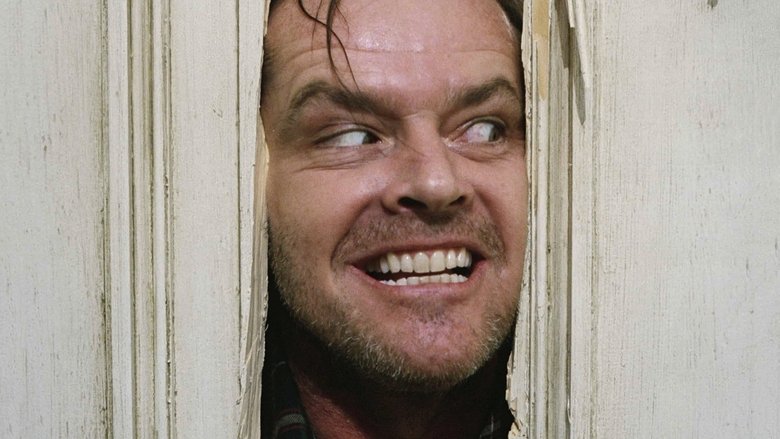
After chasing Wendy into the bathroom, Jack uses an axe to chop through the wooden door. He smashes a panel, shoves his face through the opening, and delivers the line with a maniacal grin before attempting to unlock the door.

Meaning:

This ad-libbed line, a reference to Ed McMahon's introduction of Johnny Carson on "The Tonight Show," is a moment of terrifying, psychotic glee. It signifies the complete destruction of Jack's identity as a husband and father, replaced by a monstrous, pop-culture-spouting killer. The line's jarring mundanity in a moment of extreme horror makes it profoundly unsettling and iconic.

All work and no play makes Jack a dull boy.

— Jack Torrance (written)

Context:

While Jack is away from his typewriter, Wendy nervously approaches his desk to see what he has been writing for months. She picks up the manuscript and discovers that every single page contains only this one repeated sentence, arranged in various layouts.

Meaning:

This proverb, typed over and over on hundreds of pages, is the physical manifestation of Jack's descent into madness. It represents his creative sterility, his obsessive fixation, and the complete breakdown of his rational mind. The discovery of these pages is the moment Wendy realizes the true depth of her husband's insanity and that he has been consumed by a repetitive, meaningless task instead of writing his novel.

Come play with us, Danny. Forever... and ever... and ever.

— The Grady Twins

Context:

While riding his tricycle through the hotel's corridors, Danny rounds a corner and sees the ghostly twin girls standing at the end of the hall. In a series of quick cuts, he also sees a bloody vision of their murdered bodies lying in the same spot.

Meaning:

This chilling invitation is a direct supernatural threat. The twins, ghosts of the hotel's violent past, are attempting to lure Danny into their spectral world, promising an eternity of ghostly existence within the Overlook. The phrase highlights the hotel's desire to consume innocent souls and add them to its collection of ghosts.

REDRUM

— Danny Torrance / Tony

Context:

Danny falls into a trance, repeatedly chanting the word "redrum" in a guttural voice. He takes Wendy's red lipstick and writes the word in capital letters on the bathroom door. A terrified Wendy later sees the word reflected in the mirror, revealing its true meaning: "MURDER."

Meaning:

"Redrum" is the film's most direct and terrifying premonition of violence. As a palindrome of "murder," it functions as a psychic warning from Danny's subconscious (or his entity "Tony"). Its meaning becomes clear only when seen in a mirror, symbolizing how the truth of the situation is hidden and must be viewed from a different perspective to be understood.

You've always been the caretaker.

— Delbert Grady

Context:

Jack confronts the ghost of Delbert Grady in the red-walled men's room. When Jack says he recognizes Grady as the previous caretaker who murdered his family, Grady calmly denies it, insisting that Jack is, and has always been, the caretaker.

Meaning:

This statement from the ghostly butler solidifies the film's theme of a recurring, inescapable cycle of violence. It implies that Jack is not the first, and that his identity is being subsumed by a role the hotel requires him to play. It can be interpreted as evidence for the reincarnation theory—that Jack's soul has occupied this role before in a past life.

Philosophical Questions

Are we doomed to repeat the violent mistakes of the past?

The film relentlessly explores this question through its theme of cyclical violence. The Overlook Hotel acts as a vessel for history's horrors, compelling its inhabitants to reenact past atrocities. Grady's statement to Jack, "You've always been the caretaker," suggests a deterministic loop from which individuals cannot escape. The final shot of Jack in the 1921 photo implies that he is just the latest incarnation in this endless cycle. However, the escape of Wendy and Danny offers a sliver of hope, suggesting that while the past is a powerful force, it may be possible for future generations to break free by confronting and outwitting it.

Does evil come from within a person or from an external place?

"The Shining" masterfully maintains ambiguity on this question. Is Jack Torrance a good man corrupted by a malevolent hotel, or was he a powder keg of resentment and addiction waiting to explode? The film provides evidence for both. We know of Jack's history of alcoholism and abuse before arriving. Yet, the hotel's ghosts actively manipulate and encourage his darkest impulses. Kubrick seems to suggest that the scariest possibility is not one or the other, but a symbiosis where a person's internal darkness makes them susceptible to external evil, creating a perfect storm of horror.

What is the nature of reality when the mind is isolated?

Through Jack's descent into madness, the film questions the stability of reality itself. In the suffocating isolation of the Overlook, the lines between what is real, what is a memory, and what is a supernatural vision become completely blurred. The audience is often locked into Jack's perspective, forced to question if the ghosts are real or simply projections of his unraveling psyche. The hotel's impossible architecture further enhances this, creating a world that does not adhere to rational laws, mirroring the breakdown of Jack's own mind.

Alternative Interpretations

The ambiguity of "The Shining" has invited numerous alternative interpretations that look beyond the surface ghost story. One of the most prominent theories, detailed in the documentary "Room 237," posits that the film is a metaphor for the genocide of Native Americans. Evidence cited includes the hotel being built on a burial ground, the prevalence of Native American art and symbols (like Calumet cans), and the rivers of blood representing the historical bloodshed.

Another significant interpretation reads the film as an allegory for the Holocaust. Theorists point to Kubrick's repeated use of the number 42 (referencing 1942, the year of the Final Solution), Jack's German-made Adler typewriter (Adler means 'eagle,' a Nazi symbol), and the film's theme of systematic, bureaucratic evil.

A more conspiratorial theory suggests the film is Kubrick's veiled confession for his supposed role in faking the Apollo 11 moon landing footage. This theory centers on Danny's Apollo 11 sweater, the change of the room number to 237 (the moon being roughly 237,000 miles away), and the geometric carpet pattern resembling the launchpad. Other readings view the film through a Freudian lens, as an exploration of domestic abuse and the return of repressed family trauma, suggesting the ghosts may not be real but rather manifestations of Jack's psychological breakdown.

Cultural Impact

Upon its release in 1980, "The Shining" received a mixed critical reception, with some dismissing it as a confusing departure from Stephen King's novel and even earning Kubrick a Razzie nomination for Worst Director. However, over the subsequent decades, the film has been completely re-evaluated and is now widely regarded as a masterpiece of the horror genre and one of the greatest films ever made.

Its influence on cinema is immense. Kubrick's pioneering use of the Steadicam created a new visual language for horror, allowing for fluid, ghostly tracking shots that immerse the viewer in the psychological space of the characters. The film's emphasis on atmospheric dread, ambiguity, and psychological terror over jump scares has influenced countless filmmakers, including David Lynch and Paul Thomas Anderson.

"The Shining" has permeated popular culture to an extraordinary degree. Scenes, lines, and images from the film—the Grady twins, the elevator of blood, Jack's "Here's Johnny!"—are instantly recognizable and have been endlessly parodied and paid homage to in everything from "The Simpsons" to "Toy Story." The film's open-ended and symbol-laden nature has also given rise to a cottage industry of analysis and conspiracy theories, explored in the documentary "Room 237," cementing its status as one of the most debated and rewatched films of all time.

Audience Reception

When "The Shining" was first released in 1980, audience reception was notably divided, mirroring the mixed reviews from critics. Many viewers who were fans of Stephen King's novel were disappointed by the significant changes Kubrick made, particularly to the character of Jack Torrance, who they felt lacked the novel's tragic, gradual descent into madness. Shelley Duvall's performance as Wendy was also a point of contention, with some finding her portrayal overly hysterical.

However, over time, the audience perception has shifted dramatically. The film has become a cultural touchstone, beloved for its atmospheric tension, unsettling ambiguity, and Jack Nicholson's iconic performance. Its reputation has grown through home video and repertory screenings, allowing viewers to appreciate its dense symbolism and masterful craftsmanship. Today, it is widely considered a horror classic, praised for its psychological depth and rewatchability. The endless online discussions, fan theories, and analyses are a testament to its enduring power to captivate and mystify audiences, who continue to find new layers of meaning with each viewing.

Interesting Facts

  • The iconic line "Heeere's Johnny!" was improvised by Jack Nicholson. Stanley Kubrick, who had lived in England for years, was unfamiliar with "The Tonight Show" and nearly cut the line.
  • To film the low-angle tracking shots of Danny on his tricycle, cinematographer Garrett Brown operated the revolutionary Steadicam from a wheelchair.
  • The Timberline Lodge in Oregon, which was used for the exterior shots of the Overlook Hotel, asked Kubrick to change the story's malevolent room number from 217 (as in the novel) to 237, a room number the hotel does not have, for fear that guests would avoid staying in Room 217.
  • The scene where Jack breaks down the bathroom door with an axe took three days to film and destroyed approximately 60 doors.
  • Child actor Danny Lloyd, who was six at the time, was protected by Kubrick throughout filming and was led to believe he was acting in a family drama, not a horror film. He didn't see the full movie until he was a teenager.
  • Shelley Duvall had an extremely difficult time during the notoriously long and arduous shoot. The stress of her role and Kubrick's demanding methods caused her hair to fall out.
  • The vast quantities of snow needed for the hedge maze climax were created using 900 tons of salt and crushed Styrofoam.
  • A massive fire broke out on one of the Elstree Studios soundstages late in production, destroying part of the Overlook Hotel set and causing a significant delay.
  • Stephen King has been famously critical of Kubrick's adaptation, disliking the changes to the plot and the portrayal of Jack Torrance as being insane from the start, rather than having a gradual descent.
  • The reams of paper Wendy finds with "All work and no play makes Jack a dull boy" were individually typed by Kubrick's secretary, a painstaking process that took months.

Easter Eggs

Throughout the film, cans of Calumet Baking Powder, which feature a prominent image of a Native American chief in headdress, are visible in the Overlook's pantry.

This detail is often cited by proponents of the theory that the film is an allegory for the genocide of Native Americans. A "calumet" is a ceremonial peace pipe, adding a layer of bitter irony to the violent events taking place in a hotel built on an "Indian burial ground."

In one scene, Danny Torrance is seen wearing a sweater with a large graphic of the Apollo 11 rocket.

This has become a cornerstone of the conspiracy theory that Kubrick used the film to secretly confess to helping NASA fake the 1969 moon landing. Theorists claim Room 237 represents the soundstage where the landing was allegedly filmed, as the moon is approximately 237,000 miles from Earth.

The architecture of the Overlook Hotel is filled with spatial impossibilities. For example, the manager's office has a window to the outside, even though its location on the floor plan shows it should be surrounded by interior corridors.

These impossible designs are believed to be deliberate choices by Kubrick to create a sense of disorientation and unease in the viewer, contributing to the hotel's uncanny and supernatural atmosphere. It makes the Overlook a physically irrational space, mirroring the psychological breakdown occurring within it.

Jack is seen reading a Playgirl magazine in the hotel lobby shortly before Danny arrives with bruises on his neck.

An article in that specific issue of Playgirl discusses incest. This subtle detail is seen by some analysts as a dark insinuation about the nature of the abuse within the family or the historical depravity of the hotel itself.

⚠️ Spoiler Analysis

Click to reveal detailed analysis with spoilers

Frequently Asked Questions

Explore More About This Movie

Dive deeper into specific aspects of the movie with our detailed analysis pages

Comments (0)

Leave a comment

No comments yet. Be the first to share your thoughts!