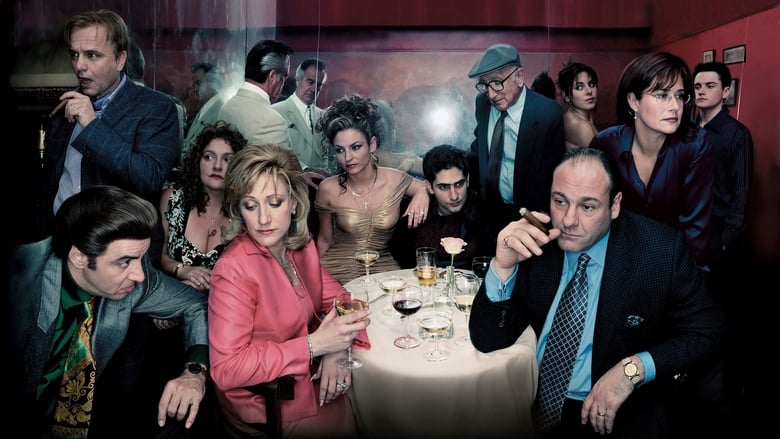
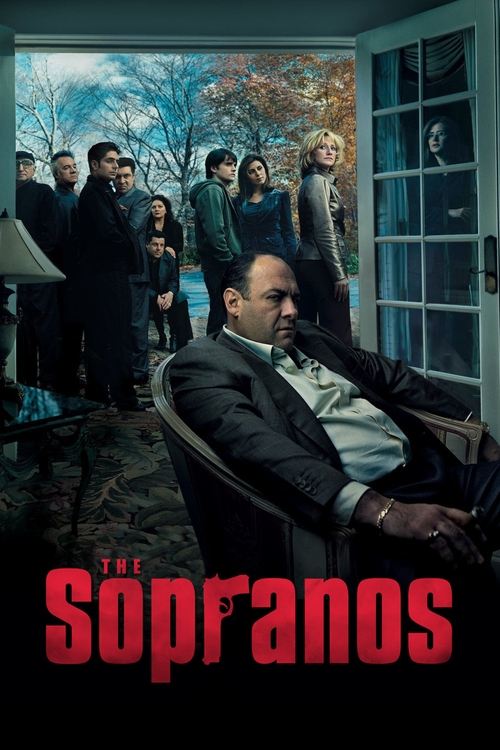
"Family. Redefined."
Cast: James Gandolfini, Edie Falco, Jamie-Lynn Sigler, Robert Iler, Lorraine Bracco
The Sopranos — Episode Highlights
Episode Highlights
College
S1E5While touring colleges in Maine with his daughter Meadow, Tony spots a former associate who entered the witness protection program. The episode masterfully juxtaposes Tony's role as a caring father with his brutal nature as he stalks and eventually murders the man with his bare hands. Meanwhile, Carmela has a tense, spiritually charged evening at home with Father Phil.
This episode was groundbreaking for television. It solidified Tony as a true antihero by showing him commit a cold-blooded murder, challenging audiences to sympathize with a killer. The raw honesty between Tony and Meadow about his "business" and Carmela's profound moral conflict established the series' thematic depth and willingness to operate in complex moral gray areas. It is often cited as one of the greatest television episodes of all time.
Pine Barrens
S3E11A seemingly simple collection from a Russian mobster goes horribly wrong, forcing Paulie and Christopher to chase him through the snowy woods of South Jersey's Pine Barrens. The two become hopelessly lost, cold, and hungry, leading to a darkly comedic and tense survival story as their incompetence and paranoia spiral out of control.
Directed by Steve Buscemi, this episode is a fan favorite, celebrated for its black humor and existential dread. It functions as a classic 'bottle episode,' stripping away the main plot to focus on the absurd and fragile relationship between Paulie and Christopher. The unresolved fate of the Russian mobster became one of the series' most enduring mysteries, underscoring the show's theme of ambiguity and the random, often pointless, nature of violence.
Whitecaps
S4E13The season finale features the explosive disintegration of Tony and Carmela's marriage. After Tony's former mistress calls the house, years of resentment, infidelity, and lies culminate in a prolonged, vicious argument that is widely regarded as one of the most realistic and powerful depictions of a marital breakdown in television history. Tony is ultimately thrown out of the house.
"Whitecaps" is a tour de force for actors James Gandolfini and Edie Falco, who both won Emmys for their performances in this episode. It brings the domestic drama, which had always been central to the show, to the absolute forefront, proving that the emotional violence within the Soprano home could be just as devastating as the physical violence of the mob world. The separation fundamentally altered the series' central dynamic moving forward.
Long Term Parking
S5E12This episode chronicles the tragic end of Adriana La Cerva. After being backed into a corner by the FBI, she confesses to Christopher that she has been an informant. Torn between his love for her and his loyalty to the mob, a devastated Christopher chooses the latter. He betrays her to Tony, who then has Silvio drive her to a remote location where she is executed.
This is arguably the most heartbreaking and emotionally devastating episode of the series. Adriana's murder is a point of no return for Christopher's character and demonstrates the absolute ruthlessness of Tony's world. It powerfully illustrates that no one is safe and that the 'family' code is absolute, even over love. The episode is a masterclass in tension and tragedy.
Made in America
S6E21In the series finale, the war with the New York family ends, and Tony attempts to piece his life back together. The final scene takes place in a diner where Tony meets Carmela and A.J. for dinner. As Meadow struggles to parallel park outside, the camera cuts between the family, other patrons, and the diner's entrance. The scene builds tension with each ring of the door's bell, culminating in the infamous and abrupt cut to black.
The finale is one of the most discussed and controversial endings in television history. The ambiguity of the final scene—whether Tony was killed or not—has been debated for years. Creator David Chase has consistently refused to give a definitive answer, forcing the audience to confront the series' central themes of anxiety, uncertainty, and the idea that for a man like Tony, life is a series of moments that could be his last. The ending cemented the show's legacy as a challenging and revolutionary piece of art.
Explore More About This Movie
Dive deeper into specific aspects of the movie with our detailed analysis pages