The Sopranos
"Family. Redefined."
Overview
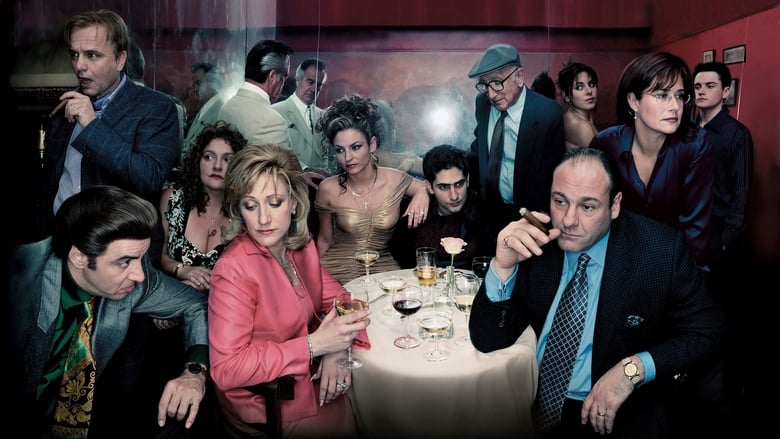
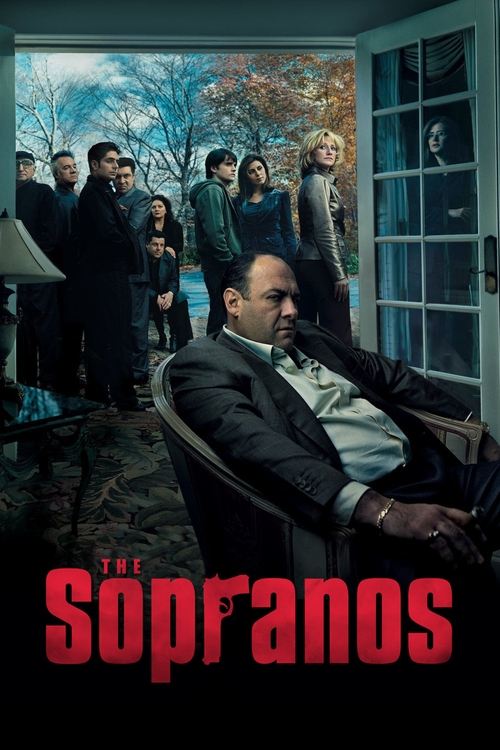
"The Sopranos," created by David Chase, chronicles the life of Tony Soprano (James Gandolfini), a New Jersey-based Italian-American mob boss. The series delves into the immense difficulty he faces while trying to balance the conflicting demands of his turbulent home life with his wife Carmela, daughter Meadow, and son A.J., and the criminal organization he leads. The narrative framework is uniquely driven by Tony's reluctant sessions with his psychiatrist, Dr. Jennifer Melfi (Lorraine Bracco), which he begins after suffering from panic attacks.
Over six seasons and 86 episodes, the show explores the intricate dynamics within Tony's two families: his actual family and his Mafia associates. Key relationships include his complex marriage to Carmela (Edie Falco), who grapples with her complicity in his criminal lifestyle, and his mentorship of his ambitious but volatile protégé, Christopher Moltisanti (Michael Imperioli). The series moves beyond typical gangster tropes to present a deeply psychological and often darkly comedic portrait of a man, an organization, and an American subculture in decline at the turn of the 21st century.
Core Meaning
At its core, "The Sopranos" is an exploration of the American Dream's decay and the moral and spiritual rot at the heart of a modern man. Through the lens of a mob boss in therapy, creator David Chase examines themes of identity, depression, and the search for meaning in a world where traditional institutions—family, religion, and even organized crime—are crumbling. The series poses profound questions about whether people can truly change, dissecting the nature of evil and the pervasive influence of family and upbringing on one's character. Ultimately, it suggests that redemption is elusive and that individuals are often trapped by the circumstances and psychological patterns they inherit, struggling for meaning in a morally ambiguous universe.
Thematic DNA
The Deconstruction of Masculinity
The series consistently dismantles traditional notions of masculinity. Tony Soprano, a powerful mob boss, is paradoxically plagued by panic attacks, depression, and vulnerability, which forces him into therapy. This central conflict challenges the stoic, hyper-masculine archetype of the gangster. The show explores how this "toxic masculinity" affects not only Tony but also the men around him, leading to violence, emotional repression, and an inability to adapt to a changing world.
The Corrupt American Dream
"The Sopranos" presents a cynical view of the American Dream, portraying it as a hollow pursuit of material wealth built on violence and moral compromise. The Soprano family lives in a lavish suburban home, a symbol of success, yet their lives are filled with anxiety, infidelity, and spiritual emptiness. Carmela, in particular, embodies this theme, constantly trying to reconcile her luxurious lifestyle with the knowledge that it is funded by "blood money."
Mental Health and Psychiatry
The therapy sessions between Tony and Dr. Melfi are the narrative backbone of the series, revolutionizing how mental health was depicted on television. These scenes provide a window into Tony's psyche, exploring the roots of his anxiety in his dysfunctional upbringing, particularly his relationship with his manipulative mother, Livia. The show treats therapy not as a quick fix but as a long, arduous process that raises complex questions about self-awareness, accountability, and the capacity for change.
Family and Betrayal
The series constantly blurs the lines between Tony's two families—his blood relatives and his crime family—exploring the codes of loyalty and the inevitability of betrayal within both. Tony professes that family is the only thing one can depend on, yet he is betrayed by his own mother and uncle. This theme is tragically crystallized in the story of Adriana La Cerva, who is forced to choose between her loyalty to Christopher and the FBI, leading to one of the show's most devastating betrayals and deaths.
Character Analysis
Tony Soprano
James Gandolfini
Motivation
Tony's primary motivation is to maintain control over his two families and to find a sense of peace amidst the chaos of his life. He is driven by a desire for respect, wealth, and the preservation of his power. He is also motivated by a deep-seated fear of showing weakness, inherited from his father, and a complex need for the approval of a maternal figure, a void left by his toxic mother, Livia.
Character Arc
Tony's arc is less a traditional trajectory of redemption and more a deep-dive into the cyclical nature of his character. He begins the series seeking help for panic attacks, showing a glimmer of desire for change. Throughout the series, he gains psychological insights through therapy but consistently fails to apply them, often regressing into violence and sociopathy. His journey is a struggle between his moments of vulnerability and his brutal nature. By the end, he appears more hardened and resigned to his fate, suggesting that despite all the self-examination, fundamental change might be impossible for him.
Carmela Soprano
Edie Falco
Motivation
Carmela is motivated by a desire for financial security, social status, and the well-being of her children. She grapples with a deep-seated Catholic guilt and a yearning for a life free from sin, but this is consistently outweighed by her attachment to the luxurious lifestyle Tony's criminal enterprise provides. Her actions are often driven by a need to create a respectable and stable home, even if it's built on a foundation of lies and violence.
Character Arc
Carmela's journey is one of moral compromise and evolving self-awareness. Initially, she is the loyal, complicit housewife, turning a blind eye to Tony's crimes in exchange for financial security. Her arc involves several crises of conscience where she confronts the source of her wealth, seeking guidance from priests and a psychiatrist. She briefly leaves Tony in Season 4, asserting her independence, but ultimately returns, realizing the limitations of her power and making a more conscious, transactional bargain with her husband. Her final state is one of pragmatic resignation, having secured her financial future but remaining morally entangled.
Dr. Jennifer Melfi
Lorraine Bracco
Motivation
Dr. Melfi is motivated by a professional duty to help her patient and a genuine intellectual curiosity about the criminal mind. She is drawn to the challenge Tony presents and, at times, is flattered by the power she holds over a dangerous man. Ultimately, her core motivation is ethical; she is driven by the principles of her profession, which leads to her eventual decision to sever ties with Tony when she believes the therapy is causing more harm than good.
Character Arc
Dr. Melfi's arc is an ethical and professional tightrope walk. Initially fascinated and challenged by Tony, she believes she can help him. For seven years, she listens to his confessions, serving as the audience's moral compass. Over time, she becomes increasingly conflicted, questioning whether her therapy is enabling his sociopathy rather than curing it. Her arc culminates in a powerful realization, prompted by a study and her own psychiatrist, that she has been complicit in his evil. She decisively terminates their sessions, representing a final moral judgment on Tony's capacity for change.
Christopher Moltisanti
Michael Imperioli
Motivation
Christopher is driven by a desperate need for validation, primarily from Tony. He wants to be seen as a serious and respected player in the mob. His motivations are also tied to a desire for a creative outlet, which clashes with the rigid, anti-intellectual world of the Mafia. He is constantly seeking an identity, whether as a tough guy, a filmmaker, or a husband, but his addictions and insecurities ultimately undermine all his efforts.
Character Arc
Christopher's arc is a tragic story of ambition, addiction, and disillusionment. He begins as Tony's loyal, if impulsive, protégé, desperate to make a name for himself in the mob and gain his uncle's respect. His journey is marked by a constant struggle with drug addiction, creative aspirations in filmmaking, and a volatile relationship with Adriana. He becomes increasingly resentful of Tony and disillusioned with the Mafia life he once craved. His arc ends tragically when Tony, seeing him as a liability after a car crash, suffocates him, symbolizing the death of the next generation's potential within the organization.
Symbols & Motifs
The Ducks
The family of ducks that takes up residence in Tony's pool in the first season symbolizes his anxieties about his own family. Their departure triggers his first on-screen panic attack. The ducks represent a form of innocent, natural family life that he yearns for but cannot maintain. They are a manifestation of his fear of losing his family and his own sense of control.
Featured prominently in Season 1, the ducks' arrival and subsequent departure from the Soprano family pool serve as the catalyst for Tony seeking therapy. The symbol recurs in his thoughts and discussions with Dr. Melfi as he tries to understand his emotional turmoil.
Food
Food is a central motif representing community, tradition, comfort, and the business of the Mafia. Family dinners and meals at Satriale's Pork Store are scenes of bonding and business. However, food is also linked to Tony's panic attacks and his complicated relationship with his mother, symbolizing both nurturing and a source of deep-seated psychological conflict. It underscores the connection between pleasure, sustenance, and the dark underbelly of their lives.
Throughout the entire series, from Carmela's baked ziti to the final scene's onion rings, food is ever-present. Key moments, like Tony associating cured meats with his panic attacks, happen frequently, tying the act of consumption to his psychological state.
The "Members Only" Jacket
The Members Only jacket symbolizes impending doom and the inescapable consequences of Tony's life of crime. It's a visual cue that connects past acts of violence and betrayal to the present, representing the constant threat that looms over Tony. Its appearance in the final scene is widely interpreted as a harbinger of his death.
The jacket first appears in Season 6 on Eugene Pontecorvo, a mobster who kills himself. It then reappears in the final scene of the series, worn by a mysterious man in the diner who many theorists believe is there to assassinate Tony.
Dreams
Tony's frequent and surreal dream sequences function as a direct portal into his subconscious. They are filled with symbolic imagery and appearances from deceased characters, exploring his deepest fears, guilts, and desires. The dreams often reveal truths that Tony cannot confront in his waking life and serve as a tool for both the audience and Dr. Melfi to understand his complex psychology.
Occurring across all seasons, notable dream sequences include the "Test Dream" in Season 5 and his coma-induced alternate life as Kevin Finnerty in Season 6. These episodes deviate from the main narrative to provide deep, psychoanalytic insights into his character.
Memorable Quotes
Those who want respect, give respect.
— Tony Soprano
Context:
Tony says this in Season 2, Episode 9, "The Knight in White Satin Armor," while lecturing Richie Aprile. It's a phrase he uses to assert his authority and demand obedience within the crime family.
Meaning:
This quote encapsulates Tony's personal and professional code. It reflects the Mafia's emphasis on a rigid, old-world hierarchy of respect, which Tony tries to uphold even as he breaks countless moral and legal laws. It highlights the central hypocrisy of his world, where 'respect' is often a euphemism for fear.
You steer the ship the best way you know. Sometimes it's smooth. Sometimes you hit the rocks. In the meantime, you find your pleasures where you can.
— Junior Soprano
Context:
Junior offers this wisdom to Tony in Season 1, reflecting on the burdens of leadership and life's inherent difficulties.
Meaning:
This piece of advice from the aging patriarch of the crime family distills the series' fatalistic and hedonistic philosophy. It suggests a world where one has limited control over their destiny and the best one can do is navigate the inevitable troubles while seizing moments of happiness, however fleeting or illicit they may be.
Don't stop believin'.
— Sung by Journey
Context:
This song plays on the jukebox in the final scene of the series finale, "Made in America" (Season 6, Episode 21), just before the infamous cut to black.
Meaning:
While not spoken by a character, the final song is perhaps the most significant quote of the series. Its abrupt cut-off during the line "Don't stop—" has become the focal point of endless debate about the finale. It can be interpreted as a final, ironic commentary on hope, a hint that life (or the lack thereof) continues, or a direct message to the audience to keep believing in their own interpretation of the ambiguous ending.
You probably don't even hear it when it happens, right?
— Bobby Baccalieri
Context:
Bobby says this to Tony in Season 6, Episode 13, "Soprano Home Movies," during a quiet conversation on a boat, reflecting on what it must be like to be killed.
Meaning:
This line is one of the most critical pieces of foreshadowing for the series finale. It speaks to the sudden, unceremonious nature of death in the mob world. Many fans believe this quote is the key to understanding the final scene: the abrupt cut to black signifies Tony's death from his own point of view—instantaneous and silent.
Episode Highlights
College
While touring colleges in Maine with his daughter Meadow, Tony spots a former associate who entered the witness protection program. The episode masterfully juxtaposes Tony's role as a caring father with his brutal nature as he stalks and eventually murders the man with his bare hands. Meanwhile, Carmela has a tense, spiritually charged evening at home with Father Phil.
This episode was groundbreaking for television. It solidified Tony as a true antihero by showing him commit a cold-blooded murder, challenging audiences to sympathize with a killer. The raw honesty between Tony and Meadow about his "business" and Carmela's profound moral conflict established the series' thematic depth and willingness to operate in complex moral gray areas. It is often cited as one of the greatest television episodes of all time.
Pine Barrens
A seemingly simple collection from a Russian mobster goes horribly wrong, forcing Paulie and Christopher to chase him through the snowy woods of South Jersey's Pine Barrens. The two become hopelessly lost, cold, and hungry, leading to a darkly comedic and tense survival story as their incompetence and paranoia spiral out of control.
Directed by Steve Buscemi, this episode is a fan favorite, celebrated for its black humor and existential dread. It functions as a classic 'bottle episode,' stripping away the main plot to focus on the absurd and fragile relationship between Paulie and Christopher. The unresolved fate of the Russian mobster became one of the series' most enduring mysteries, underscoring the show's theme of ambiguity and the random, often pointless, nature of violence.
Whitecaps
The season finale features the explosive disintegration of Tony and Carmela's marriage. After Tony's former mistress calls the house, years of resentment, infidelity, and lies culminate in a prolonged, vicious argument that is widely regarded as one of the most realistic and powerful depictions of a marital breakdown in television history. Tony is ultimately thrown out of the house.
"Whitecaps" is a tour de force for actors James Gandolfini and Edie Falco, who both won Emmys for their performances in this episode. It brings the domestic drama, which had always been central to the show, to the absolute forefront, proving that the emotional violence within the Soprano home could be just as devastating as the physical violence of the mob world. The separation fundamentally altered the series' central dynamic moving forward.
Long Term Parking
This episode chronicles the tragic end of Adriana La Cerva. After being backed into a corner by the FBI, she confesses to Christopher that she has been an informant. Torn between his love for her and his loyalty to the mob, a devastated Christopher chooses the latter. He betrays her to Tony, who then has Silvio drive her to a remote location where she is executed.
This is arguably the most heartbreaking and emotionally devastating episode of the series. Adriana's murder is a point of no return for Christopher's character and demonstrates the absolute ruthlessness of Tony's world. It powerfully illustrates that no one is safe and that the 'family' code is absolute, even over love. The episode is a masterclass in tension and tragedy.
Made in America
In the series finale, the war with the New York family ends, and Tony attempts to piece his life back together. The final scene takes place in a diner where Tony meets Carmela and A.J. for dinner. As Meadow struggles to parallel park outside, the camera cuts between the family, other patrons, and the diner's entrance. The scene builds tension with each ring of the door's bell, culminating in the infamous and abrupt cut to black.
The finale is one of the most discussed and controversial endings in television history. The ambiguity of the final scene—whether Tony was killed or not—has been debated for years. Creator David Chase has consistently refused to give a definitive answer, forcing the audience to confront the series' central themes of anxiety, uncertainty, and the idea that for a man like Tony, life is a series of moments that could be his last. The ending cemented the show's legacy as a challenging and revolutionary piece of art.
Philosophical Questions
Can a person truly change their fundamental nature?
This is the central question of the entire series, explored primarily through Tony's seven years in therapy. Dr. Melfi works to help him understand the roots of his behavior and panic attacks, hoping to foster genuine change. However, while Tony gains self-awareness, he repeatedly uses his therapy as a tool to become a more effective criminal and justify his actions. The series pessimistically suggests that despite understanding one's own psychology, breaking free from deeply ingrained patterns of behavior, especially those forged by family and environment, is nearly impossible. Dr. Melfi's final decision to drop him as a patient is a damning verdict on his capacity for change.
What is the nature of morality in a meaningless world?
"The Sopranos" is steeped in existential dread. Characters often grapple with a sense of meaninglessness and the absurdity of life, as A.J. puts it, "Death just shows the ultimate absurdity of life." In this void, characters create their own moral codes. Tony's code is a warped version of family loyalty and respect, which he uses to justify horrific violence. Carmela uses her Catholic faith and material possessions to build a facade of morality over a corrupt foundation. The series constantly questions whether any objective morality exists, or if it's all just a story people tell themselves to get by.
To what extent are we products of our upbringing?
The show is a deep-dive into generational trauma. Tony's personality and anxieties are directly traced back to his ruthless, mobster father and his manipulative, narcissistic mother, Livia. His attempts to be a better father to his own children are often undermined by the very traits he inherited. Christopher Moltisanti's story also reflects this, as he struggles to escape the shadow of his deceased father and the expectations of his surrogate father, Tony. The series argues that while individuals have choices, they are profoundly shaped and often trapped by the psychological legacy of their family.
Alternative Interpretations
The most significant area of alternative interpretation in "The Sopranos" is its famously ambiguous ending. The debate centers on the meaning of the final cut to black.
- Tony is Dead: This is the most widely accepted theory. Proponents argue that the final scene is shown from Tony's perspective. The cut to black is the moment he is shot and killed, likely by the "Members Only" jacket guy who enters the bathroom (an homage to The Godfather). This theory is heavily supported by Bobby Baccalieri's earlier line, "You probably don't even hear it when it happens." The final silence is Tony's sudden end.
- Tony Lives, But is Forever Paranoid: This interpretation suggests that the scene's tension is the true ending. The point is not whether Tony dies in that specific moment, but that his life will forever be one of looking over his shoulder. Every person who walks into the diner could be a threat, and this constant state of anxiety is his ultimate punishment and fate. The ending puts the audience directly into his paranoid mindset.
- The Audience is Whacked: A more meta-interpretation posits that creator David Chase is "whacking" the audience. For eight years, viewers have been complicit in Tony's world, watching his crimes for entertainment. The sudden cut to black is Chase's way of severing that connection, denying the audience the closure of a conventional ending and forcing them to reflect on their relationship with the show's violence and morality.
- It's Just a Scene: David Chase himself has suggested that people over-analyze the ending. The interpretation is that it is simply the end of the story. Life goes on, filled with mundane moments and underlying tension, and the show simply stops. There is no grand hidden meaning, just the end of the narrative we were allowed to witness.
Cultural Impact
"The Sopranos" is widely regarded as one of the greatest and most influential television series of all time, credited with ushering in the "Second Golden Age of Television." Its debut on HBO in 1999 marked a turning point, proving that television could be a medium for complex, cinematic, and novelistic storytelling on par with film. The series revolutionized the medium by popularizing the morally ambiguous antihero protagonist, a template that would be followed by acclaimed shows like Breaking Bad, Mad Men, and The Wire. In fact, Breaking Bad creator Vince Gilligan famously said, "Without Tony Soprano, there would be no Walter White."
The show's use of serialized, season-long narrative arcs over standalone episodic plots became a new standard for prestige dramas. Furthermore, its willingness to delve into dark, complex themes like mental health, existentialism, and the decay of American society sparked widespread cultural conversations. The series received immense critical acclaim throughout its run and its viewership grew, making it a cultural phenomenon. Its controversial, ambiguous finale remains one of the most debated moments in television history, cementing its legacy as a show that respected its audience's intelligence and refused to provide easy answers. The influence of "The Sopranos" extends beyond television, permeating pop culture and setting a new benchmark for what televised drama could achieve.
Audience Reception
"The Sopranos" received widespread critical acclaim from its premiere and is often cited as the greatest television show of all time. Audiences were initially drawn to the novel premise of a mob boss in therapy, but stayed for the deep character development, complex storytelling, and dark humor. The first few seasons were praised for revitalizing the mob genre. As the series progressed, it became known for its willingness to defy television conventions, with dream sequences, philosophical discussions, and morally ambiguous characters that challenged viewers. Some seasons were occasionally criticized by a segment of the audience for being too slow or introspective, particularly when deviating from traditional mob plotlines. However, the show's popularity and critical standing only grew over its run, turning it into a cultural touchstone. The series finale in 2007 was one of the most-watched and polarizing events in television history. The abrupt, ambiguous ending sparked intense debate, with some viewers feeling cheated while many critics and fans praised it as a brilliant and fitting conclusion to a show that never offered easy answers. Over time, the consensus on the finale has shifted more favorably, and the show's reputation has solidified, with new generations discovering it on streaming platforms and recognizing its profound impact on the television landscape.
Interesting Facts
- The series was originally conceived by creator David Chase as a feature film about a mobster in therapy who has problems with his mother.
- Many scenes were shot on location in New Jersey, including the Soprano house (a real home in North Caldwell) and the Bada Bing! (a real strip club called Satin Dolls in Lodi).
- The character of Tony's mother, Livia Soprano, was based on David Chase's own mother. The plan was for Livia to die in the first season, but actress Nancy Marchand's performance was so compelling they kept her on. Marchand's real-life death after Season 2 forced the writers to kill her character off-screen.
- The series shares 28 cast members with Martin Scorsese's classic mob film 'Goodfellas,' including Lorraine Bracco (Dr. Melfi), Michael Imperioli (Christopher), and Tony Sirico (Paulie).
- Tony Sirico, who played Paulie 'Walnuts' Gualtieri, was a real-life ex-convict with 28 arrests. He agreed to take the role on the condition that his character would never become a 'rat' (informant).
- James Gandolfini would sometimes put a stone in his shoe to help evoke Tony's anger and irritation during a scene.
- David Chase only directed two episodes of the entire series: the pilot and the finale.
- Steven Van Zandt, a musician from Bruce Springsteen's E Street Band with no prior acting experience, was David Chase's first choice to play Tony Soprano. HBO executives insisted on a professional actor, and the role of Silvio Dante was created for Van Zandt.
Easter Eggs
In the Season 1 episode "A Hit Is a Hit," Christopher Moltisanti shoots a bakery employee in the foot for making him wait. The employee's name is 'Spider.'
This is a direct reference to Martin Scorsese's film Goodfellas, where Michael Imperioli (who plays Christopher) portrays a character named Spider who is also shot in the foot by a hot-headed mobster.
The orange cat that appears at the safe house in the final episodes and stares at Christopher's photograph.
The cat is seen by many as a subtle reference to The Godfather, where oranges often foreshadow death or tragedy. Paulie becomes convinced the cat is a bad omen, possibly representing the spirit of the recently deceased Christopher, adding a layer of supernatural unease to the final episodes.
Throughout the series, characters frequently watch old gangster movies, particularly featuring James Cagney.
These clips serve as a commentary on how the characters in "The Sopranos" see themselves and their lives through the lens of Hollywood's romanticized version of the mob. It highlights the vast, often pathetic, difference between the cinematic ideal of the gangster and their own mundane, suburban reality.
⚠️ Spoiler Analysis
Click to reveal detailed analysis with spoilers
Frequently Asked Questions
Explore More About This Movie
Dive deeper into specific aspects of the movie with our detailed analysis pages
Comments (0)
No comments yet. Be the first to share your thoughts!