At its core, "The Sopranos" is an exploration of the American Dream's decay and the moral and spiritual rot at the heart of a modern man. Through the lens of a mob boss in therapy, creator David Chase examines themes of identity, depression, and the search for meaning in a world where traditional institutions—family, religion, and even organized crime—are crumbling. The series poses profound questions about whether people can truly change, dissecting the nature of evil and the pervasive influence of family and upbringing on one's character. Ultimately, it suggests that redemption is elusive and that individuals are often trapped by the circumstances and psychological patterns they inherit, struggling for meaning in a morally ambiguous universe.
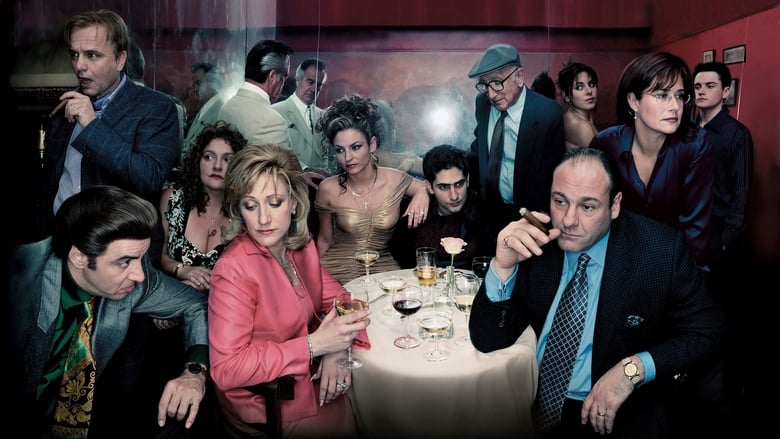
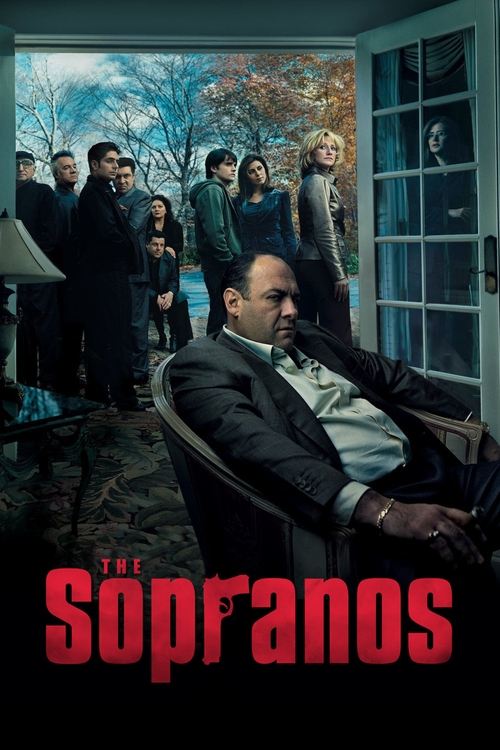
"Family. Redefined."
Cast: James Gandolfini, Edie Falco, Jamie-Lynn Sigler, Robert Iler, Lorraine Bracco
The Sopranos — Symbolism & Philosophy
Symbols & Motifs
The Ducks
The family of ducks that takes up residence in Tony's pool in the first season symbolizes his anxieties about his own family. Their departure triggers his first on-screen panic attack. The ducks represent a form of innocent, natural family life that he yearns for but cannot maintain. They are a manifestation of his fear of losing his family and his own sense of control.
Featured prominently in Season 1, the ducks' arrival and subsequent departure from the Soprano family pool serve as the catalyst for Tony seeking therapy. The symbol recurs in his thoughts and discussions with Dr. Melfi as he tries to understand his emotional turmoil.
Food
Food is a central motif representing community, tradition, comfort, and the business of the Mafia. Family dinners and meals at Satriale's Pork Store are scenes of bonding and business. However, food is also linked to Tony's panic attacks and his complicated relationship with his mother, symbolizing both nurturing and a source of deep-seated psychological conflict. It underscores the connection between pleasure, sustenance, and the dark underbelly of their lives.
Throughout the entire series, from Carmela's baked ziti to the final scene's onion rings, food is ever-present. Key moments, like Tony associating cured meats with his panic attacks, happen frequently, tying the act of consumption to his psychological state.
The "Members Only" Jacket
The Members Only jacket symbolizes impending doom and the inescapable consequences of Tony's life of crime. It's a visual cue that connects past acts of violence and betrayal to the present, representing the constant threat that looms over Tony. Its appearance in the final scene is widely interpreted as a harbinger of his death.
The jacket first appears in Season 6 on Eugene Pontecorvo, a mobster who kills himself. It then reappears in the final scene of the series, worn by a mysterious man in the diner who many theorists believe is there to assassinate Tony.
Dreams
Tony's frequent and surreal dream sequences function as a direct portal into his subconscious. They are filled with symbolic imagery and appearances from deceased characters, exploring his deepest fears, guilts, and desires. The dreams often reveal truths that Tony cannot confront in his waking life and serve as a tool for both the audience and Dr. Melfi to understand his complex psychology.
Occurring across all seasons, notable dream sequences include the "Test Dream" in Season 5 and his coma-induced alternate life as Kevin Finnerty in Season 6. These episodes deviate from the main narrative to provide deep, psychoanalytic insights into his character.
Philosophical Questions
Can a person truly change their fundamental nature?
This is the central question of the entire series, explored primarily through Tony's seven years in therapy. Dr. Melfi works to help him understand the roots of his behavior and panic attacks, hoping to foster genuine change. However, while Tony gains self-awareness, he repeatedly uses his therapy as a tool to become a more effective criminal and justify his actions. The series pessimistically suggests that despite understanding one's own psychology, breaking free from deeply ingrained patterns of behavior, especially those forged by family and environment, is nearly impossible. Dr. Melfi's final decision to drop him as a patient is a damning verdict on his capacity for change.
What is the nature of morality in a meaningless world?
"The Sopranos" is steeped in existential dread. Characters often grapple with a sense of meaninglessness and the absurdity of life, as A.J. puts it, "Death just shows the ultimate absurdity of life." In this void, characters create their own moral codes. Tony's code is a warped version of family loyalty and respect, which he uses to justify horrific violence. Carmela uses her Catholic faith and material possessions to build a facade of morality over a corrupt foundation. The series constantly questions whether any objective morality exists, or if it's all just a story people tell themselves to get by.
To what extent are we products of our upbringing?
The show is a deep-dive into generational trauma. Tony's personality and anxieties are directly traced back to his ruthless, mobster father and his manipulative, narcissistic mother, Livia. His attempts to be a better father to his own children are often undermined by the very traits he inherited. Christopher Moltisanti's story also reflects this, as he struggles to escape the shadow of his deceased father and the expectations of his surrogate father, Tony. The series argues that while individuals have choices, they are profoundly shaped and often trapped by the psychological legacy of their family.
Core Meaning
Explore More About This Movie
Dive deeper into specific aspects of the movie with our detailed analysis pages