"...all it takes is a little confidence."
The Sting - Symbolism & Philosophy
Symbols & Motifs
Poker Games
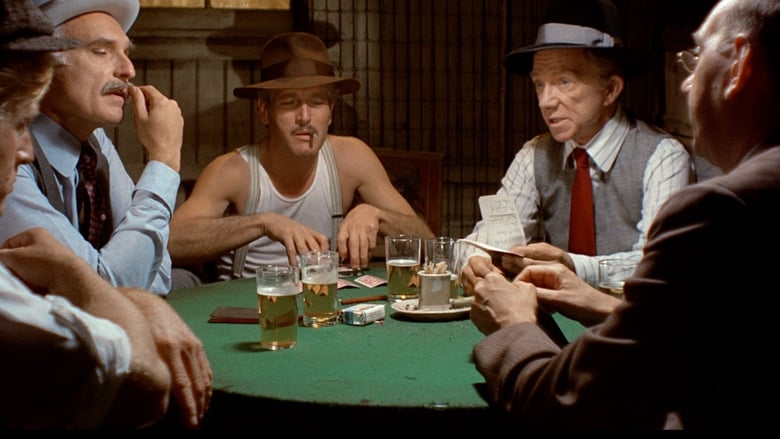
The recurring poker games symbolize the broader themes of deception, strategy, and bluffing that define the world of con artists. They are a microcosm of the larger con, where success depends on reading your opponent, maintaining a calm exterior, and knowing when to raise the stakes.
A key sequence takes place on a train where Gondorff, pretending to be a boorish, drunken bookie, cheats the notorious cardsharp Lonnegan. This scene not only establishes Gondorff's mastery of deception but also serves as "the hook" that lures Lonnegan into the main con. The game highlights the idea of out-cheating a cheater, a central tenet of the film's form of justice.
The Carousel
The carousel, which serves as a front for a brothel and Gondorff's initial hiding place, symbolizes the cyclical and deceptive nature of the con game. Its constant motion and cheerful facade hide a more complex and illicit reality, much like the cons themselves.
When Hooker first seeks out the legendary Gondorff, he finds him drunk and operating a carousel. This initial presentation is itself a small con, a facade of a man past his prime, which Gondorff quickly sheds. The location serves as the initial meeting point where the plan to sting Lonnegan is hatched.
Inter-title Cards
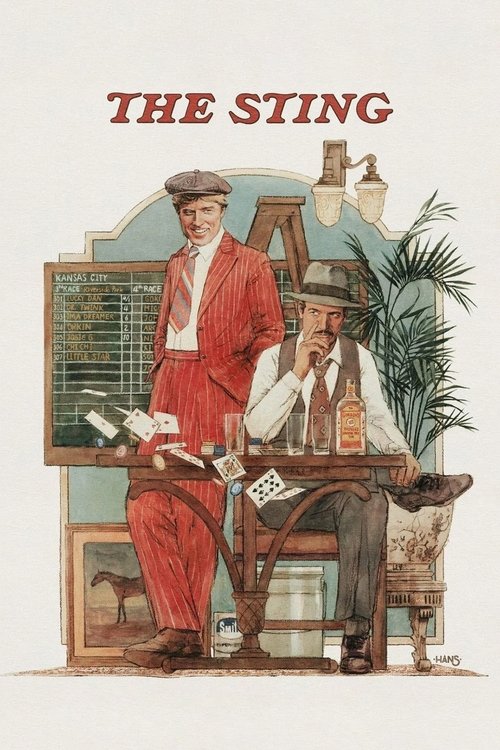
The stylized inter-title cards, designed to look like illustrations from The Saturday Evening Post, serve as a structural and symbolic device. They break the film into distinct chapters of the con ("The Set-Up," "The Hook," etc.), symbolizing the methodical, story-like nature of the grifters' plan. They also reinforce the film's nostalgic, storybook quality.
These cards appear throughout the film, introducing each new phase of the elaborate scheme. This narrative framing device draws the audience into the mechanics of the con, making them feel like insiders, even as the film prepares its final twist to deceive them as well.
Philosophical Questions
What is the nature of justice when the system is corrupt?
The film explores a world where the lines between right and wrong are blurred. The protagonist, Johnny Hooker, seeks justice for his friend's murder, but he operates outside the law. The police are portrayed as either corrupt (like Lt. Snyder) or ineffective against a powerful figure like Lonnegan. In this context, the film poses the question of whether an illegal act—an elaborate con—can be a justifiable means to achieve a moral end. The "sting" becomes a form of extralegal justice, a carefully orchestrated plan to punish a villain who is otherwise untouchable. It suggests that in a flawed system, justice may need to be crafted with the same cunning and deception used by the criminals themselves.
Is there honor among thieves?
"The Sting" deeply explores the concept of a moral code within a criminal community. The entire plot is predicated on loyalty and trust. Hooker's quest is to avenge a fallen comrade. Gondorff and his extensive network of grifters come together, risking their freedom to help, bound by a shared sense of community and professionalism. The success of their incredibly complex con depends entirely on each person playing their part with unwavering trust in the others. This contrasts sharply with the antagonist, Lonnegan, who operates through fear and betrayal. The film suggests that a strong sense of honor and loyalty can exist and even thrive in the most unlikely of subcultures.
Core Meaning
"The Sting" is a masterclass in cinematic deception, exploring the idea that the art of the con is a form of storytelling where perception is reality. The director, George Roy Hill, crafts a narrative that not only cons its central antagonist but also the audience, leading them through a maze of misdirection and false assumptions. At its heart, the film is a celebration of cleverness and ingenuity over brute force. It posits that in a corrupt world of powerful criminals and compromised law enforcement, the meticulously planned con can serve as a form of poetic justice. The film ultimately conveys a message about the power of collaboration and trust, as the success of the elaborate sting hinges on the flawless execution and loyalty of a diverse team of grifters.