The film follows the biblical narrative but adds dramatic twists. After the Red Sea destroys the Egyptian army, the story continues to Mount Sinai. While Moses receives the Ten Commandments, the Hebrews lose faith and build a Golden Calf, led by the traitor Dathan. Moses returns, enraged, and hurls the tablets at the idol, causing an earthquake that swallows the wicked, including Dathan. The film ends 40 years later; as punishment for their disobedience, the generation that left Egypt is condemned to wander the wilderness until they die. An aged Moses appoints Joshua as his successor and ascends Mount Nebo. He is forbidden by God from entering the Promised Land himself, destined only to see it from afar before dying, a final poignant sacrifice for his people.

A colossal Biblical epic of Technicolor grandeur where the divine clashes with the tyrannical. Amidst parting seas and burning bushes, one man's transformation from Egyptian prince to Hebrew prophet embodies the eternal struggle for freedom against the chains of bondage.
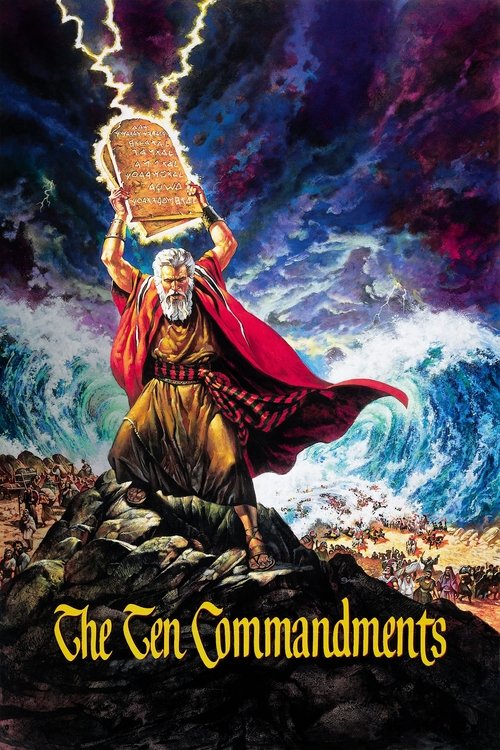
The Ten Commandments
"The greatest event in motion picture history!"
05 October 1956
United States of America
220 min
7.8
(1,779)
Director: Cecil B. DeMille
Cast: Charlton Heston, Yul Brynner, Anne Baxter, Edward G. Robinson, Yvonne De Carlo
Drama
History
Freedom vs. Tyranny
Identity and Heritage
The Law
Faith vs. Skepticism
Budget:
$13,000,000
Box Office:
$122,700,000
The Ten Commandments — Ending Explained
⚠️ Spoiler Analysis
Alternative Interpretations
While primarily a straightforward religious epic, the film invites several readings:
- Cold War Propaganda: Critics often analyze the film as a political allegory where the Hebrews represent the 'free world' and Egypt represents the Soviet Union, with Rameses as a Stalin-like dictator.
- Nefretiri as the True Villain: Unlike the biblical account where God 'hardens Pharaoh's heart,' the film suggests Nefretiri's sexual manipulation and goading are what repeatedly drive Rameses to refuse Moses, shifting the theological blame to human jealousy.
- The 'Camp' Perspective: Modern audiences often enjoy the film for its melodramatic, theatrical dialogue and Anne Baxter's vampish performance, viewing it as a masterpiece of high camp alongside its serious religious intent.
Explore More About This Movie
Dive deeper into specific aspects of the movie with our detailed analysis pages