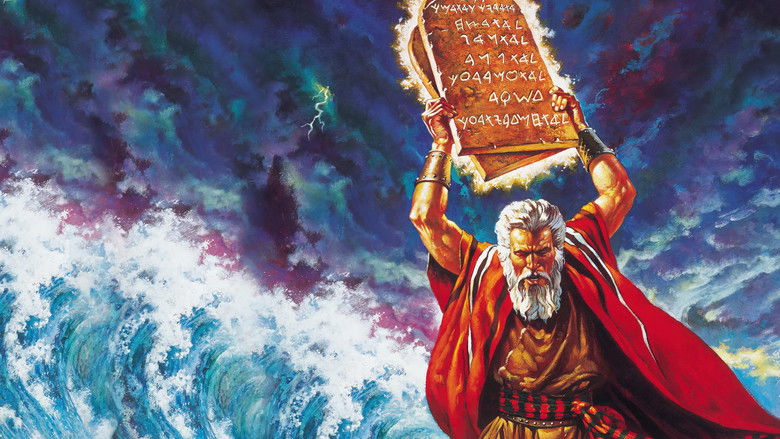
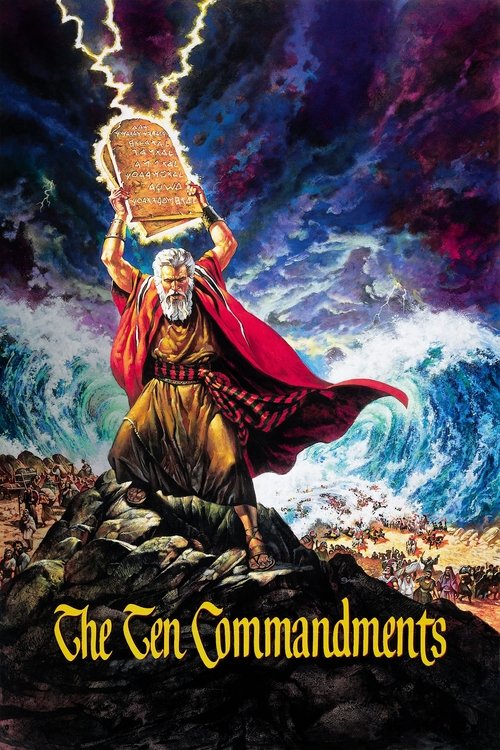
"The greatest event in motion picture history!"
The Ten Commandments - Symbolism & Philosophy
Symbols & Motifs
The Staff of Moses
It represents the transfer of power from earthly might to divine authority. Initially a shepherd's tool, it becomes the instrument of God's will, capable of turning into a cobra or parting the sea, surpassing the weapons of Pharaoh.
Moses uses it to confront Rameses, turn the Nile to blood, and part the Red Sea. It is a visual anchor for his authority.
The Burning Bush
A symbol of the divine presence that is powerful yet self-sustaining—it burns but is not consumed. It represents the awakening of Moses' spiritual consciousness and his direct commission by God.
Located on Mount Sinai, this visual effect marks the turning point where Moses ceases to be a shepherd and becomes a prophet.
The Red Sea
The ultimate barrier and the threshold of baptism. Passing through it symbolizes the death of the old life of slavery and the birth of a free people. It is the final severance from Egypt.
The parting sequence is the film's visual centerpiece, representing the impossible made possible through faith.
The Mud and Straw
These materials symbolize the degradation of human life into mere economic units. The struggle to make bricks without straw highlights the cruelty of a system that values production over humanity.
Used extensively in the first half of the film to depict the Hebrews' suffering in the brick pits of Goshen.
Philosophical Questions
Does freedom require submission to law?
The film argues that freedom without law is anarchy. Moses' goal is not just to break chains but to bring the people to Mount Sinai to receive the Law. The Golden Calf sequence shows that without moral structure, the newly freed slaves immediately degrade themselves, suggesting true liberty is found in voluntary obedience to a higher moral order.
Is destiny determined by birth or choice?
Moses is born a slave but raised a prince. The film explores whether his nobility comes from his royal upbringing or his Hebrew blood. Ultimately, it suggests that his greatness comes from his choice to sacrifice his privilege for justice, rejecting the determinism of caste and social station.
Core Meaning
At its heart, the film is a Cold War allegory framing the biblical narrative as a conflict between freedom under God and human tyranny. DeMille explicitly states in the prologue that the central question is whether men are the property of the state or free souls. The film posits that true liberty is not merely the absence of chains but the voluntary submission to a moral law higher than any earthly ruler.