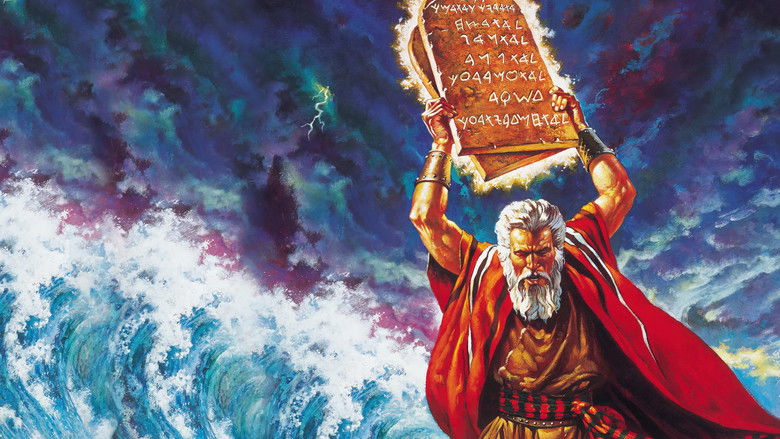
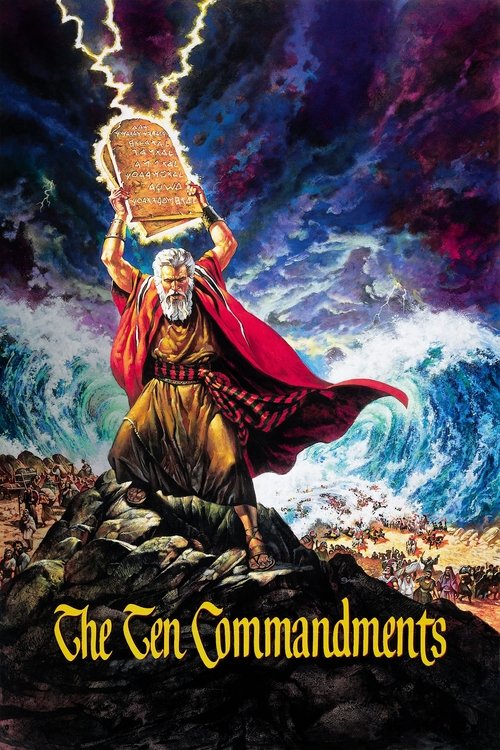
"The greatest event in motion picture history!"
Director: Cecil B. DeMille
Cast: Charlton Heston, Yul Brynner, Anne Baxter, Edward G. Robinson, Yvonne De Carlo
The Ten Commandments — Movie Quotes
Memorable Quotes
So let it be written, so let it be done.
Context
Rameses says this repeatedly when issuing decrees, most chillingly when ordering the death of the Hebrew firstborns.
Meaning
The ultimate assertion of absolute, dictatorial power. It signifies that the Pharaoh's word is law, requiring no debate or justification, contrasting sharply with God's law.
God made men. Men made slaves.
Context
Spoken by Joshua the stonecutter when defending his dignity against Egyptian overseers.
Meaning
A concise summary of the film's humanistic and theological message: freedom is the natural state of humanity, while bondage is an artificial human construct.
Let my people go!
Context
Moses delivers this message to Rameses in the royal court, initiating the cycle of plagues.
Meaning
The central demand of the Exodus. It is not a request but a divine command, establishing the conflict between God's will and Pharaoh's will.
His god... IS God.
Context
Spoken by a broken Rameses sitting on his throne after his army is drowned in the Red Sea.
Meaning
The final admission of defeat. The man who claimed to be a living god is forced to acknowledge the supremacy of the Hebrew God after losing everything.
Oh, Moses, Moses! You stubborn, splendid, adorable fool!
Context
Nefretiri says this while trying to seduce Moses back to her side before he leaves the palace.
Meaning
Highlights the romantic tragedy and Nefretiri's inability to understand Moses' spiritual transformation. She sees his mission as foolishness compared to the earthly power she offers.
Explore More About This Movie
Dive deeper into specific aspects of the movie with our detailed analysis pages