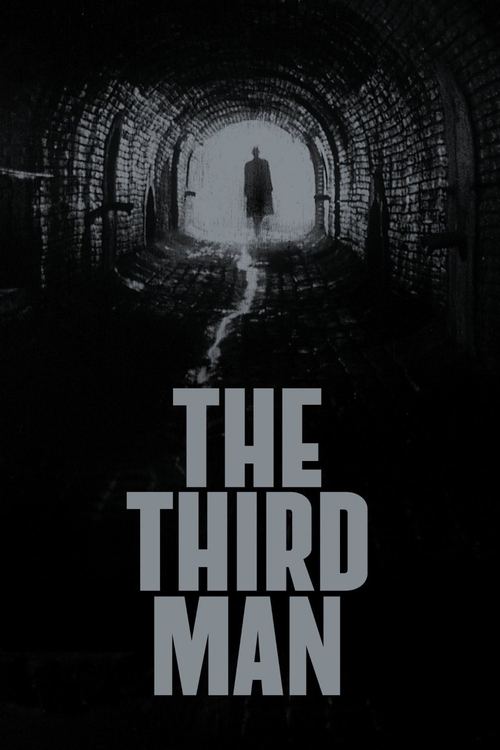
"Hunted by men ... Sought by WOMEN!"
The Third Man - Symbolism & Philosophy
Symbols & Motifs
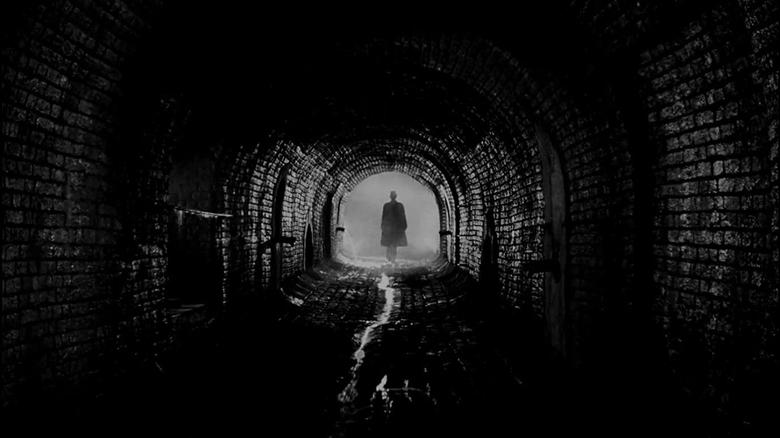
The Sewers of Vienna
The sewers symbolize the corrupt, hidden underworld of Vienna and the moral darkness of characters like Harry Lime. They represent a labyrinthine subconscious, a place where the city's filth—both literal and metaphorical—resides.
The sewers are the setting for the film's climactic chase sequence. Harry Lime uses this underground network to navigate the city and evade the authorities, physically placing him in the underbelly of society. His final confrontation and death in the sewers signifies that he is ultimately consumed by the corruption he embodied.
The Ferris Wheel (Wiener Riesenrad)
The Ferris wheel represents Harry Lime's god-like perspective and his complete detachment from humanity. From the top, people below are reduced to insignificant dots, making their lives and deaths meaningless to him. It symbolizes his sociopathic worldview and moral nihilism.
In one of the film's most iconic scenes, Harry and Holly meet on the Wiener Riesenrad. It is here that Harry delivers his famous "cuckoo clock" speech, articulating his amoral philosophy and attempting to justify his crimes by comparing the insignificant lives of his victims to mere dots on the ground.
Shadows and Light (Chiaroscuro)
The dramatic use of shadows and harsh light, a hallmark of German Expressionism, symbolizes the film's themes of moral ambiguity, hidden truths, and deception. Characters are often half-lit, visually representing their divided loyalties and moral compromises. Shadows conceal and reveal, creating a constant sense of unease and mystery.
Throughout the film, the visuals are dominated by deep shadows and stark contrasts. Harry Lime's iconic introduction shows him revealed from a dark doorway by a sudden flash of light. He is a creature of the shadows, and the expressionistic lighting makes the war-torn city a menacing, disorienting labyrinth.
Zither Music
Anton Karas's unique zither score represents the unsettling and off-kilter atmosphere of post-war Vienna. The jaunty yet haunting melody creates a sense of irony and dissonance, contrasting the grim reality of the city with a seemingly carefree tune. It became synonymous with the film and the character of Harry Lime himself.
The zither music is used throughout the film, most notably in the opening credits and as "The Harry Lime Theme." Its constant presence underscores the narrative's tension and moral ambiguity, becoming an unforgettable auditory signature for the film's unique world.
Philosophical Questions
Do traditional moral codes apply in a world shattered by chaos and war?
The film relentlessly explores this question through the character of Harry Lime. His infamous 'cuckoo clock' speech posits that great art and progress are born from conflict and terror, not from peaceful, 'moral' societies. He operates in a world where survival and profit are the only guiding principles. While the film ultimately condemns Harry's actions through Holly's final choice, it presents Harry's cynical philosophy as a seductive and powerful argument born from the rubble of post-war Europe, leaving the audience to grapple with the uncomfortable relationship between morality, chaos, and creation.
Is loyalty to a person more important than loyalty to a moral principle?
This is the central dilemma faced by Holly Martins. His entire journey is a conflict between his personal loyalty to his best friend, Harry, and the dawning moral horror at what Harry has done. Anna Schmidt embodies one answer to this question: her loyalty to Harry the man is absolute, regardless of his monstrous crimes. Holly, however, is ultimately swayed by Major Calloway's appeal to his conscience, choosing to betray his friend for the sake of faceless victims. The film's bleak ending, where Holly is left with nothing, offers no easy answer as to which choice was 'right,' suggesting that any decision in such a conflict results in profound loss.
Can one truly know another person?
Holly arrives in Vienna believing he knows Harry Lime better than anyone. The film's plot is a systematic dismantling of this belief. He discovers that his charming, roguish friend is, in fact, a sociopathic monster responsible for immense suffering. Anna's perspective further complicates this, as she acknowledges Harry's crimes but insists he is still the man she knew and loved. The film suggests that people are complex and contradictory, and that our understanding of others is often a projection of our own ideals and desires rather than an objective reality.
Core Meaning
"The Third Man" is a profound exploration of moral ambiguity and disillusionment in a world shattered by war. Director Carol Reed and writer Graham Greene present a cynical post-war landscape where clear lines between good and evil have dissolved. The film questions the nature of friendship, loyalty, and morality when confronted with harsh realities. It suggests that in a world of corruption and survival, naive idealism, as embodied by Holly Martins, is a dangerous and ultimately unsustainable virtue. The core message is a somber reflection on the loss of innocence and the difficult, often compromising, choices people must make in a broken world.