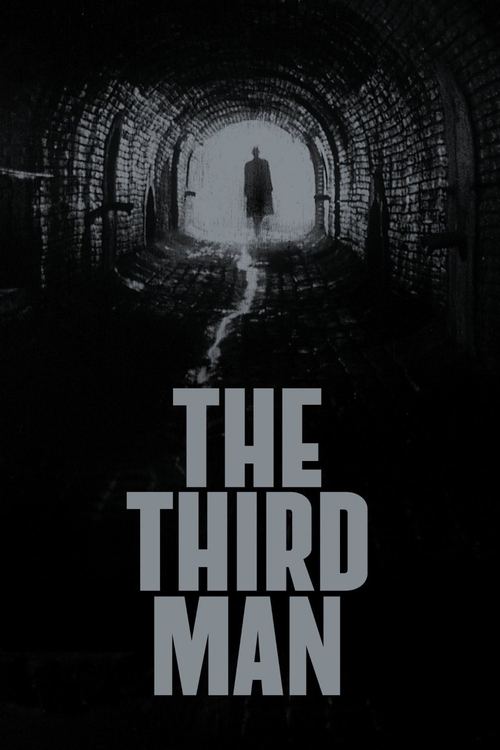
The Third Man
A noir-drenched descent into post-war Vienna's shadowy heart, where loyalty corrodes and innocence is a ghost haunting the cobblestone streets.
The Third Man

The Third Man

"Hunted by men ... Sought by WOMEN!"

31 August 1949 United Kingdom 105 min ⭐ 7.9 (2,003)
Director: Carol Reed
Cast: Joseph Cotten, Alida Valli, Trevor Howard, Orson Welles, Paul Hörbiger
Thriller Mystery
Moral Ambiguity Disillusionment and Loss of Innocence Friendship and Betrayal The Corrupting Influence of Post-War Chaos
Box Office: $1,226,098

Overview

"The Third Man" centers on Holly Martins, an American writer of pulp Westerns, who arrives in Allied-occupied Vienna at the invitation of his childhood friend, Harry Lime, who has offered him a job. However, upon his arrival, Martins is informed that Lime has been killed in a traffic accident. At the funeral, he meets British Royal Military Police officer Major Calloway, who suggests Lime was a criminal.

Dismissing this, Martins decides to stay and investigate his friend's death to clear his name. He soon discovers inconsistencies in the official account of the accident, particularly concerning a mysterious "third man" present at the scene. His investigation leads him into the city's corrupt underbelly and into the life of Lime's enigmatic girlfriend, Anna Schmidt. As Martins delves deeper, he is drawn into a web of intrigue, danger, and moral compromise that forces him to question his loyalty and everything he thought he knew about his best friend.
Core Meaning

"The Third Man" is a profound exploration of moral ambiguity and disillusionment in a world shattered by war. Director Carol Reed and writer Graham Greene present a cynical post-war landscape where clear lines between good and evil have dissolved. The film questions the nature of friendship, loyalty, and morality when confronted with harsh realities. It suggests that in a world of corruption and survival, naive idealism, as embodied by Holly Martins, is a dangerous and ultimately unsustainable virtue. The core message is a somber reflection on the loss of innocence and the difficult, often compromising, choices people must make in a broken world.

Thematic DNA

Moral Ambiguity 35%
Disillusionment and Loss of Innocence 30%
Friendship and Betrayal 25%
The Corrupting Influence of Post-War Chaos 10%

Moral Ambiguity

The film is steeped in moral ambiguity, challenging simplistic notions of right and wrong. Harry Lime, the charming but ruthless villain, operates on his own amoral code, justifying his horrific crimes with cynical logic. Holly Martins, the ostensible hero, begins as a naive idealist but is forced to make morally complex decisions, ultimately betraying his friend for the greater good. Anna's unwavering loyalty to the monstrous Lime, despite knowing the truth, further complicates the moral landscape, suggesting that love and affection often exist outside the bounds of conventional morality.

Disillusionment and Loss of Innocence

Set against the backdrop of a war-ravaged Vienna, the film captures the pervasive sense of disillusionment of the post-war era. Holly Martins arrives with a romantic, almost boyish, view of friendship and loyalty. His journey is one of painful disillusionment as he uncovers the monstrous truth about Harry Lime. This personal loss of innocence mirrors the broader societal collapse of pre-war ideals, depicting a world where cynicism has replaced hope.

Friendship and Betrayal

The friendship between Holly Martins and Harry Lime is the film's central pillar. Holly's initial quest is driven by a deep-seated loyalty to his friend, whom he remembers from their school days. The entire narrative is a test of this bond, culminating in the ultimate betrayal when Holly decides to help the police capture Harry. The film explores the complexities and limits of loyalty, questioning whether friendship can or should endure when it conflicts with fundamental human decency.

The Corrupting Influence of Post-War Chaos

The setting of Allied-occupied Vienna is not just a backdrop but a character in itself, representing a fractured, corrupt world. The division of the city among four powers creates a chaotic environment where black markets thrive and lawlessness is rampant. Harry Lime is a product of this environment, an opportunist who exploits the chaos for personal gain. The film suggests that such a morally bankrupt landscape inevitably breeds cynicism and corruption, tempting even ordinary people.

Character Analysis

Holly Martins

Joseph Cotten

Archetype: The Naive Hero
Key Trait: Idealistic

Motivation

Initially, Holly is motivated by a fierce loyalty to his childhood friend, Harry Lime, and a desire to clear his name. After witnessing the devastating consequences of Harry's crimes—specifically the sick children in the hospital—his motivation shifts to a sense of moral duty to stop him.

Character Arc

Holly begins as a naive and somewhat bumbling writer of cheap Westerns, possessing a black-and-white view of morality and an unwavering loyalty to his friend. As he is drawn deeper into Vienna's corrupt underworld, his idealism is shattered by the monstrous truth about Harry. He undergoes a significant transformation, forced to abandon his simplistic worldview and make a difficult moral choice, ultimately choosing to betray his friend and kill him. He ends the film a disillusioned and solitary figure.

Harry Lime

Orson Welles

Archetype: The Charismatic Villain / Anti-hero
Key Trait: Amoral

Motivation

Harry's motivations are purely self-interest, profit, and survival. He operates on a sociopathic level of detachment, viewing other people as insignificant "dots" whose lives are expendable for his own gain. As he tells Holly, he doesn't believe in the morality of governments or individuals, only in his own five-year plans.

Character Arc

Harry Lime has no developmental arc within the film; he is an unchanging force of charming amorality. He is revealed to have faked his own death to continue his black-market racketeering, specifically selling diluted penicillin which has caused the deaths of many, including children. Despite his monstrous actions, he remains witty, charismatic, and convinced of his own worldview. His character is fully formed and static, serving as the catalyst for Holly's transformation. He ends as he lived: a self-serving criminal who is ultimately cornered and killed.

Anna Schmidt

Alida Valli

Archetype: The Loyal Lover / Femme Fatale (subverted)
Key Trait: Loyal

Motivation

Anna's primary motivation is her deep and abiding love for Harry Lime. This love is the anchor of her existence in the chaotic world of post-war Vienna. She is also motivated by self-preservation, as she is a Czechoslovakian refugee with forged papers, making her vulnerable to deportation by the occupying forces.

Character Arc

Anna's arc is one of tragic, unwavering loyalty. She remains devoted to Harry Lime, even after learning the full extent of his crimes. She refuses to betray him and cannot transfer her affections to the more morally upright Holly. Her character defies the typical femme fatale archetype; she is not manipulative but rather steadfast in her love, however misplaced. The film ends with her pointedly ignoring Holly, demonstrating that her loyalty to Harry transcends even his death, leaving her isolated in her grief.

Major Calloway

Trevor Howard

Archetype: The Mentor / Pragmatist
Key Trait: Cynical

Motivation

Calloway is motivated by his duty as a police officer and a desire to bring a dangerous criminal, Harry Lime, to justice. He is driven by a professional, unemotional sense of right and wrong, and he wants to stop the suffering caused by Lime's penicillin racket.

Character Arc

Major Calloway is a cynical but professional British military police officer. He acts as a foil and a reluctant mentor to the naive Holly Martins. Initially, he is dismissive of Holly, seeing him as a nuisance. However, as Holly becomes more entangled in the case, Calloway develops a grudging respect for him. He represents the pragmatic, weary, but ultimately principled authority trying to impose order on a chaotic world. His character remains largely consistent, serving as the voice of harsh reality that guides Holly toward his difficult decision.

Symbols & Motifs

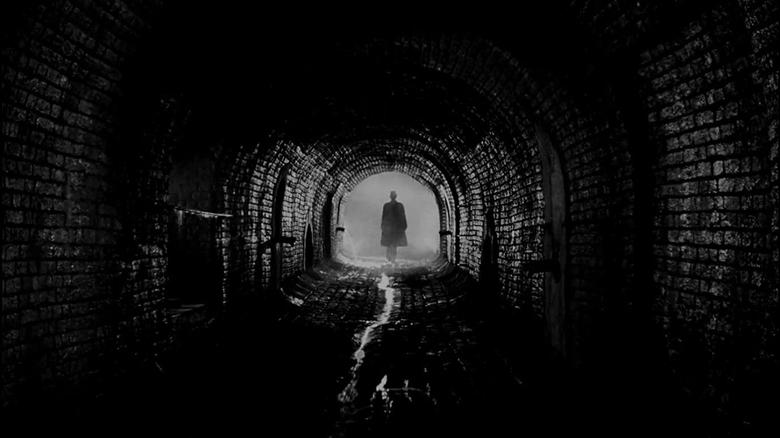
The Sewers of Vienna

Meaning:

The sewers symbolize the corrupt, hidden underworld of Vienna and the moral darkness of characters like Harry Lime. They represent a labyrinthine subconscious, a place where the city's filth—both literal and metaphorical—resides.

Context:

The sewers are the setting for the film's climactic chase sequence. Harry Lime uses this underground network to navigate the city and evade the authorities, physically placing him in the underbelly of society. His final confrontation and death in the sewers signifies that he is ultimately consumed by the corruption he embodied.

The Ferris Wheel (Wiener Riesenrad)

Meaning:

The Ferris wheel represents Harry Lime's god-like perspective and his complete detachment from humanity. From the top, people below are reduced to insignificant dots, making their lives and deaths meaningless to him. It symbolizes his sociopathic worldview and moral nihilism.

Context:

In one of the film's most iconic scenes, Harry and Holly meet on the Wiener Riesenrad. It is here that Harry delivers his famous "cuckoo clock" speech, articulating his amoral philosophy and attempting to justify his crimes by comparing the insignificant lives of his victims to mere dots on the ground.

Shadows and Light (Chiaroscuro)

Meaning:

The dramatic use of shadows and harsh light, a hallmark of German Expressionism, symbolizes the film's themes of moral ambiguity, hidden truths, and deception. Characters are often half-lit, visually representing their divided loyalties and moral compromises. Shadows conceal and reveal, creating a constant sense of unease and mystery.

Context:

Throughout the film, the visuals are dominated by deep shadows and stark contrasts. Harry Lime's iconic introduction shows him revealed from a dark doorway by a sudden flash of light. He is a creature of the shadows, and the expressionistic lighting makes the war-torn city a menacing, disorienting labyrinth.

Zither Music

Meaning:

Anton Karas's unique zither score represents the unsettling and off-kilter atmosphere of post-war Vienna. The jaunty yet haunting melody creates a sense of irony and dissonance, contrasting the grim reality of the city with a seemingly carefree tune. It became synonymous with the film and the character of Harry Lime himself.

Context:

The zither music is used throughout the film, most notably in the opening credits and as "The Harry Lime Theme." Its constant presence underscores the narrative's tension and moral ambiguity, becoming an unforgettable auditory signature for the film's unique world.

Memorable Quotes

In Italy, for 30 years under the Borgias, they had warfare, terror, murder, and bloodshed, but they produced Michelangelo, Leonardo da Vinci, and the Renaissance. In Switzerland, they had brotherly love. They had 500 years of democracy and peace, and what did that produce? The cuckoo clock.

— Harry Lime

Context:

Harry delivers this speech to Holly while they are on the Wiener Riesenrad (the giant Ferris wheel), looking down on the people below. He has just finished comparing the people to insignificant dots and is trying to persuade Holly to join his criminal enterprise.

Meaning:

This is Harry Lime's cynical justification for his amoral actions. He argues that chaos and conflict, while destructive, are the crucibles of great human achievement, whereas peace and stability lead to mediocrity. It's a powerful expression of his nihilistic worldview, dismissing conventional morality in favor of a self-serving philosophy. The line was famously ad-libbed by Orson Welles.

Nobody thinks in terms of human beings. Governments don't. Why should we? They talk about the people and the proletariat, I talk about the suckers and the mugs. It's the same thing. They have their five-year plans, so have I.

— Harry Lime

Context:

This line is spoken during the tense confrontation between Holly and Harry on the Ferris wheel. Harry is defending his actions and trying to pull Holly into his cynical way of thinking, dismissing Holly's moral objections as naive.

Meaning:

This quote encapsulates Harry's complete detachment from empathy and his equation of his own criminal racketeering with the impersonal, often brutal, policies of nation-states. It reveals his sociopathic belief that individual lives are meaningless in the grand scheme of power and profit, whether wielded by a government or a black marketeer like himself.

Death's at the bottom of everything, Martins. Leave death to the professionals.

— Major Calloway

Context:

Major Calloway says this to Holly early in the film in a bar, trying to persuade him to stop his investigation into Harry's death and return home. Calloway sees Holly as a naive outsider who is out of his depth.

Meaning:

This is a world-weary and cynical piece of advice from a man who deals with the grim realities of post-war Vienna on a daily basis. It serves as a warning to the amateur Holly Martins to stop meddling in dangerous affairs that are beyond his comprehension and control. It highlights the gulf between Holly's fictional world of cowboys and the very real, and deadly, world he has stumbled into.

Oh, I still do believe in God, old man. I believe in God and Mercy and all that. But the dead are happier dead. They don't miss much here, poor devils.

— Harry Lime

Context:

Spoken during the Ferris wheel scene after Holly, horrified by Harry's lack of remorse, reminds him, "You used to believe in God." Harry's response is a glib dismissal of the moral weight of his actions.

Meaning:

This is a chillingly ironic statement that further illustrates Harry's profound amorality. He pays lip service to religious belief while simultaneously justifying the deaths he has caused. By claiming the dead are better off, he absolves himself of any guilt, twisting faith into another tool for his self-serving nihilism.

Philosophical Questions

Do traditional moral codes apply in a world shattered by chaos and war?

The film relentlessly explores this question through the character of Harry Lime. His infamous 'cuckoo clock' speech posits that great art and progress are born from conflict and terror, not from peaceful, 'moral' societies. He operates in a world where survival and profit are the only guiding principles. While the film ultimately condemns Harry's actions through Holly's final choice, it presents Harry's cynical philosophy as a seductive and powerful argument born from the rubble of post-war Europe, leaving the audience to grapple with the uncomfortable relationship between morality, chaos, and creation.

Is loyalty to a person more important than loyalty to a moral principle?

This is the central dilemma faced by Holly Martins. His entire journey is a conflict between his personal loyalty to his best friend, Harry, and the dawning moral horror at what Harry has done. Anna Schmidt embodies one answer to this question: her loyalty to Harry the man is absolute, regardless of his monstrous crimes. Holly, however, is ultimately swayed by Major Calloway's appeal to his conscience, choosing to betray his friend for the sake of faceless victims. The film's bleak ending, where Holly is left with nothing, offers no easy answer as to which choice was 'right,' suggesting that any decision in such a conflict results in profound loss.

Can one truly know another person?

Holly arrives in Vienna believing he knows Harry Lime better than anyone. The film's plot is a systematic dismantling of this belief. He discovers that his charming, roguish friend is, in fact, a sociopathic monster responsible for immense suffering. Anna's perspective further complicates this, as she acknowledges Harry's crimes but insists he is still the man she knew and loved. The film suggests that people are complex and contradictory, and that our understanding of others is often a projection of our own ideals and desires rather than an objective reality.

Alternative Interpretations

While the primary reading of the film focuses on Holly Martins' moral awakening and disillusionment, alternative interpretations offer different perspectives. One view posits that the film is a critique of American naivete and interventionism in post-war Europe. Holly, a writer of simplistic good-versus-evil Westerns, blunders through the complex, cynical world of Vienna, demonstrating a uniquely American inability to grasp the moral shades of gray that define the old world's experience.

Another interpretation focuses on the ending. While many see Anna's rejection of Holly as a testament to her unwavering love for Harry, some critics view it as a punishment for Holly's betrayal of friendship. In this reading, Holly's decision to side with the authorities over his friend is seen not as a moral triumph but as a violation of a more personal, sacred code of loyalty. His reward is to be left utterly alone, having lost both his friend and the woman he loves.

A less common interpretation reads the relationship between Holly and Harry through a homoerotic lens. The intensity of Holly's devotion, his quest to protect Harry's memory, and the ultimate climax of their relationship—a chase through the sewers ending with Holly killing the man he once idolized—can be viewed as a tragic, sublimated love story. This adds another layer to Anna's role as a romantic rival and the profound sense of loss that permeates the film.

Cultural Impact

"The Third Man" is widely regarded as one of the greatest films ever made and a pinnacle of the film noir genre. Its release in 1949 had a significant and lasting impact on cinema. The film's visual style, heavily influenced by German Expressionism with its use of stark shadows, high-contrast black-and-white cinematography, and unsettling Dutch angles, set a new standard for atmospheric storytelling and has been emulated by countless filmmakers since.

Anton Karas's zither score was a cultural phenomenon. The main title, "The Third Man Theme," became an international bestseller, topping music charts in 1950 and popularizing the zither worldwide. This success pioneered the trend of releasing film themes as standalone singles. The film also solidified Orson Welles's status as a cinematic icon, with his brief but unforgettable performance as the charismatic villain Harry Lime often cited as one of the best in history. The character was so popular he was later spun off into a radio and television series.

Critically, the film was a triumph, winning the Grand Prix at the Cannes Film Festival and an Academy Award for Robert Krasker's cinematography. The British Film Institute voted it the greatest British film of all time in 1999. The film's themes of moral ambiguity, post-war disillusionment, and American naivete abroad resonated strongly with audiences at the dawn of the Cold War and continue to be relevant. Its haunting, cynical tone and unforgettable ending, which defied Hollywood conventions, have left an indelible mark on popular culture and the art of filmmaking.

Audience Reception

Upon its release, "The Third Man" was met with widespread critical acclaim and was a commercial success. Audiences were captivated by its atmospheric cinematography, the suspenseful plot, and the charismatic, albeit brief, performance by Orson Welles as Harry Lime. The most praised aspect was undoubtedly the film's unique and haunting atmosphere, created by the on-location shooting in war-ravaged Vienna, Robert Krasker's expressionistic camerawork, and Anton Karas's unforgettable zither score. The "Harry Lime Theme" became a worldwide sensation, topping music charts and contributing significantly to the film's popularity.

Points of criticism were few, but some viewers at the time were disoriented by the pervasive use of Dutch angles, finding them stylistically excessive. However, this stylistic choice is now widely celebrated as integral to the film's unsettling mood. The film's deeply cynical tone and its unconventional, unhappy ending were also noted, standing in stark contrast to the more optimistic films often produced by Hollywood. This very bleakness, however, is what many viewers and critics have praised over the years, contributing to the film's enduring legacy as a masterpiece of cinema.

Interesting Facts

  • The film's iconic zither score was performed by Anton Karas, a local musician whom director Carol Reed discovered playing in a Vienna wine garden.
  • Orson Welles, despite his character being the focal point of the film, is only on screen for a small amount of time.
  • Welles wrote Harry Lime's famous 'cuckoo clock' speech himself; it was not in Graham Greene's original script.
  • Graham Greene wrote the story first as a novella to serve as a treatment for the screenplay, which was published after the film's release.
  • The final scene, where Anna walks past Holly without a word, was insisted upon by director Carol Reed. Writer Graham Greene had initially envisioned a happier, more conventional ending where the two get together.
  • Much of the film was shot on location in the war-torn streets and sewers of Vienna, which adds to its authentic, atmospheric quality.
  • Due to Orson Welles's occasional absences from the set, director Carol Reed had to use a body double and even shot some close-ups of his own hands (such as when they reach through the sewer grating).
  • The film's distinctive look, characterized by Dutch angles and expressionistic lighting, was so prevalent that Hollywood director William Wyler reportedly sent Carol Reed a spirit level with a note saying, 'Carol, next time you make a picture, just put this on top of the camera, will you?'.

⚠️ Spoiler Analysis

Click to reveal detailed analysis with spoilers

Frequently Asked Questions

Explore More About This Movie

Dive deeper into specific aspects of the movie with our detailed analysis pages

Comments (0)

Leave a comment

No comments yet. Be the first to share your thoughts!