"You are about to enter another dimension."
The Twilight Zone - Symbolism & Philosophy
Symbols & Motifs
The Doorway/Window
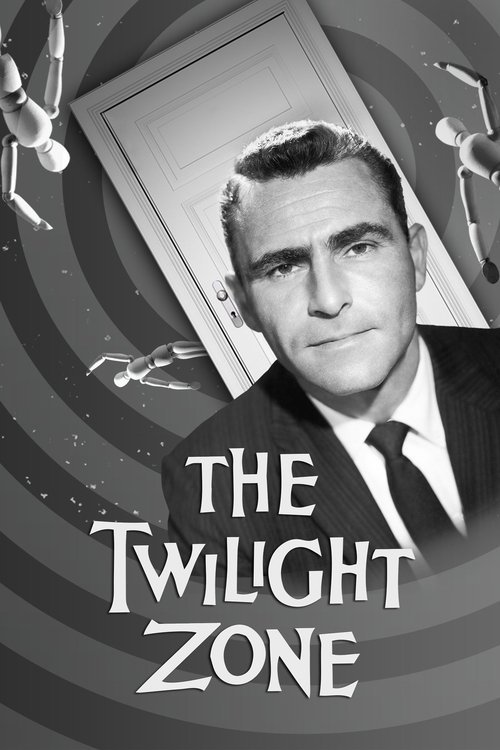
Symbolizes the entrance into another dimension or a different state of consciousness. It represents the thin veil between the known and the unknown, the ordinary and the fantastical. The iconic opening sequence features a floating door, cementing this as the primary gateway into the titular zone.
This motif appears in various forms throughout the series. In the opening credits, it's a literal door floating in space. In episodes like "Little Girl Lost," a portal to another dimension opens in a child's bedroom wall. Windows often serve a similar function, such as the airplane window in "Nightmare at 20,000 Feet," through which a character sees a terrifying reality no one else can.
Masks
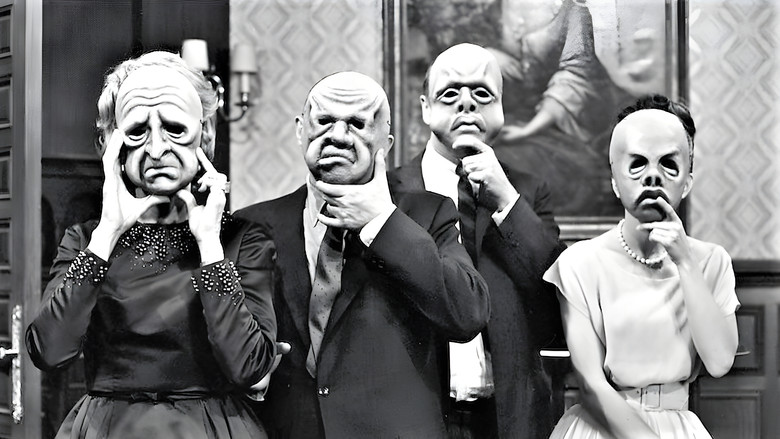
Masks represent the hidden, true nature of individuals and the superficiality of societal standards. They can either conceal a monstrous interior or be forced upon someone to hide a truth that society deems unacceptable.
In "The Masks," a wealthy patriarch forces his greedy heirs to wear masks that reflect their vile inner selves, which eventually become their actual faces. In "Eye of the Beholder," the protagonist's face is wrapped in bandages (a type of mask) for most of the episode, hiding her from a society where conventional beauty is considered grotesque.
Dolls and Mannequins
These figures symbolize the loss of humanity, control, and free will. They often represent a sinister or uncanny version of human life, blurring the line between the animate and the inanimate and tapping into deep-seated fears of being controlled or replaced.
In "Living Doll," the seemingly innocent Talky Tina doll becomes a malevolent entity that terrorizes a cruel stepfather. In "The After Hours," a woman discovers she is a mannequin who is only allowed to live among humans for a limited time before returning to her inanimate state.
The Broken Glasses
This powerful symbol from the episode "Time Enough at Last" represents the ultimate cosmic irony and the fragility of human happiness. It signifies that even when one's greatest desire is fulfilled, a simple accident or twist of fate can render it meaningless.
Used memorably in "Time Enough at Last," where bibliophile Henry Bemis is the sole survivor of a nuclear holocaust with access to all the books he could ever want. His moment of triumph is shattered when his essential reading glasses fall and break.
Philosophical Questions
What defines a person?
The series repeatedly probes the essence of personhood. In "The Lonely," a convicted man on an asteroid is given a female android, Alicia, for companionship. He initially rejects her as a machine but eventually falls in love, treating her as human. The episode raises questions about whether consciousness, emotion, and personhood are dependent on biological origins or can be ascribed to a sufficiently advanced machine. When Alicia is cruelly destroyed, revealing her mechanical nature, the man's grief is real, forcing the audience to ask if his perception of her as a person was enough to make it so. Other episodes like "I Sing the Body Electric" also explore the capacity for love and humanity in artificial beings.
Is humanity's progress leading to its salvation or destruction?
The Twilight Zone often displays a deep skepticism towards technology and the notion of inevitable progress. Far from being a savior, technology in the series is frequently a source of dehumanization, alienation, or destruction. In "The Obsolete Man," a dystopian state declares a librarian obsolete because books have been banned. In "To Serve Man," advanced alien technology is a Trojan horse for humanity's doom. The series consistently warns that scientific advancement without a corresponding growth in wisdom and empathy can lead to catastrophic consequences, questioning whether humanity's tools will ultimately outpace its morality.
What is the nature of good and evil?
The series functions as a collection of morality plays, examining the eternal struggle between good and evil. However, it rarely presents this as a simple binary. Evil is often mundane, born from fear, prejudice, and selfishness, as seen in "The Monsters Are Due on Maple Street." Goodness is often found in acts of quiet empathy or sacrifice. The show explores whether evil is an external force or an inherent part of human nature. Episodes like "The Howling Man" depict evil as a literal entity that can be captured and released, while others suggest that the greatest evils are those we create ourselves.
Core Meaning
The core meaning of The Twilight Zone is a profound and enduring exploration of the human condition, stripped down to its most essential fears, desires, and moral failings. Creator Rod Serling used the guise of science fiction and fantasy to craft modern-day parables, holding up a mirror to society's anxieties about conformity, nuclear annihilation, prejudice, and the dehumanizing potential of technology. The series posits that the greatest monsters are not aliens from another planet, but the darkness that resides within ordinary people—our paranoia, hatred, and ignorance. Ultimately, the 'Twilight Zone' is not just another dimension, but a space within the human mind itself, where reason gives way to fear and morality is put to the ultimate test. It serves as a timeless warning that the capacity for both heaven and hell lies within ourselves and our choices.