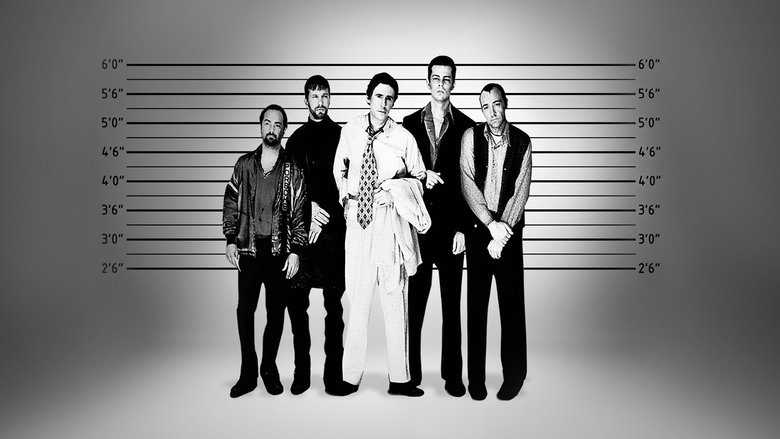
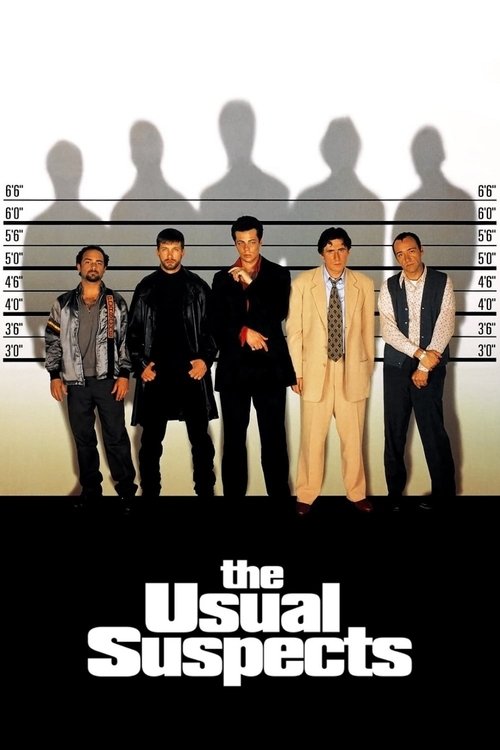
"Five criminals. One line up. No coincidence."
The Usual Suspects - Symbolism & Philosophy
Symbols & Motifs
The Bulletin Board
The bulletin board in the cluttered police office symbolizes the fabricated nature of Verbal's story and the deceptive construction of truth. It is the source material for the names and places in his narrative, representing how a convincing lie can be built from mundane, everyday details hidden in plain sight.
In the film's final moments, Agent Kujan looks at the bulletin board and realizes that names like "Kobayashi" and locations from Verbal's tale are pulled directly from the papers pinned to it. This is the moment the entire deception unravels for him and the audience.
The Gold Lighter and Watch
The gold lighter and watch are symbols of Keyser Söze's true identity and his hidden power. They are personal effects returned to Verbal at the end of his interrogation, objects that don't fit the persona of a weak, small-time crook. They represent the sophisticated, powerful man hiding beneath the façade.
As Verbal leaves the police station, he collects his personal items, including a distinctive gold lighter and a gold watch. Moments later, as he walks away, he uses the lighter, and a police fax arrives with a sketch of Söze holding an identical lighter. This confirms his identity for the audience.
The Shattered Coffee Mug
The coffee mug, which Kujan drops and shatters, symbolizes his shattered perception of the truth and the complete collapse of his carefully constructed theory. The name on the bottom of the mug, "Kobayashi," is the final clue that breaks his confidence and reveals the extent of Verbal's manipulation.
As the realization dawns on Kujan that Verbal's story was a lie, his shock is so profound that he drops his coffee mug, which shatters on the floor. The camera focuses on the brand name on the bottom of the broken pieces—Kobayashi—confirming it was just another name pulled from the room.
Philosophical Questions
What is the nature of truth in a world shaped by narrative?
The film fundamentally challenges the audience's ability to discern truth. Verbal Kint's entire testimony is a fabrication, yet for Agent Kujan and the viewers, it functions as reality for most of the film. It raises the question of whether truth is an objective fact or simply the most convincing story. If a lie is told well enough and achieves its purpose, does its falsehood even matter? The film suggests that perception can be more powerful than reality, and the person who controls the narrative controls the truth.
Can evil truly be comprehended, or is it a force that operates beyond our understanding?
Keyser Söze is presented as a mythic, almost supernatural figure of evil. The stories of him murdering his own family just to prove a point elevate him from a mere criminal to a symbol of pure, unadulterated ruthlessness. The film questions whether such evil can be rationalized or understood by conventional logic. Kujan's failure stems from his attempt to apply logical police work to a character who operates by a completely different, more terrifying set of rules. The famous quote about the Devil suggests that the most profound evil is that which we fail to even recognize.
Core Meaning
The core meaning of "The Usual Suspects" revolves around the immense power of narrative and perception. It explores how a well-told story, regardless of its truthfulness, can shape reality and manipulate those who hear it. The film posits that the idea of a person, the myth built around them, can be more powerful and terrifying than the person themselves. It delves into the nature of evil and identity, suggesting that the greatest trick the devil ever pulled was convincing the world he didn't exist, a metaphor for how true evil can operate unseen, cloaked in an unassuming facade. Ultimately, the film is a masterclass in deception, forcing the audience to question everything they have seen and heard, and highlighting the unreliability of perception.