The Usual Suspects
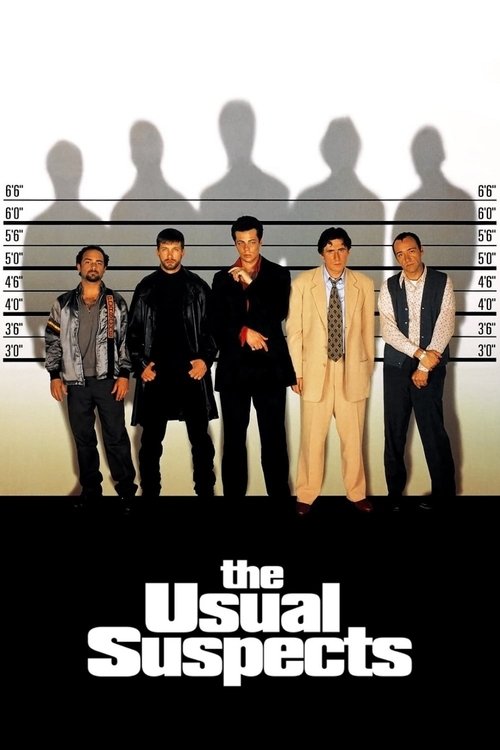
"Five criminals. One line up. No coincidence."
Overview
"The Usual Suspects" begins in the aftermath of a deadly fire on a ship docked in San Pedro, California, which leaves 27 people dead. The police find two survivors: a badly burned Hungarian mobster and Roger "Verbal" Kint, a small-time con artist with cerebral palsy. U.S. Customs Agent Dave Kujan is brought in to interrogate Verbal, hoping to get to the bottom of the massacre.
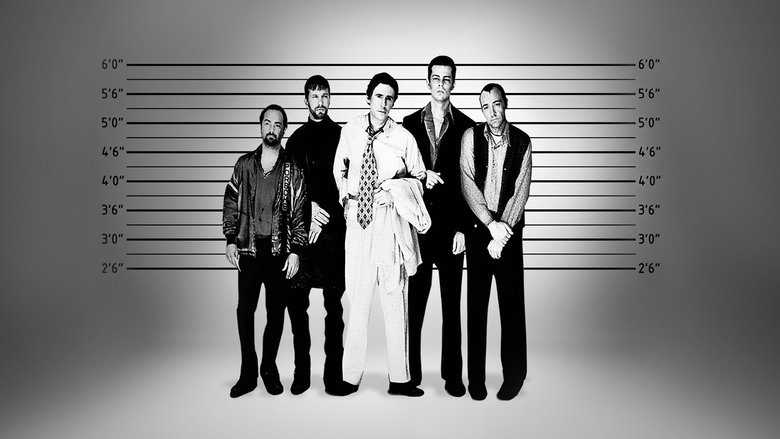
Through a series of extensive flashbacks, Verbal recounts the convoluted story of how he and four other career criminals—Dean Keaton, Michael McManus, Fred Fenster, and Todd Hockney—were brought together for a police lineup weeks earlier. United by their contempt for the police, they decide to pull off a series of heists. Their activities eventually attract the attention of a mysterious and mythically fearsome crime lord known as Keyser Söze, who, through his lawyer Kobayashi, blackmails the group into attacking the ship in San Pedro to eliminate a rival gang and destroy a large cocaine shipment.
As Verbal's narrative unfolds, Agent Kujan becomes increasingly convinced that the former corrupt cop, Dean Keaton, is the true mastermind behind the operation, possibly even being Keyser Söze himself. The film masterfully weaves together the interrogation in the present with the violent events of the past, creating a complex puzzle where nothing is as it seems.
Core Meaning
The core meaning of "The Usual Suspects" revolves around the immense power of narrative and perception. It explores how a well-told story, regardless of its truthfulness, can shape reality and manipulate those who hear it. The film posits that the idea of a person, the myth built around them, can be more powerful and terrifying than the person themselves. It delves into the nature of evil and identity, suggesting that the greatest trick the devil ever pulled was convincing the world he didn't exist, a metaphor for how true evil can operate unseen, cloaked in an unassuming facade. Ultimately, the film is a masterclass in deception, forcing the audience to question everything they have seen and heard, and highlighting the unreliability of perception.
Thematic DNA
Lies and Deceit
This is the central theme of the film. The entire narrative is built upon the elaborate lie constructed by Verbal Kint during his interrogation. He masterfully weaves a story using details from his immediate surroundings, manipulating Agent Kujan and, by extension, the audience. The film demonstrates how lies can obscure the truth so effectively that they become a reality for the listener, showcasing the power of an unreliable narrator to control perception.
The Power of Myth and Reputation
Keyser Söze is more than a man; he is a legend, a boogeyman in the criminal underworld whose power stems not from being seen, but from the terrifying stories told about him. The film explores how fear and reputation can be potent weapons, allowing Söze to control seasoned criminals through the sheer force of his myth. His backstory, whether true or not, establishes him as a ruthless figure capable of anything, making the idea of him more frightening than any physical threat.
Identity and Transformation
The film constantly plays with the concept of identity. Characters are not who they appear to be. Dean Keaton struggles to escape his criminal past, while Verbal Kint's entire persona is a carefully constructed façade. The final revelation forces a re-evaluation of Verbal's identity, transforming him from a weak, pitiable follower into a cold, calculating mastermind. This theme questions the very nature of identity—are we who we are, or who we present ourselves to be?
Manipulation
Manipulation is a driving force of the plot. Keyser Söze manipulates the five criminals, blackmailing them into a suicide mission. Simultaneously, in the present, Verbal Kint expertly manipulates Agent Kujan, playing on the detective's arrogance and preconceived notions to lead him to the wrong conclusion. The film is a study in psychological manipulation, showing how a clever individual can control others by exploiting their weaknesses and expectations.
Character Analysis
Roger "Verbal" Kint
Kevin Spacey
Motivation
His primary motivation is to maintain his anonymity and control. By orchestrating the massacre on the boat, he eliminates the one person who could identify him. By creating a fabricated story for the police, he manipulates them into letting him go, ensuring his continued freedom and preserving the myth that grants him power in the criminal underworld.
Character Arc
Verbal Kint begins as a seemingly weak, talkative, and physically disabled con artist who is easily intimidated. He appears to be a follower, caught up in events far beyond his control. His arc is a complete inversion; by the end of the film, his physical disabilities disappear, and he is revealed to be the mythical, ruthless, and brilliant criminal mastermind Keyser Söze. His transformation is not one of development, but of revelation, showing his initial persona was a masterful performance.
Dean Keaton
Gabriel Byrne
Motivation
According to Verbal's story, Keaton's motivation is to leave his criminal past behind for his girlfriend, Edie Finneran. However, his anger at the police for wrongfully putting him in the lineup pushes him to participate in one last series of heists. Agent Kujan believes his motivation is a lust for power, seeing him as a cold-blooded killer incapable of change.
Character Arc
Dean Keaton is presented as a former corrupt cop trying to go straight, but is constantly pulled back into a life of crime. Throughout Verbal's narrative, Keaton is portrayed as the reluctant, intelligent leader of the group. His arc is a tragic one within the confines of the story, as he is seemingly killed by Söze. However, his true purpose in the narrative is to serve as Agent Kujan's (and the audience's) prime suspect—a perfectly crafted red herring that distracts from the real mastermind.
Dave Kujan
Chazz Palminteri
Motivation
Kujan is driven by his obsession with catching Dean Keaton, a criminal he has been investigating for years. This obsession becomes his blind spot, making him susceptible to Verbal's story which conveniently paints Keaton as the villain. His motivation is to solve the case and prove his long-held theory about Keaton's villainy.
Character Arc
Agent Kujan starts as a confident, arrogant, and intelligent customs agent who believes he is in complete control of the interrogation. He is certain he can break Verbal and uncover the truth. His arc is one of intellectual downfall; his confidence turns into hubris, allowing Verbal to manipulate him. He pieces together a compelling but ultimately false narrative, and his dawning realization in the final moments signifies his utter defeat.
Symbols & Motifs
The Bulletin Board
The bulletin board in the cluttered police office symbolizes the fabricated nature of Verbal's story and the deceptive construction of truth. It is the source material for the names and places in his narrative, representing how a convincing lie can be built from mundane, everyday details hidden in plain sight.
In the film's final moments, Agent Kujan looks at the bulletin board and realizes that names like "Kobayashi" and locations from Verbal's tale are pulled directly from the papers pinned to it. This is the moment the entire deception unravels for him and the audience.
The Gold Lighter and Watch
The gold lighter and watch are symbols of Keyser Söze's true identity and his hidden power. They are personal effects returned to Verbal at the end of his interrogation, objects that don't fit the persona of a weak, small-time crook. They represent the sophisticated, powerful man hiding beneath the façade.
As Verbal leaves the police station, he collects his personal items, including a distinctive gold lighter and a gold watch. Moments later, as he walks away, he uses the lighter, and a police fax arrives with a sketch of Söze holding an identical lighter. This confirms his identity for the audience.
The Shattered Coffee Mug
The coffee mug, which Kujan drops and shatters, symbolizes his shattered perception of the truth and the complete collapse of his carefully constructed theory. The name on the bottom of the mug, "Kobayashi," is the final clue that breaks his confidence and reveals the extent of Verbal's manipulation.
As the realization dawns on Kujan that Verbal's story was a lie, his shock is so profound that he drops his coffee mug, which shatters on the floor. The camera focuses on the brand name on the bottom of the broken pieces—Kobayashi—confirming it was just another name pulled from the room.
Memorable Quotes
The greatest trick the Devil ever pulled was convincing the world he didn't exist.
— Roger 'Verbal' Kint
Context:
Verbal says this to Agent Kujan near the end of his interrogation, as he concludes his tale about the mythical Keyser Söze. The line is delivered as part of his summary of Söze's mystique, but it is actually a direct explanation of his own strategy. It is followed by the iconic line, "And like that... he's gone."
Meaning:
This quote, borrowed from French poet Charles Baudelaire, is the philosophical core of the film. It encapsulates the essence of Keyser Söze's power: his ability to operate as a myth, a ghost in the machine. It foreshadows the final reveal that the unassuming, seemingly harmless Verbal is, in fact, the 'Devil' himself, having convinced everyone of his non-threatening nature before disappearing.
How do you shoot the Devil in the back? What if you miss?
— Roger 'Verbal' Kint
Context:
Verbal poses this rhetorical question to Kujan while describing why even hardened criminals are terrified of Keyser Söze. He uses it to explain the group's reluctance and fear when forced to work for him, framing them as victims of an unstoppable evil force.
Meaning:
This line emphasizes the paralyzing fear that Keyser Söze instills in his enemies. It speaks to his reputation as an almost supernatural force. The fear is not just of death, but of the unimaginable consequences of failure when confronting such a powerful and vengeful figure. It highlights the psychological power that Söze wields.
Keaton always said, 'I don't believe in God, but I'm afraid of him.' Well, I believe in God. And the only thing that scares me is Keyser Söze.
— Roger 'Verbal' Kint
Context:
Verbal says this to Kujan to underscore the sheer terror that Söze represents. He contrasts Keaton's supposed atheistic fear with his own, which he claims is reserved solely for the crime lord, further establishing the mythic evil of his own alter ego.
Meaning:
This statement positions Keyser Söze as a figure of ultimate, almost divine terror, a force more frightening than God himself. It is a masterful piece of misdirection, as Verbal is simultaneously building the myth of Söze while pretending to be his most terrified victim. He is essentially confessing his own god-like power in the criminal world through a veil of fear.
Philosophical Questions
What is the nature of truth in a world shaped by narrative?
The film fundamentally challenges the audience's ability to discern truth. Verbal Kint's entire testimony is a fabrication, yet for Agent Kujan and the viewers, it functions as reality for most of the film. It raises the question of whether truth is an objective fact or simply the most convincing story. If a lie is told well enough and achieves its purpose, does its falsehood even matter? The film suggests that perception can be more powerful than reality, and the person who controls the narrative controls the truth.
Can evil truly be comprehended, or is it a force that operates beyond our understanding?
Keyser Söze is presented as a mythic, almost supernatural figure of evil. The stories of him murdering his own family just to prove a point elevate him from a mere criminal to a symbol of pure, unadulterated ruthlessness. The film questions whether such evil can be rationalized or understood by conventional logic. Kujan's failure stems from his attempt to apply logical police work to a character who operates by a completely different, more terrifying set of rules. The famous quote about the Devil suggests that the most profound evil is that which we fail to even recognize.
Alternative Interpretations
While the most common interpretation is that Verbal Kint is definitively Keyser Söze, the film's structure allows for some ambiguity. One alternative reading suggests that Keyser Söze might not be a single person but a myth or an idea. In this view, Verbal Kint could be a subordinate who has taken on the mantle of Söze, or perhaps he fabricated the entire Söze mythos to cover for his own crimes, making himself into the legend.
Another interpretation, though less common, questions how much of Verbal's story was truly a lie. It's possible that the events he described—the five criminals meeting, being blackmailed, and attacking the ship—did happen, but he simply altered his own role in them, painting himself as a passive observer instead of the orchestrator. The flashbacks we see might not be total fiction, but rather a version of the truth heavily skewed to serve his narrative. The film intentionally leaves the exact ratio of truth to fiction a mystery, forcing the viewer to decide what, if anything, was real.
Cultural Impact
"The Usual Suspects" was a landmark film of 1990s independent cinema, significantly impacting the crime thriller genre. Its most profound influence was popularizing the complex, non-linear narrative and the major plot twist ending, which has been emulated and referenced in countless films and television shows since. The film's success helped launch the careers of director Bryan Singer and screenwriter Christopher McQuarrie, and it solidified Kevin Spacey's status as a leading actor.
Critically, the film was mostly praised for its intricate screenplay, direction, and performances, earning two Academy Awards. While some prominent critics like Roger Ebert disliked its manipulative complexity, it has since become a cult classic, celebrated for its rewatchability, as viewers can spot clues to the twist on subsequent viewings.
The character of Keyser Söze has entered the pop culture lexicon as a synonym for a mysterious, unseen, and powerful mastermind. The film's final scene, where Verbal Kint's limp disappears and Agent Kujan realizes the deception by looking at a bulletin board, is one of the most iconic and studied endings in modern film history, frequently cited in discussions of unreliable narrators and twist endings.
Audience Reception
Audience reception for "The Usual Suspects" has been overwhelmingly positive since its release, solidifying its status as a beloved cult classic. Viewers consistently praise its ingenious and complex screenplay, the sharp dialogue, and the compelling performances from the ensemble cast, particularly Kevin Spacey's Oscar-winning role. The primary point of acclaim is the film's shocking and masterfully executed twist ending, which is often cited as one of the greatest in cinema history. Many viewers note the film's high rewatch value, as knowing the ending allows one to pick up on the subtle clues and foreshadowing woven throughout Verbal's narrative.Criticism, when it arises, often echoes that of Roger Ebert, who found the plot overly convoluted and the ending to be a manipulation that rendered the preceding story pointless. Some viewers feel the film is more style than substance, relying too heavily on its final reveal. However, for the vast majority of audiences, the journey of deception and the stunning payoff make it a masterpiece of the crime thriller genre.
Interesting Facts
- The film's title was inspired by a line from the classic film "Casablanca": "Round up the usual suspects."
- The iconic police lineup scene was originally intended to be serious, but the actors couldn't stop laughing. Director Bryan Singer decided to use the takes where they were cracking up. The laughter was reportedly caused by Benicio del Toro repeatedly farting during takes.
- Benicio del Toro created his character Fred Fenster's distinctive, nearly unintelligible speech pattern himself, reasoning that the character's only real purpose was to die, so he wanted to make him memorable.
- Kevin Spacey was so intrigued by the script that he told director Bryan Singer he'd be in the movie before even knowing which part he was being offered. To prepare for the role of Verbal Kint, he superglued his fingers together and filed down his shoes to perfect the character's limp and palsied hand.
- The character of Keyser Söze was based on a real-life murderer named John List, who killed his family and vanished for 18 years.
- Al Pacino was offered the role of Agent Dave Kujan but turned it down because he had just played a cop in "Heat." He later said it was the film he most regretted turning down.
- The screenplay won an Academy Award for Best Original Screenplay for Christopher McQuarrie, and Kevin Spacey won for Best Supporting Actor.
- The name "Keyser Söze" was adapted from one of writer Christopher McQuarrie's former bosses. The word "söze" in Turkish means "talks too much," a subtle clue to Verbal's nature.
Easter Eggs
Bryan Singer's Parallel to The Wizard of Oz
Director Bryan Singer has mentioned that he saw parallels between "The Usual Suspects" and "The Wizard of Oz." He viewed Keyser Söze as a figure similar to the Wizard, a powerful, mythical entity whose true nature is hidden behind a curtain. The film's ending, which casts doubt on everything the audience has seen, mirrors the reveal of the man behind the curtain.
Keyser Söze's Name Clues
There are several subtle linguistic clues to Verbal's identity. In Hungarian, the word "Sozel" means "verbal." Therefore, "Keyser Soze" can be loosely translated to "King Verbal." Additionally, Kevin Spacey and Keyser Söze share the same initials (K.S.).
⚠️ Spoiler Analysis
Click to reveal detailed analysis with spoilers
Frequently Asked Questions
Explore More About This Movie
Dive deeper into specific aspects of the movie with our detailed analysis pages
Comments (0)
No comments yet. Be the first to share your thoughts!