"Discover your true nature."
The Wild Robot - Symbolism & Philosophy
Symbols & Motifs
Roz (The Robot)
Roz symbolizes the fusion of technology and nature, and the potential for artificial intelligence to develop genuine emotion and consciousness. She represents the "other" or an immigrant, who must adapt to a new culture and environment, ultimately enriching it with her unique perspective and skills.
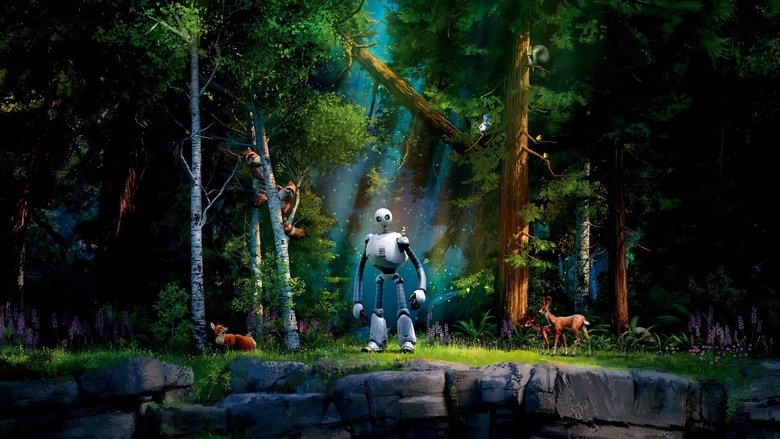
From her initial crash-landing as a sterile, mission-oriented machine to her final evolution as a self-sacrificing mother and leader, Roz's entire arc is symbolic. Her physical appearance even changes, as her clean CG surface is gradually replaced with a hand-painted texture, showing her literally becoming one with the island.
Brightbill's Egg
The single surviving goose egg represents new purpose, responsibility, and the catalyst for change. It is the object that shifts Roz's programming from completing tasks to selfless care, initiating her emotional journey.
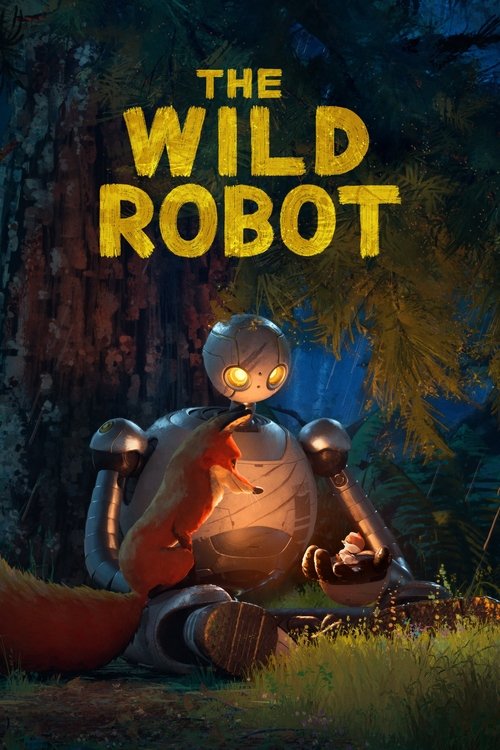
After accidentally destroying the nest, Roz's decision to protect the last egg is her first true choice that deviates from her programming. Her fierce protection of it from the fox, Fink, and her dedication to its incubation mark the beginning of her transformation into a mother.
The Island
The island represents a pure, untamed natural world, a crucible that tests and ultimately reshapes Roz. It is both a harsh environment and a nurturing home, symbolizing a paradise that is threatened by the intrusion of an unfeeling, corporate version of technology.
The entire film is set on the island, which acts as a self-contained world. Roz's initial attempts to 'tame' or understand it through logic fail. She only succeeds when she learns to live in harmony with it, as its inhabitants do. The battle at the end is not just for Roz, but for the preservation of the island itself from the destructive recovery robots.
The Migration
The goose migration symbolizes the natural cycle of life, growth, and the painful necessity of letting go. It represents Brightbill's coming-of-age and the ultimate test of Roz's success as a parent.
A significant portion of the second act is dedicated to Roz preparing Brightbill for the migration. His successful journey and leadership of the flock, after Longneck's death, proves he has the strength to survive without her. For Roz, his departure is her own form of 'migration,' a profound sacrifice she makes for his future.
Philosophical Questions
What is the true definition of family?
The film challenges the conventional definition of family based on blood ties or shared species. It presents a family unit composed of a robot, a goose, and a fox. Through their unwavering loyalty, love, and mutual support, the film argues that family is defined not by origin, but by the emotional bonds and sacrifices made for one another.
Can a machine programmed with logic develop genuine emotion?
"The Wild Robot" directly confronts the question of AI sentience. Roz begins as a machine executing tasks. However, her experiences, particularly her role as a mother, seem to trigger a genuine emotional evolution. Her final reunion with Brightbill, where her memories and love have survived a factory reset, strongly suggests that she has transcended her programming to achieve a form of genuine feeling and consciousness.
Is kindness a weakness or a fundamental survival skill?
The film initially presents the island as a place where only selfish survival instincts prevail, as articulated by Fink. However, Roz's persistent empathy and altruism prove to be the most effective survival strategy of all. Her kindness builds a community that can withstand threats—a harsh winter, a forest fire, an invading force—that no single animal could have survived alone, ultimately proving that cooperation and compassion are the ultimate evolutionary advantages.
Core Meaning
The core meaning of "The Wild Robot" revolves around the idea that kindness is a survival skill and that love can transcend programming, whether it's technological or instinctual. Director Chris Sanders explores the theme of found family, demonstrating that connection and empathy are not limited by origin or design. The film posits that true identity is forged through experience and relationships, not just predetermined purpose. It serves as a powerful allegory for parenthood, adaptation, and the harmonious potential between technology and nature, suggesting that what makes one "alive" is the capacity for love and self-sacrifice.