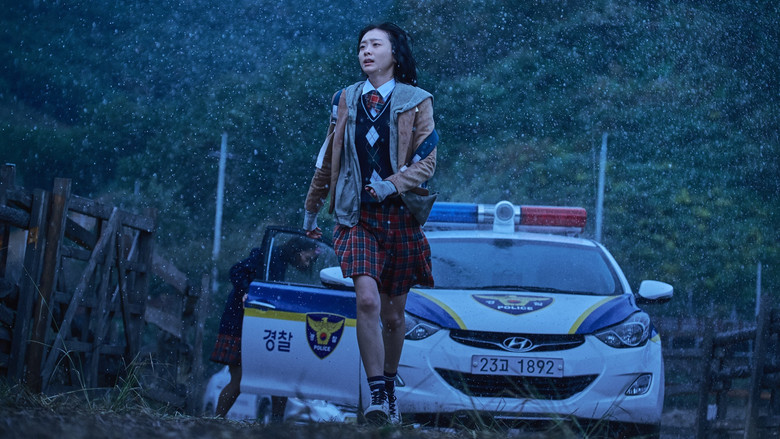

마녀
"Everything changed after they appeared."
The Witch: Part 1. The Subversion - Symbolism & Philosophy
Symbols & Motifs
The Farm
The farm symbolizes the idyllic, peaceful life of normalcy and the 'nurture' side of Ja-yoon's identity. It represents warmth, family, and innocence. It is a carefully chosen sanctuary where she can hide in plain sight and construct her facade.
The film visually contrasts the warm, natural lighting and earthy tones of the farm with the cold, sterile, and brutalist architecture of the laboratory. Ja-yoon's life on the farm, filled with mundane chores and loving interactions, serves as the perfect cover for the calculated predator lying in wait. Her ultimate return to provide her parents with the serum shows a lingering attachment, but also solidifies that the farm was a means to an end.
Boiled Eggs
In the context of the film, the boiled eggs eaten on the train represent a moment of manufactured normalcy and camaraderie with her friend, Myung-hee. However, they also hint at her immense, suppressed physical capabilities and her calculated persona.
During a train scene, Ja-yoon and Myung-hee eat boiled eggs, a common snack in South Korea. In a behind-the-scenes anecdote, it's revealed actress Kim Da-mi ate nearly three trays (around 90) of eggs during filming for this one scene, a feat that humorously mirrors her character's hidden superhuman nature. The simple act of eating becomes a subtle symbol of the extraordinary hiding within the ordinary.
The Laboratory
The laboratory is a symbol of Ja-yoon's true origin, her 'nature'. It represents the cold, unethical, and detached world of science that created her. It is a place of trauma, power, and ultimately, confrontation with her identity.
The film opens and closes within the confines of such facilities. Depicted with sterile, concrete corridors and a palette of cold blues and greys, it's the antithesis of the warm, lively farm. When Ja-yoon is brought back, she is restrained and treated like a specimen, but it is here that she sheds her false identity and unleashes her full power, reclaiming the space of her trauma as the stage for her revenge.
Philosophical Questions
Can nurture ever truly overcome a malevolent nature?
The film explores this question through Ja-yoon's ten-year life with her loving adoptive parents. For all intents and purposes, she was raised to be a good person. However, the narrative reveals this entire period was a calculated phase in her master plan. The film leans towards a deterministic and cynical conclusion: that her genetically engineered, ruthless nature was always the dominant force, merely using the tools of 'nurture'—love, family, friendship—as a disguise to achieve its own selfish ends. It questions whether genuine change is possible for someone 'born bad'.
What responsibility does a creator have for its creation?
Dr. Baek is the creator, and Ja-yoon is her creation. The film uses their conflict to examine scientific ethics. Dr. Baek feels a sense of ownership and pride, but no parental responsibility or empathy; to her, Ja-yoon is a product. Ja-yoon's line, "You created me like this," directly confronts this. The film suggests that creators cannot absolve themselves of the consequences of their work. Dr. Baek's refusal to accept responsibility, and her attempt to control rather than understand her creation, leads directly to her own destruction, serving as a grim answer to the question.
What is the true cost of survival?
Ja-yoon's core motivation is to survive a terminal illness caused by her powers. The film presents her journey not as a heroic struggle, but as a path of extreme manipulation, violence, and betrayal. She sacrifices her relationship with her adoptive parents (by revealing her true self and leaving), murders dozens of people, and lives a ten-year lie. The film asks the audience to consider what lines they would be willing to cross for their own survival. Ja-yoon's answer is clear: there are no lines she will not cross.
Core Meaning
The core meaning of "The Witch: Part 1. The Subversion" explores the dark consequences of scientific hubris and the inescapable nature of one's identity. Director Park Hoon-jung poses a critical question about what defines humanity: is it our upbringing and the love we receive (nurture), or the inherent traits we are born with (nature)? The film deconstructs the typical superhero origin story by presenting a protagonist whose powers are not a gift but a curse born from unethical experimentation. It serves as a commentary on the generational conflict, where an older generation of scientists creates and then fears their powerful, younger creations, ultimately failing to control them. The 'subversion' of the title refers not only to the plot twist but to the subversion of audience expectations, transforming a seemingly gentle coming-of-age story into a brutal tale of premeditated vengeance.