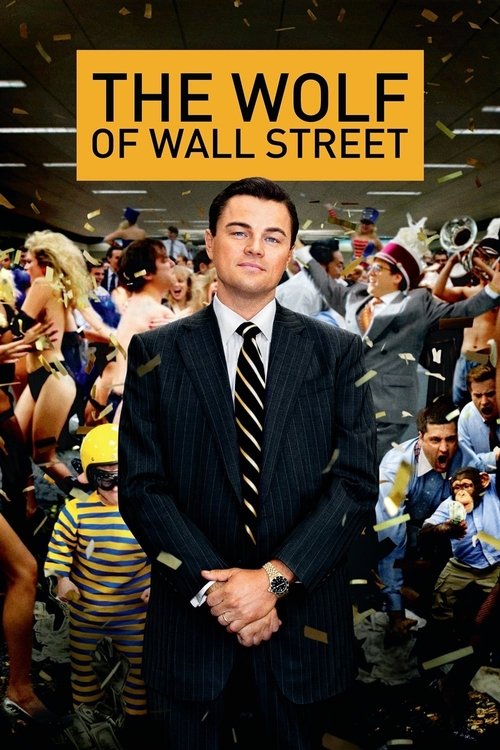
The Wolf of Wall Street
A frenetic, biographical black comedy that plunges the viewer into a dizzying carnival of greed and debauchery, charting the intoxicating rise and spectacular fall of a Wall Street tycoon.
The Wolf of Wall Street

"Earn. Spend. Party."

25 December 2013 United States of America 180 min ⭐ 8.0 (25,040)
Director: Martin Scorsese
Cast: Leonardo DiCaprio, Jonah Hill, Margot Robbie, Matthew McConaughey, Kyle Chandler
Drama Crime Comedy
Greed and Excess The Corruption of the American Dream Addiction Moral Decay and Lawlessness
Budget: $100,000,000
Box Office: $407,038,432

The Wolf of Wall Street - Ending Explained

⚠️ Spoiler Analysis

"The Wolf of Wall Street" traces the inevitable downfall of Jordan Belfort's empire. As the FBI, led by Agent Patrick Denham, closes in on Stratton Oakmont's illegal activities, Jordan attempts to hide his fortune in a Swiss bank account with the help of his wife Naomi's British aunt. The plan goes awry, culminating in a disastrous yacht voyage during a storm where the aunt's associate is arrested and she subsequently dies. The pressure mounts, and Jordan's life, already unravelling due to his severe drug addiction, completely falls apart. He engages in domestic abuse, endangers his child, and is eventually arrested.

To secure a lenient sentence, Jordan agrees to cooperate with the FBI and wear a wire to incriminate his colleagues. In a final, crucial act, he subtly warns his best friend, Donnie Azoff, by passing him a note. This act of loyalty is discovered by the FBI, who then use it as leverage to force him to give up everyone. Jordan is ultimately sentenced to 36 months in a minimum-security prison. The film's poignant final act reveals that after his release, Jordan has successfully reinvented himself as a motivational speaker and sales guru, teaching his techniques to an adoring crowd. The camera lingers on the faces of the audience, all hoping to learn the secret to his success. This ending provides a cynical commentary on society's obsession with wealth and suggests that the very same greed and ambition that fueled Belfort's crimes are still alive and well, waiting for the next "wolf" to emerge.

Alternative Interpretations

The central interpretive debate surrounding "The Wolf of Wall Street" is whether it functions as a celebration or a critique of its subject matter. The primary interpretation sees the film as a sharp, dark satire of capitalism's excesses. In this view, Scorsese deliberately seduces the audience with the glamour and thrill of Belfort's lifestyle to demonstrate how easily one can be corrupted by greed, forcing a self-examination rather than providing a simple moral lesson.

An alternative reading argues that the film, regardless of its intent, ends up glorifying its protagonist. By focusing so intensely on the fun and excitement of the debauchery and giving minimal screen time to Belfort's victims, this perspective holds that the film makes a life of crime appear aspirational. The ending, which shows Belfort successfully rebranding himself, is seen by some as a cynical but accurate critique of society's willingness to forgive and even reward such figures, while others view it as a failure to provide a satisfying sense of justice.