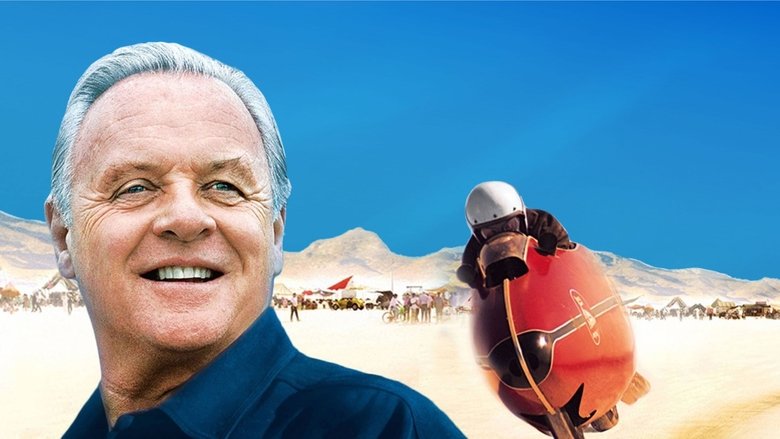
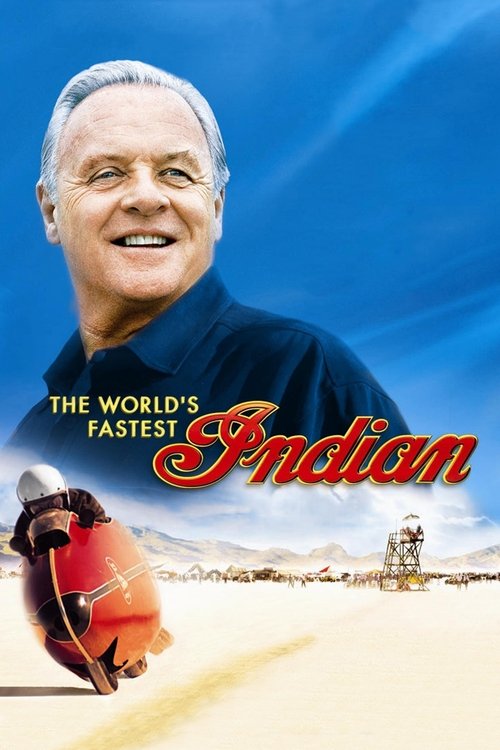
"Based on one hell of a true story."
The World's Fastest Indian - Symbolism & Philosophy
Symbols & Motifs
The 1920 Indian Scout
The motorcycle is an extension of Burt himself—an antique chassis modified to perform beyond its original design. It symbolizes potential hidden within the old and the idea that with enough care (and obsession), even something "obsolete" can set the world on fire.
The bike is treated like a living companion; Burt talks to it, touches it tenderly, and risks his life on its reliability. The visual of the "shell" covering the old frame mirrors Burt's own aging body housing a youthful spirit.
The Lemon Tree
A symbol of unconventional growth and pragmatism. Burt urinates on it to water it, shocking his neighbors. It represents his rejection of social niceties in favor of what works, and his connection to the natural cycle of life.
Early in the film, Burt instructs his young neighbor Tom on the benefits of this "natural fertilizer," establishing his disregard for suburban norms and his practical philosophy.
The White Salt Flats
A place of purity, infinity, and danger. The stark white landscape represents the threshold between life and death, a blank canvas where Burt can finally write his own destiny without the noise of society.
The visual shift from the green, cluttered spaces of New Zealand to the blinding, expansive white of Utah marks the transition from the mundane world to the spiritual realm of speed.
Philosophical Questions
Does the pursuit of a dream justify the risk of life?
The film asks whether a long, safe life is superior to a short, glorious one. Burt explicitly states he would rather die attempting the record than live as a "vegetable." The film validates this existential wager, presenting the quality of life as dependent on the pursuit of one's highest passion, regardless of the danger.
Is success defined by the result or the attempt?
While Burt does get the record, the film spends 90% of its runtime on the journey and the struggle. Even if he hadn't set the record, the friends he made and the barriers he broke (age, class, geography) suggest that the "win" was in arriving at the starting line, not just crossing the finish line.
Core Meaning
At its heart, the film is a meditation on the vitality of the human spirit and the refusal to accept the limitations of age. Director Roger Donaldson uses Burt Munro's story to argue that passion is the antidote to death. The film suggests that "growing old" is a choice to stop dreaming, not just a biological process. By contrasting Burt's vibrant, risky life with the safety of a "vegetable" existence, the movie champions the idea that a life lived fully, even for five minutes at high speed, is worth more than a lifetime of safe stagnation.