"There will be greed. There will be vengeance."
There Will Be Blood - Symbolism & Philosophy
Symbols & Motifs
Oil
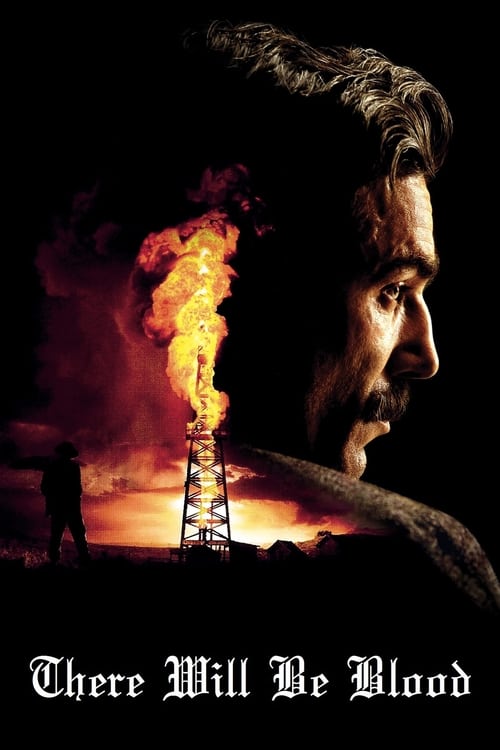
Oil represents wealth, power, corruption, and the very "blood" of the land that Daniel covets. It is a source of life for industry but a poison for the soul. Its blackness visually mirrors the darkness consuming Daniel's character. The film equates this thirst for oil with a vampiric lust, draining the earth and the humanity of those who seek it.
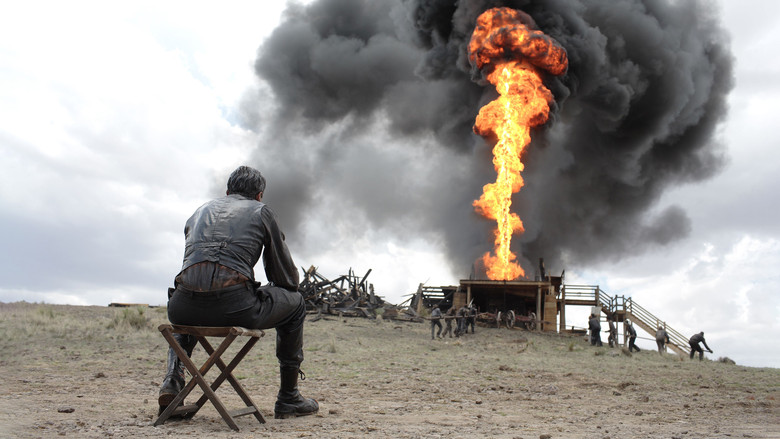
Oil is the central driving force of the entire plot. From Daniel's first discovery, its presence dictates every action. The gusher fire is a pivotal scene, a destructive yet beautiful display of oil's immense power. Daniel's obsession with it leads him to betray, manipulate, and murder.
The Milkshake
The "milkshake" analogy for oil drainage (specifically, slant drilling) symbolizes Daniel's ultimate competitive philosophy: a ruthless, all-encompassing approach to capitalism where one party can secretly drain the resources of another until nothing is left. It represents his victory through superior cunning and utter annihilation of his competition.
In the final scene, Daniel uses this metaphor to taunt and mentally destroy Eli Sunday. He explains how he has already drained all the oil from the neighboring Bandy tract, which Eli had hoped to sell him, rendering Eli's final gambit worthless. The line "I drink your milkshake!" has become an iconic declaration of total, crushing victory.
Baptism
Baptism, typically a symbol of purification and rebirth, is subverted to represent humiliation, performance, and a transactional exchange of power. For Daniel, it is not a spiritual act but a calculated business move he must endure to gain access to land for his pipeline. For Eli, it is a performance of spiritual authority and an opportunity to dominate and humble his rival.
Daniel is forced by William Bandy to be baptized in Eli's church to secure a pipeline easement. Eli seizes the moment, slapping Daniel and forcing him to confess to abandoning his son. The scene marks a turning point where Daniel's simmering hatred for Eli solidifies into a vow of vengeance, which he ultimately fulfills in the final scene.
Bowling Alley
The private bowling alley in Daniel's mansion symbolizes the isolated, grotesque, and hollow nature of his success. It is a playground built for a man who has no one to play with. It becomes the arena for the final, brutal confrontation between capitalism and religion, a place of profane judgment where Daniel becomes the ultimate arbiter.
The film's climax takes place in the bowling alley. A drunken Daniel torments Eli, who has come begging for money. The vast, empty space highlights Daniel's loneliness and madness. He ultimately bludgeons Eli to death with a bowling pin, a perverse and mundane instrument of murder that underscores the banality of his evil.
Philosophical Questions
Does the pursuit of the American Dream inevitably lead to moral compromise and corruption?
The film explores this question through Daniel Plainview's tragic arc. He achieves the American Dream of immense wealth and success, but does so by sacrificing his humanity, familial bonds, and any sense of morality. His story serves as a cautionary tale, suggesting that unchecked ambition, a core tenet of the dream, can be a spiritually corrosive force that rots a person from the inside out, leaving them with material riches but profound emotional and ethical poverty.
In a world driven by capital, can faith remain pure, or does it inevitably become another commodity?
The film scrutinizes the relationship between spirituality and materialism through the character of Eli Sunday. Eli's church and his role as a preacher are portrayed not as genuine sources of faith but as a business enterprise designed to secure power and influence. He uses religion to manipulate his flock and attempts to leverage it for financial gain from Daniel. The film suggests that in a society that worships wealth, even religion can be co-opted and commodified, becoming just another performance in the service of greed.
Is humanity fundamentally driven by competition and a will to dominate?
Daniel Plainview's explicit philosophy is that he has a "competition" in him and wants "no one else to succeed." The film uses his character to explore a cynical view of human nature. His relationships are all transactional and based on power dynamics. His conflict with Eli is a zero-sum game. The narrative seems to align with a Nietzschean perspective that the 'will to power' is a primary driving force of human action, often masked by more palatable motivations like community or faith. Daniel is simply more honest about this impulse than those around him.
Core Meaning
"There Will Be Blood" serves as a powerful and haunting allegory for the dark side of the American Dream, exploring the corrosive nature of unchecked ambition, greed, and the fraught relationship between capitalism and religion. Director Paul Thomas Anderson presents a narrative where the pursuit of wealth leads not to fulfillment, but to moral and spiritual decay. The central conflict between Daniel Plainview, the embodiment of ruthless industry, and Eli Sunday, who represents opportunistic faith, suggests that both institutions can be twisted into tools for manipulation and power. Ultimately, the film poses the philosophical question of what is gained and, more importantly, what is lost in the relentless quest for success. It suggests that the very drive that builds empires can simultaneously hollow out the human soul, leaving behind an empty vessel of bitterness and isolation.