
Director: Martin McDonagh
Cast: Frances McDormand, Woody Harrelson, Sam Rockwell, Lucas Hedges, Abbie Cornish
Three Billboards Outside Ebbing, Missouri — Characters & Cast
Character Analysis
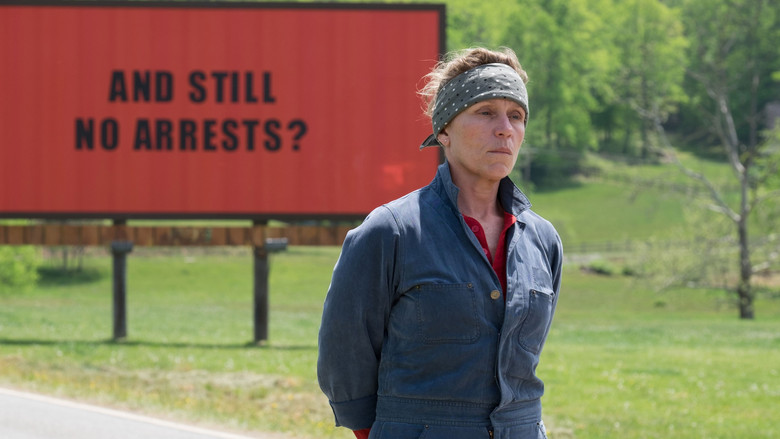
Mildred Hayes
Frances McDormand
Motivation
Her primary motivation is to force the police to solve the brutal rape and murder of her daughter, Angela. She is driven by a deep-seated guilt over her last conversation with her daughter and a furious belief that Angela has been forgotten by the authorities and the town. Her motivation is less about healing and more about holding people accountable, no matter the cost.
Character Arc
Mildred begins as a woman defined entirely by her grief and rage, launching a one-woman war against the local police. She is confrontational, ruthless, and isolates nearly everyone around her. While she never truly softens or abandons her anger, her arc involves a subtle shift in its focus. Initially aimed at a specific person (Willoughby), her quest for justice becomes more abstract. By the end, she forms an unlikely alliance with Dixon, channeling her anger not just for her own daughter, but against injustice in general, albeit through morally ambiguous means. She doesn't find peace, but she finds a partner in her pain, moving from total isolation to a shared, uncertain purpose.
Jason Dixon
Sam Rockwell
Motivation
Initially, Dixon is motivated by a desire for respect, particularly from Chief Willoughby, whom he idolizes. He is also heavily influenced by his domineering mother and his own deep-seated insecurities, which manifest as racism and aggression. After Willoughby's death, his motivation shifts. He is posthumously tasked by his hero to become a better man by embracing love and thought over hate, which becomes his new, driving purpose.
Character Arc
Dixon has the most dramatic character arc in the film. He starts as a racist, violent, dim-witted police officer who lives with his mother and is widely disrespected. His initial actions are driven by a misguided loyalty to Willoughby and his own prejudices. After Willoughby's death, getting fired, and being badly burned in the station fire, Dixon hits rock bottom. Guided by Willoughby's posthumous letter and moved by an act of kindness from his victim, Red Welby, he begins a transformation. He evolves from a source of the town's injustice to a proactive, albeit clumsy, agent for it, dedicating himself to finding Angela's killer and ultimately partnering with Mildred.
Bill Willoughby
Woody Harrelson
Motivation
Willoughby is motivated by a sense of duty to his job, a deep love for his family, and a desire to do the right thing. Despite Mildred's accusations, he demonstrates that he did everything he could to solve the case. His final actions—spending a perfect day with his family and writing letters to guide those he leaves behind—are motivated by a desire to bring a small measure of peace and order to a chaotic world he is about to leave.
Character Arc
Willoughby's arc is largely completed before his death. He is presented as a fundamentally decent and respected man who is in an impossible situation: he is dying of cancer and has no leads in a horrific murder case. He genuinely sympathizes with Mildred's pain but is frustrated by her public attack. His arc is one of maintaining his humanity and dignity in the face of death and public condemnation. His suicide is framed not as an act of despair due to the billboards, but as a final act of love and control to spare his family pain. Posthumously, through his letters, he becomes a moral guide for both Mildred and Dixon, shaping the film's second half.
Cast
Explore More About This Movie
Dive deeper into specific aspects of the movie with our detailed analysis pages