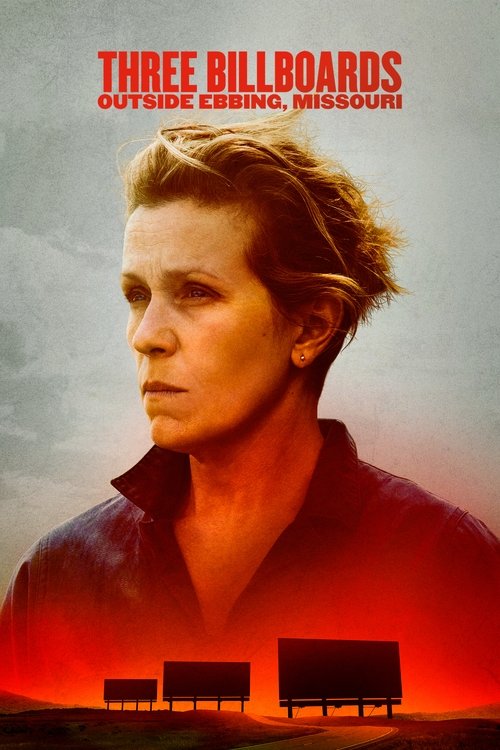
Three Billboards Outside Ebbing, Missouri
A darkly comedic drama where blistering grief fuels a mother's relentless, fiery quest for justice, scarring a small town with its raw, unapologetic pain.
Three Billboards Outside Ebbing, Missouri

Three Billboards Outside Ebbing, Missouri

01 December 2017 United Kingdom 115 min ⭐ 8.1 (10,500)
Director: Martin McDonagh
Cast: Frances McDormand, Woody Harrelson, Sam Rockwell, Lucas Hedges, Abbie Cornish
Drama Crime
Grief and Anger Forgiveness and Redemption The Elusiveness of Justice Hypocrisy and Moral Ambiguity
Budget: $15,000,000
Box Office: $162,729,321

Overview

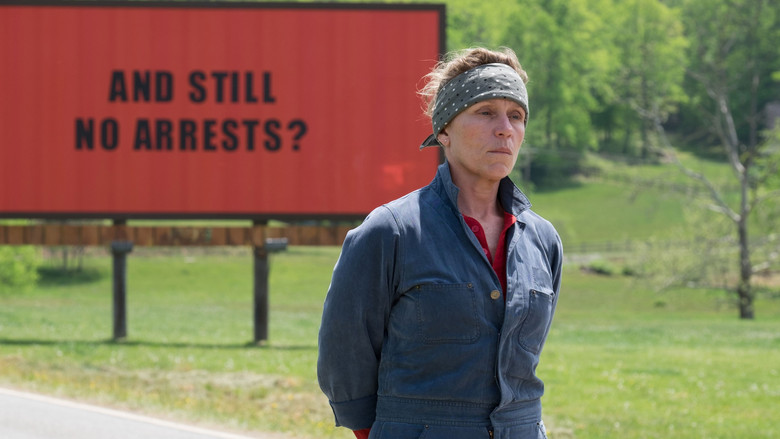
"Three Billboards Outside Ebbing, Missouri" centers on Mildred Hayes, a woman consumed by grief and rage seven months after the brutal rape and murder of her daughter, Angela. Frustrated by the local police department's lack of progress, she takes a bold and controversial step: she rents three derelict billboards on a seldom-used road leading into her town. The signs display a stark, sequential message: "RAPED WHILE DYING," "AND STILL NO ARRESTS?," and "HOW COME, CHIEF WILLOUGHBY?".

This public accusation immediately disrupts the small, fictional town of Ebbing, Missouri, placing Mildred in direct conflict with the well-respected and terminally ill Police Chief, Bill Willoughby, and his volatile, racist subordinate, Officer Jason Dixon. The billboards polarize the community; some residents are outraged at what they see as an unfair attack on a dying man, while others are forced to confront the unsolved crime. Mildred's defiant act sets off a chain reaction of escalating conflicts, dark humor, and unexpected moments of compassion, as she refuses to back down in her quest for accountability, forcing the town and its flawed inhabitants to confront their own complicity, anger, and capacity for change.

Core Meaning

The core meaning of "Three Billboards Outside Ebbing, Missouri" revolves around the complex and often paradoxical nature of grief, rage, forgiveness, and redemption. Director Martin McDonagh explores the idea that all-consuming anger, while a valid response to profound tragedy, is ultimately a destructive force that begets more violence and pain. The film posits that true healing and the possibility of justice cannot be found through hatred alone.

Chief Willoughby's posthumous letters explicitly state this theme, particularly his advice to Dixon that letting go of hate is the only way to become a better man and a competent detective. The film suggests that forgiveness is not about condoning wrongful acts but is a necessary step for the aggrieved to break free from the cycle of suffering. It also delves into the elusiveness of clear-cut justice, ultimately arguing that in a world of moral ambiguity, the path forward lies not in vengeance, but in finding common humanity and the possibility of change, even in the most flawed individuals.

Thematic DNA

Grief and Anger 35%
Forgiveness and Redemption 30%
The Elusiveness of Justice 25%
Hypocrisy and Moral Ambiguity 10%

Grief and Anger

The film is fundamentally a study in grief, portraying it not as a quiet sorrow but as a raging, active force. Mildred Hayes's anger is the engine of the narrative, a direct result of her profound loss and the perceived inaction of law enforcement. Her billboards are a public manifestation of this private pain. However, the film shows how this unchecked rage becomes corrosive, isolating her from her son, alienating the town, and leading her to commit violent acts, such as firebombing the police station. The narrative explores the idea that while her anger is justified, it becomes a destructive cycle, encapsulated by the quote, "Anger just begets greater anger."

Forgiveness and Redemption

Forgiveness is presented as the difficult antidote to the poison of rage. This is most powerfully illustrated through Officer Dixon's character arc. Initially a racist, violent, and immature man-child, he is seemingly irredeemable. Yet, through a combination of Chief Willoughby's posthumous guidance, the consequences of his own actions (getting fired and burned), and an unexpected act of kindness from Red Welby (who offers him orange juice in the hospital), Dixon begins a painful transformation. The film argues that redemption is possible for even the most flawed characters, but it's a painful, incomplete process. The ambiguous ending, with Mildred and Dixon seeking a form of justice together, shows them on a shared path toward a potential, albeit uncertain, redemption.

The Elusiveness of Justice

The film deliberately subverts the conventions of a typical crime procedural. The central crime—the murder of Angela Hayes—is never solved. This intentional lack of resolution underscores a key theme: the world does not always provide neat answers or traditional justice. Mildred's quest begins as a demand for a culprit to be found, but it evolves into something more complex. The film deconstructs the idea of clear-cut guilt and righteousness. In the end, Mildred and Dixon set out to punish a man who is guilty of *a* rape, but not the one central to the plot, highlighting a shift from a desire for legal justice to a form of ambiguous moral vigilantism born from shared pain and a need for purpose.

Hypocrisy and Moral Ambiguity

No character in the film is entirely good or evil. Mildred, the protagonist, is driven by righteous fury but is also cruel, stubborn, and violent. Chief Willoughby is a decent, loving family man respected by the town, yet he has failed to solve the case and oversaw a racist police force. Dixon is a violent racist who tortures prisoners but also deeply loves his mother and ultimately shows capacity for bravery and change. The film is saturated with this moral ambiguity, challenging the audience to sympathize with deeply flawed people. Mildred's confrontation with the priest, where she calls out the Catholic Church's hypocrisy regarding child abuse, is a prime example of the film's examination of flawed authority and moral inconsistency.

Character Analysis

Mildred Hayes

Frances McDormand

Archetype: Antihero / Avenger
Key Trait: Unyielding

Motivation

Her primary motivation is to force the police to solve the brutal rape and murder of her daughter, Angela. She is driven by a deep-seated guilt over her last conversation with her daughter and a furious belief that Angela has been forgotten by the authorities and the town. Her motivation is less about healing and more about holding people accountable, no matter the cost.

Character Arc

Mildred begins as a woman defined entirely by her grief and rage, launching a one-woman war against the local police. She is confrontational, ruthless, and isolates nearly everyone around her. While she never truly softens or abandons her anger, her arc involves a subtle shift in its focus. Initially aimed at a specific person (Willoughby), her quest for justice becomes more abstract. By the end, she forms an unlikely alliance with Dixon, channeling her anger not just for her own daughter, but against injustice in general, albeit through morally ambiguous means. She doesn't find peace, but she finds a partner in her pain, moving from total isolation to a shared, uncertain purpose.

Jason Dixon

Sam Rockwell

Archetype: The Redeemed Antagonist
Key Trait: Volatile

Motivation

Initially, Dixon is motivated by a desire for respect, particularly from Chief Willoughby, whom he idolizes. He is also heavily influenced by his domineering mother and his own deep-seated insecurities, which manifest as racism and aggression. After Willoughby's death, his motivation shifts. He is posthumously tasked by his hero to become a better man by embracing love and thought over hate, which becomes his new, driving purpose.

Character Arc

Dixon has the most dramatic character arc in the film. He starts as a racist, violent, dim-witted police officer who lives with his mother and is widely disrespected. His initial actions are driven by a misguided loyalty to Willoughby and his own prejudices. After Willoughby's death, getting fired, and being badly burned in the station fire, Dixon hits rock bottom. Guided by Willoughby's posthumous letter and moved by an act of kindness from his victim, Red Welby, he begins a transformation. He evolves from a source of the town's injustice to a proactive, albeit clumsy, agent for it, dedicating himself to finding Angela's killer and ultimately partnering with Mildred.

Bill Willoughby

Woody Harrelson

Archetype: The Mentor / Tragic Hero
Key Trait: Decent

Motivation

Willoughby is motivated by a sense of duty to his job, a deep love for his family, and a desire to do the right thing. Despite Mildred's accusations, he demonstrates that he did everything he could to solve the case. His final actions—spending a perfect day with his family and writing letters to guide those he leaves behind—are motivated by a desire to bring a small measure of peace and order to a chaotic world he is about to leave.

Character Arc

Willoughby's arc is largely completed before his death. He is presented as a fundamentally decent and respected man who is in an impossible situation: he is dying of cancer and has no leads in a horrific murder case. He genuinely sympathizes with Mildred's pain but is frustrated by her public attack. His arc is one of maintaining his humanity and dignity in the face of death and public condemnation. His suicide is framed not as an act of despair due to the billboards, but as a final act of love and control to spare his family pain. Posthumously, through his letters, he becomes a moral guide for both Mildred and Dixon, shaping the film's second half.

Symbols & Motifs

The Three Billboards

Meaning:

The billboards are the central symbol of the film, representing unyielding grief, public accusation, and a demand for accountability. Their stark red color symbolizes Mildred's rage and the violence of the crime. They are a physical manifestation of her pain, refusing to let the town forget her daughter's unsolved murder. They also symbolize a challenge to authority and the status quo.

Context:

Mildred rents the three dilapidated billboards on Drinkwater Road to publicly shame Chief Willoughby and the Ebbing police department for their failure to find her daughter's killer. They are a constant visual presence throughout the film, looming over Mildred's house and the town. They are vandalized, burned down, and eventually restored, mirroring the persistence of Mildred's quest and the escalating conflict.

The Deer

Meaning:

The deer symbolizes a moment of peace, innocence, and perhaps a spiritual connection to Mildred's deceased daughter. It represents a brief respite from her all-consuming anger. While Mildred explicitly rejects the idea that the deer is a reincarnation of Angela ("You're pretty, but you ain't her"), the gentle encounter allows her a moment of vulnerability and a flicker of her softer side, reminding the audience of the loving mother beneath the hardened warrior.

Context:

While Mildred is planting flowers by the billboards, a lone deer calmly approaches her. In a quiet, poignant monologue, she speaks to the animal, sharing her feelings of doubt and sorrow. This serene moment stands in stark contrast to the violence and rage that otherwise define her actions.

Fire

Meaning:

Fire symbolizes purification, destruction, and rebirth. It is a tool for both vengeance and, paradoxically, transformation. Mildred's use of fire is an act of pure rage meant to destroy the institution she blames. However, the same fire inadvertently sets Dixon on a path to redemption, as he must literally pass through the flames, saving Angela's case file in the process, to begin his change.

Context:

After the billboards are burned down (by her ex-husband, as it turns out), Mildred retaliates by throwing Molotov cocktails at the police station, believing it to be empty. Dixon, however, is inside reading Willoughby's letter. He is badly burned but manages to escape with the case file, an act that marks the beginning of his transformation.

Willoughby's Letters

Meaning:

The letters left by Chief Willoughby after his suicide symbolize wisdom, guidance, and posthumous grace. They are his final acts, intended to bring peace and clarity rather than chaos. The letter to Mildred offers understanding and support, while the letter to Dixon provides the paternal advice and moral compass he desperately needed, directly telling him that love, calm, and thought are the keys to becoming a good man.

Context:

After taking his own life to spare his family from his illness, Willoughby leaves several letters. His wife delivers one to Mildred, in which he explains his suicide was not her fault and that he secretly paid to keep the billboards up for another month. Dixon reads his letter alone in the police station, a moment that serves as the catalyst for his redemption arc just before the station is set ablaze.

Memorable Quotes

All this anger, man, it just begets greater anger.

— Penelope (quoting someone else)

Context:

Mildred's ex-husband, Charlie, is trying to explain his own feelings of anger. He attributes this surprisingly profound observation to his girlfriend, Penelope, underscoring the film's use of unexpected sources for moments of clarity and wisdom.

Meaning:

This line, spoken by Charlie's young and seemingly simple-minded girlfriend, succinctly captures the film's central theme. It highlights the self-perpetuating and destructive nature of rage. The film repeatedly demonstrates how one act of anger leads to another, creating a cycle of violence and pain that engulfs the characters and the town.

If you got rid of every cop with vaguely racist leanings, then you'd have three cops left, and all o' them are gonna hate the fags.

— Chief Willoughby

Context:

Willoughby says this to Mildred during one of their early confrontations at the police station. She has just accused his department of being too busy "torturing black folks" to solve real crimes, and this is his stark, world-weary response.

Meaning:

This quote is a cynical and blunt assessment of the systemic nature of prejudice within institutions like the police. It reveals Willoughby's pragmatism and his weary acceptance of the flawed world he operates in. It's a key line that contextualizes the controversy around Dixon's character, suggesting that he is a symptom of a much larger problem rather than a lone bad apple.

Hate never solved nothing, but calm did. And thought did. You need thought to detect stuff sometimes.

— Chief Willoughby (in his letter to Dixon)

Context:

Dixon reads these words from a letter Willoughby wrote him before his suicide. He is sitting alone in the police station, moments before Mildred firebombs it. The words of his hero provide the catalyst for him to change his ways.

Meaning:

This is the thesis statement for Dixon's redemption arc and a core message of the film. It's a posthumous plea from a mentor to his troubled protégé, arguing that intelligence, calm, and empathy are more powerful tools than hatred and violence. It is the moral guidance that Dixon needs to hear to begin his transformation from a reactive thug to a proactive detective.

This didn't put an end to shit, you fucking retard; this is just the fucking start.

— Mildred Hayes

Context:

Mildred says this live on a local news broadcast when the reporter suggests her actions might have contributed to Chief Willoughby's suicide. Instead of showing remorse, she doubles down on her mission, using the platform to amplify her rage and promise further action.

Meaning:

This quote perfectly encapsulates Mildred's defiant and combative spirit. It shows her absolute refusal to be silenced or intimidated. For her, the billboards are not an end in themselves but the opening salvo in a war she is fully prepared to escalate. It establishes her as an unrelenting force of nature.

Philosophical Questions

Can true redemption be achieved without full atonement?

The film explores this question through the character of Dixon. He is a violent racist who has caused significant harm. While he undergoes a profound transformation, he never fully apologizes for or atones for his racist past. The film asks whether his subsequent acts of bravery and his change of heart are enough to constitute redemption. It challenges the viewer to consider if a person can be redeemed by their future actions even if their past sins are never fully reconciled, presenting redemption not as a destination but as a continuous, difficult process.

What is the nature of justice when the legal system fails?

When the investigation into her daughter's murder stalls, Mildred takes matters into her own hands. The film's entire plot is driven by the failure of institutional justice. This raises questions about what constitutes justice in such a vacuum. Is public shaming a valid tool? Is personal vengeance justified? The film's unresolved ending, where Mildred and Dixon embark on a vigilante mission, leaves this question open. It suggests that when formal systems fail, humans are drawn to create their own, often morally gray, forms of justice.

Is all-consuming anger a justifiable response to tragedy, or is it inherently self-destructive?

The film presents Mildred's rage as both her greatest strength and her most destructive flaw. It fuels her quest for justice and gives her the strength to stand up to the entire town, but it also isolates her, hurts her son, and leads her to violence. The film doesn't condemn her anger but meticulously documents its corrosive effects, asking the audience to weigh the righteousness of her cause against the damage it creates. It suggests that while rage is a powerful catalyst, it cannot sustain a person and must eventually give way to something else, like forgiveness or at least a shared purpose, to avoid complete self-destruction.

Alternative Interpretations

The most debated aspect of the film is its ambiguous ending. One interpretation is that Mildred and Dixon, having failed to find legal justice, have chosen to pursue a form of vigilante justice against a known rapist, thus finding a new, shared purpose for their rage. Their final conversation, where they admit they are unsure if they will go through with killing the man and will "decide on the way," suggests a flicker of moral doubt. This reading posits that their journey is more important than the destination; their shared humanity and acknowledgment of uncertainty is the true resolution, not the act of violence itself.

Another interpretation suggests a more cynical reading: that the cycle of violence is not broken, merely redirected. Mildred and Dixon have not overcome their anger but have simply found a new, mutually agreed-upon target for it. In this view, the ending is not hopeful but a dark continuation of the theme that "anger begets greater anger," implying they are likely to commit the murder.

A more meta-textual interpretation is that the ending intentionally leaves the choice to the audience. By not showing the outcome, the film forces viewers to confront their own feelings about justice, vengeance, and morality, making them complicit in the characters' final decision.

Cultural Impact

"Three Billboards Outside Ebbing, Missouri" was released to widespread critical acclaim, praised for its sharp script, dark humor, and powerful performances, particularly by McDormand and Rockwell, who both won Academy Awards for their roles. The film became a major contender during the 2017-2018 awards season, winning numerous accolades, including the Golden Globe for Best Motion Picture – Drama and the BAFTA for Best Film.

However, the film also sparked significant cultural debate and controversy, primarily surrounding the redemption arc of the racist police officer, Jason Dixon. Some critics and audiences argued that the film too easily forgave Dixon's bigotry and violence, especially in a socio-political climate increasingly focused on issues of police brutality and racial injustice. Others defended the film, arguing that it was a complex portrayal of flawed humanity and that Dixon's difficult, incomplete redemption was a central and challenging theme, not an endorsement of his earlier actions.

The film's central motif—the three red billboards with black text—was adopted by activists worldwide. Protestors used the format to call for justice and accountability on various issues, from gun control in the wake of the Parkland shooting to demands for action following the Grenfell Tower fire in London. This demonstrated the film's powerful visual language transcending the screen to become a real-world symbol of protest.

Audience Reception

Audience reception for "Three Billboards Outside Ebbing, Missouri" was largely positive, with many viewers praising its powerful performances, sharp and witty dialogue, and its successful blend of dark comedy and intense drama. Frances McDormand's portrayal of Mildred Hayes was particularly lauded as a tour-de-force performance of a complex and formidable female character. Sam Rockwell's transformation as Officer Dixon also received widespread acclaim from audiences.

However, the film was also polarizing. The primary point of criticism and controversy among viewers was the handling of Dixon's character arc. Many found his redemption to be unearned, arguing that a violently racist cop was given a sympathetic portrayal without adequately addressing the harm he caused. This aspect sparked considerable online debate, with some viewers finding it morally problematic.

The film's ambiguous ending was another major topic of discussion. Some viewers found it unsatisfying and frustrating, desiring a more definitive conclusion to the central mystery and the characters' fates. Others appreciated the ambiguity, finding it thematically fitting for a film that explores the messy, unresolved nature of grief and justice. Overall, while highly praised, it was a film that provoked strong reactions and was seen as challenging and thought-provoking rather than simple entertainment.

Interesting Facts

  • The story was inspired by a real-life incident. Director Martin McDonagh was on a bus trip across America when he saw a series of angry, accusatory billboards about an unsolved crime, which he presumed were put up by a grieving parent. The image stuck with him for years.
  • The role of Mildred Hayes was written specifically for Frances McDormand. Initially, McDormand was hesitant, feeling she was too old for the part and suggested she play the character as a grandmother, but her husband, Joel Coen, convinced her to take the role.
  • Similarly, the role of Dixon was written specifically for Sam Rockwell.
  • The film was shot in Sylva, North Carolina, which stood in for the fictional town of Ebbing, Missouri.
  • Mildred's signature bandana is an homage to Christopher Walken's character in the 1978 film "The Deer Hunter."
  • During production, the controversial billboards had to be covered with large tarps every day to avoid alarming local residents who were unaware of the film shoot.
  • The deer that Mildred speaks to in a poignant scene is a local animal celebrity named Becca from the Western North Carolina Nature Center.
  • This was the first film Martin McDonagh directed that did not feature actor Colin Farrell.

Easter Eggs

There are several visual and thematic nods to the 1973 horror film "Don't Look Now."

Both films share themes of parents grieving the loss of a daughter. The prominent use of the color red (the billboards in this film, a red raincoat in "Don't Look Now") is a direct visual link. Furthermore, in one scene, Dixon's mother is seen watching "Don't Look Now" on television, making the reference explicit.

⚠️ Spoiler Analysis

Click to reveal detailed analysis with spoilers

Frequently Asked Questions

Explore More About This Movie

Dive deeper into specific aspects of the movie with our detailed analysis pages

Comments (0)

Leave a comment

No comments yet. Be the first to share your thoughts!