Trois couleurs : Bleu
Three Colors: Blue - Symbolism & Philosophy
Symbols & Motifs
The Color Blue
Represents both suffocating grief and eventual emotional liberation. [1.1] It is omnipresent in the film's lighting, objects, and filters, washing over Julie during moments of intense memory or sorrow, but ultimately transforming into the color of hope and the open sky.
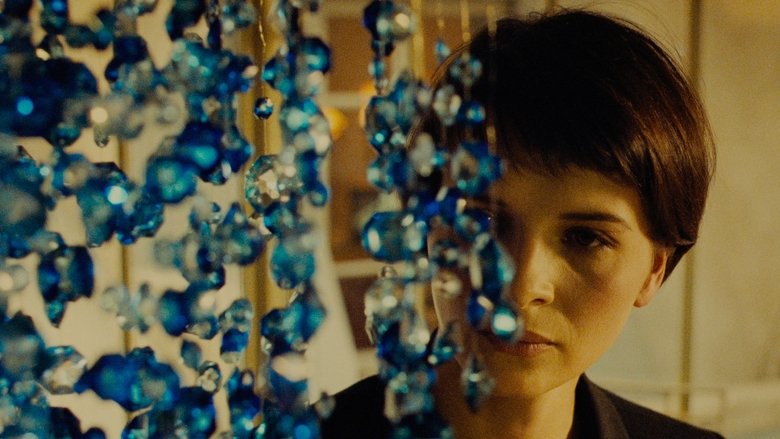
Appears vividly in the swimming pool, the chandelier, the lollipops, and the screen flooding with blue light when the concerto plays in her mind.
The Swimming Pool
Symbolizes a womb-like sanctuary of isolation, but also an immersion into her inescapable grief.
Julie routinely swims in the blue pool to physically exhaust herself and escape her thoughts, momentarily becoming part of the reflective surface of her pain.
The Blue Chandelier
A physical manifestation of her lingering love and the single fragile artifact she refuses to discard.
Originally hanging in her daughter's room, Julie takes it to her new apartment. It catches the light, serving as a delicate, beautiful reminder of the child she lost.
The Sugar Cube
Symbolizes how the world and life inevitably soak into Julie despite her attempts to remain empty and emotionally detached.
In a famous extreme close-up, Julie holds a sugar cube over a cup of coffee, watching the dark liquid slowly absorb into it before dropping it in.
Philosophical Questions
Is absolute freedom a form of self-imprisonment?
The film deeply questions the desire for absolute liberty. Julie attempts to free herself from all human ties, but the narrative reveals that living entirely without attachments, memories, or love is indistinguishable from death. [1.3]
Can we ever truly sever our connections to the past?
Through the haunting music and physical artifacts like the blue chandelier, the film suggests that the past is an inescapable part of human identity that must be integrated, not destroyed.
What is the relationship between love and liberty?
Echoing the lyrics from First Corinthians used in the finale, the film posits that without love, a person is 'nothing.' It challenges the notion that love is a trap, framing it instead as the only true source of emotional emancipation.
Core Meaning
Krzysztof Kieślowski uses the French revolutionary ideal of liberty, represented by the color blue, to explore a deeply personal and emotional form of freedom. Rather than political liberty, the film investigates the tragic paradox of striving for freedom from grief, memory, and human connection. Julie attempts to achieve ultimate liberty by cutting off all ties and responsibilities, creating a protective vacuum to shield herself from further pain. However, Kieślowski's central message is that true liberation is impossible in isolation. Absolute freedom becomes its own prison; it is only through accepting love, engaging with others, and confronting the painful past that one can achieve genuine peace and emotional emancipation.