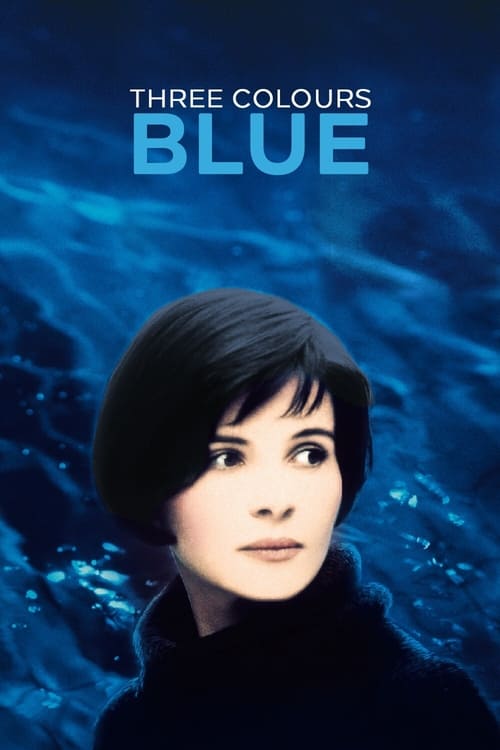
Three Colors: Blue
A haunting psychological drama exploring the crushing weight of grief, where a shattered woman seeks sanctuary in total isolation, only to be submerged in the striking blue hues of inescapable human connection.
Three Colors: Blue

Three Colors: Blue

Trois couleurs : Bleu

08 September 1993 France 98 min ⭐ 7.6 (1,852)
Director: Krzysztof Kieślowski
Cast: Juliette Binoche, Benoît Régent, Florence Pernel, Charlotte Véry, Hélène Vincent
Drama
The Illusion of Absolute Liberty Grief, Trauma, and Healing The Omnipresence of the Past Human Connection and Empathy
Box Office: $1,527,572

Overview

Following a devastating car accident that claims the lives of her acclaimed composer husband and their young daughter, Julie is left to navigate the agonizing aftermath of survival. Consumed by a sorrow too profound for words, she attempts an impossible feat: to erase her past completely. She sells her estate, destroys her husband's unfinished musical masterpiece, and relocates to a nondescript apartment in Paris, desperate to exist in a state of absolute anonymity and detachment.

However, Julie soon discovers that severing all human connections is an illusion. Despite her resolute efforts to live without love, possessions, or memory, the world continually encroaches upon her self-imposed exile. From a persistent, unfinished concerto that echoes in her mind to the complicated lives of her new neighbors, the fragments of life demand her attention. The film intricately follows her painful but inevitable journey as she learns that true emotional liberty cannot be found in a void, but rather in the courageous acceptance of human fragility and the reopening of one's heart.
Core Meaning

Krzysztof Kieślowski uses the French revolutionary ideal of liberty, represented by the color blue, to explore a deeply personal and emotional form of freedom. Rather than political liberty, the film investigates the tragic paradox of striving for freedom from grief, memory, and human connection. Julie attempts to achieve ultimate liberty by cutting off all ties and responsibilities, creating a protective vacuum to shield herself from further pain. However, Kieślowski's central message is that true liberation is impossible in isolation. Absolute freedom becomes its own prison; it is only through accepting love, engaging with others, and confronting the painful past that one can achieve genuine peace and emotional emancipation.

Thematic DNA

The Illusion of Absolute Liberty 40%
Grief, Trauma, and Healing 30%
The Omnipresence of the Past 15%
Human Connection and Empathy 15%

The Illusion of Absolute Liberty

The film deconstructs the concept of freedom by showing Julie's attempt to liberate herself from all societal roles, possessions, and emotional ties. She seeks a negative freedom—freedom from pain. [1.8] However, the narrative reveals that this absolute liberty is contradictory to human nature and ultimately impossible to maintain, as life constantly forces her to reconnect.

Grief, Trauma, and Healing

Kieślowski portrays grief not through continuous weeping, but through Julie's profound emotional suppression. Her trauma manifests as sudden blackouts and overwhelming swells of music that flood her senses, showing how grief is an internal, inescapable physical force.

The Omnipresence of the Past

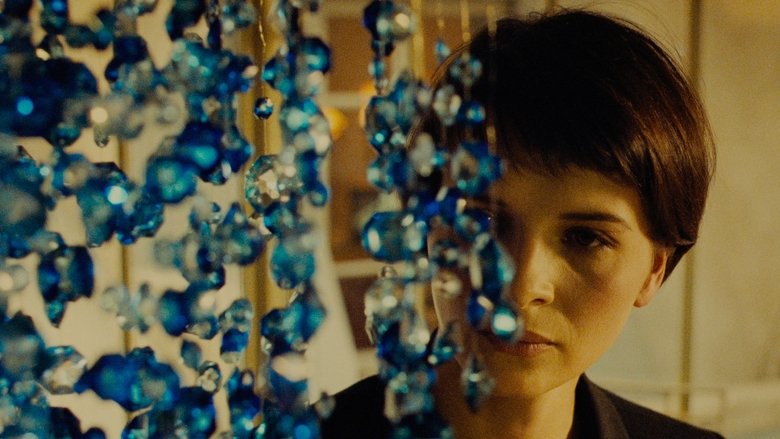
Despite her efforts to destroy her husband's musical score and hide in Paris, the past constantly haunts Julie. The lingering concerto, the discovery of her husband's mistress, and the blue chandelier all symbolize how history cannot be erased, only integrated.

Human Connection and Empathy

Julie's gradual return to the world is facilitated by the unavoidable needs of others. Whether it's comforting her neighbor Lucille or accepting Olivier's devotion, the film suggests that empathy and love are the true paths to salvation, captured in the choral finale quoting First Corinthians.

Character Analysis

Julie Vignon

Juliette Binoche

Archetype: The Grieving Survivor
Key Trait: Resolute and emotionally detached

Motivation

To achieve absolute emotional liberty and numb the unbearable pain of losing her family.

Character Arc

Julie begins in a state of catatonic shock, attempting to erase her identity and isolate herself from all pain. [1.3] Slowly, through involuntary interactions with the world, she sheds her armor, confronts her husband's secrets, and embraces love once more.

Olivier

Benoît Régent

Archetype: The Steadfast Lover / Catalyst
Key Trait: Persistent and devoted

Motivation

Deep love for Julie and a commitment to preserving the unfinished musical masterpiece.

Character Arc

Olivier refuses to let Patrice's (and Julie's) musical legacy die. He publicly attempts to finish the concerto, forcing Julie out of hiding to correct it, thereby drawing her back into life and art.

Lucille

Charlotte Véry

Archetype: The Unlikely Confidante
Key Trait: Vulnerable and unashamed

Motivation

Seeking human connection, validation, and a non-judgmental friend.

Character Arc

An exotic dancer who faces judgment from the other apartment tenants. Julie, stripped of societal prejudices, is the only one who refuses to sign a petition to evict her, forming a bond of mutual vulnerability.

Madame Vignon (Julie's Mother)

Emmanuelle Riva

Archetype: The Mirror
Key Trait: Oblivious and isolated

Motivation

She lacks motivation, lost in the televised world she observes but does not participate in.

Character Arc

Suffering from Alzheimer's disease, she physically embodies the total detachment and forgetting that Julie desperately desires but cannot achieve.

Symbols & Motifs

The Color Blue

Meaning:

Represents both suffocating grief and eventual emotional liberation. [1.1] It is omnipresent in the film's lighting, objects, and filters, washing over Julie during moments of intense memory or sorrow, but ultimately transforming into the color of hope and the open sky.

Context:

Appears vividly in the swimming pool, the chandelier, the lollipops, and the screen flooding with blue light when the concerto plays in her mind.

The Swimming Pool

Meaning:

Symbolizes a womb-like sanctuary of isolation, but also an immersion into her inescapable grief.

Context:

Julie routinely swims in the blue pool to physically exhaust herself and escape her thoughts, momentarily becoming part of the reflective surface of her pain.

The Blue Chandelier

Meaning:

A physical manifestation of her lingering love and the single fragile artifact she refuses to discard.

Context:

Originally hanging in her daughter's room, Julie takes it to her new apartment. It catches the light, serving as a delicate, beautiful reminder of the child she lost.

The Sugar Cube

Meaning:

Symbolizes how the world and life inevitably soak into Julie despite her attempts to remain empty and emotionally detached.

Context:

In a famous extreme close-up, Julie holds a sugar cube over a cup of coffee, watching the dark liquid slowly absorb into it before dropping it in.

Memorable Quotes

Now I have only one thing left to do: nothing. I don't want any belongings, any memories. No friends, no love. Those are all traps.

— Julie Vignon

Context:

Spoken to her mother, who suffers from severe dementia, in the nursing home.

Meaning:

This quote perfectly encapsulates Julie's central philosophy for her survival—the belief that ultimate freedom is achieved through total negation. [1.6]

Why are you crying? / Because you're not.

— Julie Vignon and Marie

Context:

An exchange between Julie and her housekeeper, Marie, when Julie briefly returns to the estate following the tragedy.

Meaning:

Highlights Julie's emotional paralysis. She is so traumatized that she cannot express her grief normally, leaving those around her to mourn the loss of her former self and her family.

I appreciate what you did for me. But you see, I'm like any other woman. I sweat. I cough. I've cavities. You won't miss me. I'm sure you realize that now. Shut the door when you leave.

— Julie Vignon

Context:

Spoken to Olivier after she invites him to sleep with her on a bare mattress, right before she abandons her home.

Meaning:

Julie attempts to demystify herself and break Olivier's romantic attachment to her, deliberately portraying herself as unexceptional to push him away.

Philosophical Questions

Is absolute freedom a form of self-imprisonment?

The film deeply questions the desire for absolute liberty. Julie attempts to free herself from all human ties, but the narrative reveals that living entirely without attachments, memories, or love is indistinguishable from death. [1.3]

Can we ever truly sever our connections to the past?

Through the haunting music and physical artifacts like the blue chandelier, the film suggests that the past is an inescapable part of human identity that must be integrated, not destroyed.

What is the relationship between love and liberty?

Echoing the lyrics from First Corinthians used in the finale, the film posits that without love, a person is 'nothing.' It challenges the notion that love is a trap, framing it instead as the only true source of emotional emancipation.

Alternative Interpretations

A major point of debate among audiences and critics is the true authorship of the late Patrice's music. The film leaves subtle but powerful clues—such as Julie effortlessly correcting complex scores from memory—that suggest Julie was the uncredited genius behind her husband's success all along. In this reading, her destruction of the score is not just grief, but the erasure of her own unacknowledged labor. Another alternative reading focuses on the film's ending. While many see her final tears and subtle smile as a triumph of healing and rebirth, a more cynical interpretation suggests that Julie has tragically surrendered. In this view, she realizes that absolute liberty is impossible, and she resigns herself to the 'traps' of love, property, and society that she initially fought so hard to escape.

Cultural Impact

Three Colors: Blue stands as a monumental achievement in 1990s European cinema, cementing Krzysztof Kieślowski's reputation as a master of philosophical filmmaking. The film won the Golden Lion at the Venice Film Festival, and Juliette Binoche won the Volpi Cup for Best Actress, elevating her to international stardom. Its deeply internalized exploration of grief influenced a generation of filmmakers who adopted its aesthetic of using specific color palettes as psychological landscapes. Zbigniew Preisner's soaring, operatic score transcended the film, becoming a standalone masterpiece that redefined the role of diegetic and non-diegetic music in arthouse cinema. Academically, the film has been endlessly analyzed for its subversion of the political concept of 'Liberty', turning a grand societal ideal into an intimate, tragic struggle of the soul.

Audience Reception

Audiences and critics universally praise Three Colors: Blue for its breathtaking visual poetry and Juliette Binoche's deeply moving, restrained performance. Viewers frequently highlight Zbigniew Preisner's magnificent score, noting how the music acts almost as an independent character representing the persistence of memory. However, some general audiences have found the film's pacing deliberately slow and its initial focus on overwhelming grief to be intensely bleak and difficult to watch. Despite its heavy themes, the overarching verdict is that it is a profound, visually stunning masterpiece that offers a deeply rewarding and cathartic experience by its triumphant conclusion.

Interesting Facts

  • Juliette Binoche smuggled the final, incredibly subtle hint of a smile at the end of the film past director Krzysztof Kieślowski, who generally preferred a more ambiguous or sorrowful conclusion. [1.3]
  • The majestic choral music, credited in the film to a fictional 18th-century Dutch composer named Van den Budenmayer, was actually composed by Zbigniew Preisner.
  • The iconic macro shot of the coffee soaking into the sugar cube was meticulously timed and crafted by cinematographer Sławomir Idziak, representing life bleeding back into Julie.
  • Krzysztof Kieślowski famously assigned the colors of the French flag to his trilogy, but interpreted 'Liberty' in Blue emotionally and personally, rather than politically.
  • Juliette Binoche initially found the role deeply intimidating and turned it down, but was eventually convinced after reading the script multiple times. She considers it one of the most difficult roles of her career.

Easter Eggs

The Courtroom Scene

While tracking down her husband's mistress, Julie enters a courtroom and accidentally interrupts a divorce proceeding. The couple in the courtroom is Karol and Dominique, the main characters of the next film in the trilogy, Three Colors: White. [1.2]

Van den Budenmayer

The fictional composer whose music is featured in the film is a recurring easter egg in Kieślowski's cinematic universe, also appearing in The Double Life of Veronique and Decalogue, serving as a stand-in for composer Zbigniew Preisner.

⚠️ Spoiler Analysis

Click to reveal detailed analysis with spoilers

Frequently Asked Questions

Explore More About This Movie

Dive deeper into specific aspects of the movie with our detailed analysis pages

Comments (0)

Leave a comment

No comments yet. Be the first to share your thoughts!