
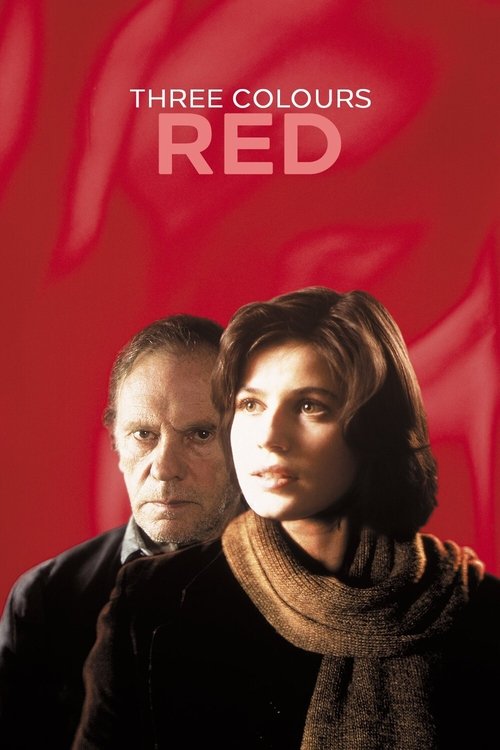
Trois couleurs : Rouge
"The invisible thread of destinies."
Three Colors: Red - Symbolism & Philosophy
Symbols & Motifs
The Color Red
Red symbolizes fraternity, but also a complex dichotomy of opposing forces: intimacy and invasion, passion and danger, love and pain. It represents the vibrant thread of connection that runs through the characters' lives, appearing in crucial moments and objects to highlight their fated bond.
The color permeates the film, from the massive billboard of Valentine against a red background to her red car, clothing, and even the cherries on a slot machine. Its most iconic use is in the final shot, where Valentine's face is framed by the red coat of a rescuer, an image that cinematographer Piotr Sobociński decided should inform the look of the entire movie.
Telephones and Wires
Telephones symbolize the paradox of modern communication: the potential for connection and the reality of invasion and misunderstanding. The opening sequence, which rushes through undersea cables only to end in a busy signal, establishes this theme of failed or difficult communication. They represent both a yearning for intimacy and a violation of privacy.
The plot is driven by phone calls. Valentine's relationship with her boyfriend exists only through the phone. The Judge's central activity is eavesdropping on phone calls. The technology that is meant to bring people together becomes a tool for isolation and moral transgression.
Broken Glass
Broken glass symbolizes fragile connections, breached privacy, and emotional vulnerability. It represents the shattering of illusions and the painful but necessary act of breaking down barriers between people.
After the Judge's neighbors discover his eavesdropping, they throw rocks through his windows. He then watches the news of the ferry rescue through the broken panes, a powerful visual metaphor for his shattered cynicism and newfound connection to the world via Valentine. Earlier, Valentine cleans up broken glass, suggesting her role in mending the Judge's fractured life.
The Ferry
The ferry symbolizes the convergence of destinies. It is the physical space where the separate narrative threads of the entire "Three Colors" trilogy are brought together by a catastrophic event, representing a shared fate.
In the film's climax, both Valentine and Auguste board a ferry to England. The ferry sinks in a storm, but they, along with the main characters from "Blue" and "White," are among the few survivors. This event solidifies the trilogy's theme of an overarching, interconnected human experience.
Philosophical Questions
Are our lives governed by chance or by a pre-ordained destiny?
The film delves deeply into the debate between free will and determinism. Characters' lives are altered by seemingly random events, like a car hitting a dog or dropping a book. Yet, the narrative is filled with such perfect parallels and echoes—Auguste's life mirroring the Judge's—that it suggests a powerful, underlying pattern. Kieślowski doesn't provide a clear answer, instead presenting a world where chance appears to be the instrument of destiny, and every coincidence is pregnant with meaning, leaving the audience to ponder the invisible forces that shape our existence.
What is the nature of true fraternity or human connection?
"Red" challenges the conventional meaning of fraternity, presenting it not as a social or political ideal but as a profound, often unspoken, bond between strangers. The central relationship between Valentine and the Judge transcends age, background, and initial moral judgment. It suggests that genuine connection is born from shared vulnerability and empathy, and can exist outside of romance or family. The film explores how technology both helps and hinders this connection, ultimately championing direct, compassionate engagement as the highest form of fraternity.
Is it possible to achieve redemption for past failures?
The character of the Judge embodies this question. Embittered by a life of perceived mistakes, he lives in a state of self-imposed exile. His connection with Valentine offers him a unique opportunity for redemption—not by undoing his past, but by positively influencing the future. By guiding Valentine towards Auguste, he vicariously corrects his own history, suggesting that redemption can be found by facilitating the happiness of others and fostering the connections we failed to make ourselves. His tears at the end signify a release from his cynical prison.
Core Meaning
The core meaning of "Three Colors: Red" is a profound exploration of fraternity, not in a political sense, but as a deep, almost metaphysical interconnectedness between human beings. Director Krzysztof Kieślowski suggests that lives are intertwined by forces beyond our comprehension, such as chance, destiny, and coincidence. The film posits that true connection can bridge vast differences in age and experience, as seen in the unlikely bond between the optimistic Valentine and the disillusioned Judge Kern. It explores the idea of second chances and redemption, suggesting that one life can unknowingly correct the mistakes of another. The Judge, seeing his own past failures mirrored in the life of his young neighbor Auguste, seems to guide Valentine towards a destiny that he himself missed. Ultimately, the film is a meditation on communication, empathy, and the mysterious, invisible threads that create a fraternity of strangers.