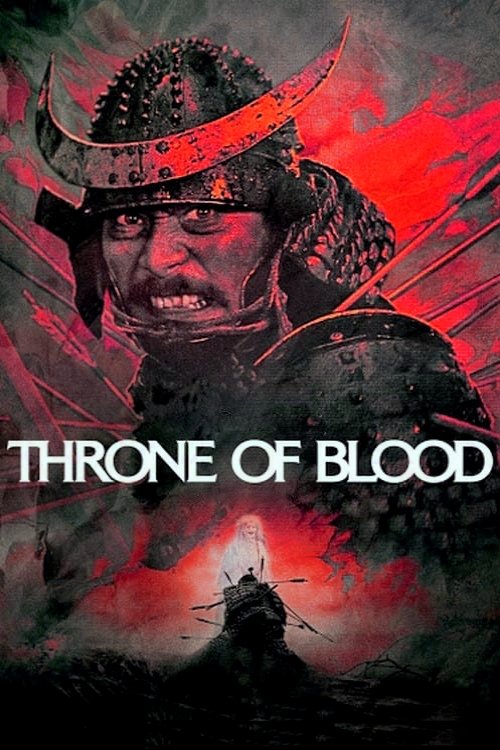
The plot of "Throne of Blood" follows the tragic trajectory of Shakespeare's Macbeth. After murdering Lord Tsuzuki at the urging of his wife Asaji, Taketoki Washizu usurps control of Spider's Web Castle. To secure his throne and defy the second part of a spirit's prophecy—that the son of his friend Yoshiaki Miki will eventually rule—Washizu arranges for Miki and his son to be assassinated. The assassination attempt is only partially successful; Miki is killed, but his son escapes. During a grand banquet, Washizu is tormented by Miki's ghost, an apparition only he can see, causing him to rave madly in front of his terrified vassals.
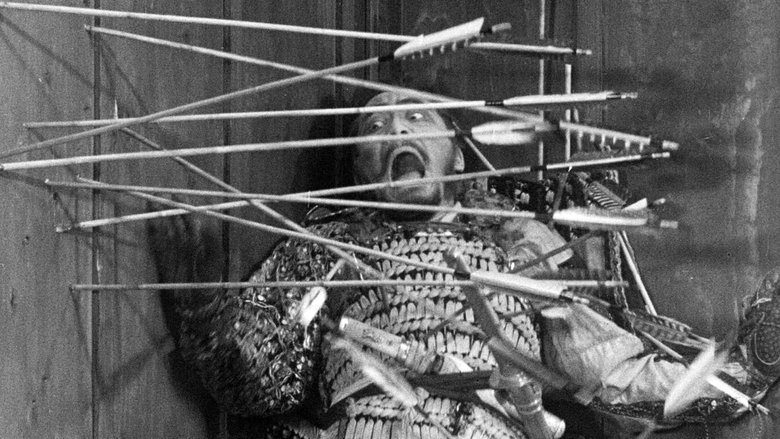
Asaji, the architect of the scheme, informs Washizu she is pregnant, giving him a reason to eliminate Miki's line. However, the pregnancy ends in a stillbirth, and the immense guilt drives Asaji into a catatonic madness where she compulsively tries to wash phantom blood from her hands. Desperate, Washizu seeks the forest spirit again, who tells him he will not be defeated until the Spider's Web Forest moves to the castle. Believing this impossible, a confident Washizu rallies his troops. However, his enemies, led by Miki's son and Tsuzuki's heir, advance on the castle by using branches from the forest as camouflage, thus fulfilling the prophecy. Seeing the "forest" move, Washizu's own terrified soldiers turn on him, viewing him as a doomed leader. They betray him and shoot him with a barrage of arrows. The final, iconic shot sees Washizu, bristling with arrows, finally succumbing to a single arrow through the neck, a brutal end to his reign of blood. The film concludes as it began, with a chorus lamenting the ruin of the castle, a monument to the folly of ambition.