Throne of Blood
A haunting, fog-drenched samurai tragedy where ambition's whispers spiral into a violent, cyclical nightmare, visually echoing the stark minimalism of Noh theatre.
Throne of Blood

Throne of Blood

蜘蛛巣城

15 January 1957 Japan 108 min ⭐ 7.9 (932)
Director: Akira Kurosawa
Cast: Toshirō Mifune, Isuzu Yamada, Takashi Shimura, Akira Kubo, Hiroshi Tachikawa
Drama History
Ambition and Corruption Fate vs. Free Will The Cycle of Violence Guilt and Madness
Box Office: $13,422

Overview

Akira Kurosawa's "Throne of Blood" transposes Shakespeare's Macbeth to feudal Japan. After a victorious battle, loyal samurai generals Washizu and Miki get lost in the labyrinthine Spider's Web Forest. They encounter a ghostly spirit who prophesies that Washizu will become Lord of Spider's Web Castle, and Miki's son will eventually succeed him. When the first part of the prophecy immediately comes true, Washizu's ambitious wife, Asaji, relentlessly goads him into murdering their lord to seize power.

Consumed by paranoia and guilt after his betrayal, Washizu's reign becomes a bloody torrent of violence. Manipulated by Asaji and haunted by his deeds, he turns on his closest allies, including his friend Miki, to secure his fragile throne. As his enemies gather and his own troops begin to question his sanity, Washizu descends deeper into a madness from which there is no escape, culminating in one of cinema's most unforgettable and visceral finales.

Core Meaning

"Throne of Blood" explores the corrupting nature of unchecked ambition and the cyclical, inescapable nature of violence. Director Akira Kurosawa uses the framework of Shakespeare's Macbeth to comment on the human condition, suggesting that the lust for power is a timeless and universal flaw. The film presents a fatalistic worldview, heavily influenced by Buddhist philosophy, where characters are trapped in a predetermined cycle of suffering brought on by their own base desires. Ultimately, the film posits that individual lives are transient and often meaningless in the grand, unending history of human violence and betrayal.

Thematic DNA

Ambition and Corruption 35%
Fate vs. Free Will 30%
The Cycle of Violence 25%
Guilt and Madness 10%

Ambition and Corruption

The central theme is the destructive power of ambition. Washizu, initially a loyal and content general, is prodded by his wife Asaji's relentless ambition. This ambition poisons his honor, leading him to commit regicide and a series of further murders to secure his power. The film illustrates how the pursuit of power for its own sake corrupts absolutely, transforming a noble warrior into a paranoid, tyrannical ruler.

Fate vs. Free Will

The film constantly questions whether the characters' destinies are predetermined or if they are the masters of their own choices. The spirit's prophecies set events in motion, suggesting an unavoidable fate. However, it is the characters' own actions, particularly Washizu's susceptibility to Asaji's manipulation and his own paranoia, that bring the prophecies to fruition. The film masterfully maintains this ambiguity, suggesting that while the path may be laid out, the steps upon it are still taken by choice.

The Cycle of Violence

Kurosawa portrays a world trapped in a perpetual cycle of violence and retribution. Washizu murders his lord to gain power, but it is mentioned that his lord did the same. This act of betrayal only begets more violence, leading to civil war and Washizu's own eventual demise at the hands of his own men. The film's framing, beginning and ending with the ruins of the castle, suggests that this bloody history is doomed to repeat itself.

Guilt and Madness

The psychological toll of their actions drives both Washizu and Asaji to madness. Washizu is haunted by the ghost of his murdered friend Miki, his paranoia escalating with each betrayal. Asaji, the cold and calculating instigator, ultimately succumbs to a catatonic state, endlessly trying to wash imaginary blood from her hands. Their descent into insanity powerfully visualizes the internal consequences of their crimes.

Character Analysis

Taketoki Washizu

Toshirō Mifune

Archetype: Tragic Hero / Antihero
Key Trait: Ambitious but Susceptible

Motivation

Initially content, his motivation shifts to ambition and self-preservation, driven by his wife's cunning and his own growing fear and paranoia. He kills not just to gain power, but to prevent the prophecies about others from coming true and to eliminate anyone he perceives as a threat.

Character Arc

Washizu begins as a brave and loyal samurai commander. After hearing the spirit's prophecy, he is manipulated by his wife's ruthless ambition. He murders his lord, seizing power, but is immediately consumed by paranoia and guilt. His arc is a downward spiral of increasing violence and madness, as he betrays and murders his allies to protect his position, ultimately becoming a feared tyrant who is destroyed by the very men he commands.

Lady Asaji Washizu

Isuzu Yamada

Archetype: Femme Fatale / The Instigator
Key Trait: Ruthlessly Manipulative

Motivation

Her motivation is pure, unadulterated ambition for power, both for her husband and herself. She sees the prophecy as a path to greatness and is willing to achieve it by any means necessary, showing no remorse until her mind finally breaks.

Character Arc

Asaji is ruthlessly ambitious and calculating from the start. She is the primary catalyst for Washizu's downfall, masterfully manipulating his fears and desires. She appears strong and unwavering as she plots murder. However, her steely resolve eventually cracks under the weight of her guilt, leading to a complete mental breakdown where she is haunted by the blood on her hands, culminating in a stillbirth and madness.

Yoshiaki Miki

Minoru Chiaki

Archetype: The Loyal Friend / The Foil
Key Trait: Loyal and Honorable

Motivation

Miki is motivated by loyalty and honor. He is a steadfast friend and a dutiful samurai, representing the noble path that Washizu could have followed.

Character Arc

Miki is Washizu's loyal friend and fellow commander who also receives a prophecy. Unlike Washizu, he remains honorable and does not act on the prediction that his son will one day rule. He remains loyal to Washizu even when others suspect foul play. His arc is tragic, as his loyalty and trust are betrayed by Washizu, who, consumed by paranoia, has him murdered. Miki returns as a ghostly apparition to haunt Washizu at a banquet.

The Forest Spirit

Chieko Naniwa

Archetype: The Oracle / Harbinger of Fate
Key Trait: Enigmatic and Supernatural

Motivation

Her motivation is enigmatic. She appears to be a malevolent or at least indifferent force, an embodiment of fate that reveals the dark potential within humanity. She does not command the characters to act, but merely plants the seeds of ambition and watches the ensuing chaos.

Character Arc

The spirit is a supernatural entity who appears to set the tragedy in motion. She doesn't have a developmental arc but serves as a catalyst. She delivers prophecies that prey on the ambitions of mortals. She reappears later to offer Washizu a second, more cryptic prophecy that bolsters his confidence but ultimately seals his doom.

Symbols & Motifs

Fog

Meaning:

The pervasive fog symbolizes moral confusion, uncertainty, and the obscuring of truth and reason. It represents the characters being lost, both physically in the forest and metaphorically in their own ambition and paranoia. The fog creates an eerie, dream-like atmosphere, suggesting a world where the lines between reality and the supernatural are blurred.

Context:

The film opens and closes with shots of the castle ruins shrouded in fog. Washizu and Miki are first lost in a thick fog when they encounter the spirit in the Spider's Web Forest. The fog frequently blankets the landscape, visually representing Washizu's clouded judgment and the inescapable, suffocating nature of his fate.

Spider's Web Forest and Castle

Meaning:

The name itself, "Spider's Web Castle" (Kumonosu-jō), symbolizes the inescapable trap of fate and ambition that Washizu finds himself in. The forest is a labyrinth that leads not to clarity but to a damning prophecy. The castle becomes his web, a place of power that is also his prison and, ultimately, his tomb. He is entangled in a web of his own making.

Context:

The film is set around the Spider's Web Forest and Castle. Washizu and Miki get lost in the forest at the beginning. Washizu becomes the lord of the castle, only to be besieged within its walls. The spirit's prophecy, that he cannot be defeated until the forest moves against the castle, is literally fulfilled when his enemies advance under the cover of tree branches.

Blood

Meaning:

Blood symbolizes the guilt and the irreversible consequences of violence. It is both a literal and psychological stain. The act of murder leaves a mark that cannot be removed, haunting the perpetrators until their demise.

Context:

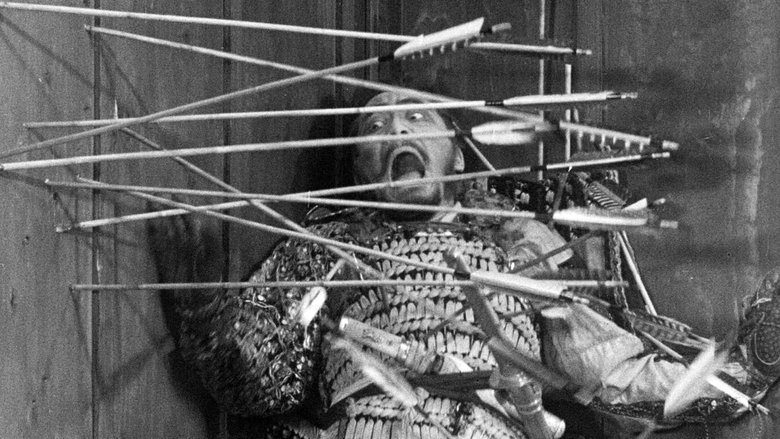
After murdering their lord, Asaji takes the bloody spear to frame the guards. Later, she is found in a trance, frantically trying to wash imaginary blood from her hands, a direct parallel to Lady Macbeth's famous scene. The film ends with Washizu being riddled with arrows, a bloody and visceral end to his violent reign.

The Forest Spirit's Spinning Wheel

Meaning:

The spirit spinning thread represents the weaving of fate. Like the Moirai (Fates) of Greek mythology, her spinning symbolizes the predetermined, intertwined destinies of the characters. The thread represents the lifeline of a person, being spun and eventually cut, highlighting the film's fatalistic themes.

Context:

When Washizu and Miki first encounter the spirit in the forest, she is sitting in a hut, endlessly spinning thread at her wheel and chanting prophecies about their futures. This image is a powerful and unsettling representation of the forces controlling the characters' lives.

Memorable Quotes

ambition is false fame and will fall, death will reign, man falls in vain

— Old Ghost Woman (Forest Spirit)

Context:

This is part of the haunting song the spirit sings while spinning her wheel when Washizu and Miki first encounter her in the Spider's Web Forest. The prophecy lays out the philosophical foundation for the entire narrative.

Meaning:

This sung prophecy encapsulates the film's core theme: the futility and destructive nature of human ambition. It serves as a grim warning, foreshadowing Washizu's tragic rise and fall and suggesting that the pursuit of power ultimately leads to nothing but death and decay.

In this degenerate age one must kill so as not to be killed.

— Lady Asaji Washizu

Context:

Asaji says this to Washizu to persuade him to murder their lord. She frames the act not as one of ambition, but of self-preservation, preying on his fears and convincing him that inaction will lead to his own death.

Meaning:

This quote reveals Asaji's cynical and ruthless worldview, which she uses to justify murder and treason. It speaks to the theme of a violent, cyclical world where morality is a weakness and preemptive strikes are necessary for survival and advancement.

Admirable, my Lord. You, who would soon rule the world, allow a ghost to frighten you.

— Lady Asaji Washizu

Context:

Asaji speaks these words to Washizu during the banquet scene, after he has reacted with terror to the appearance of Miki's ghost, which only he can see. She is trying to cover for his outburst in front of his retainers and shame him back into composure.

Meaning:

This quote showcases Asaji's cold nerve and her manipulative power over her husband. While Washizu is visibly terrified by the supernatural consequences of his actions (Miki's ghost), Asaji remains pragmatic and contemptuous of his weakness, urging him to maintain control.

Philosophical Questions

Are we controlled by fate, or are our lives the product of our own free will?

The film delves deeply into this question through the prophecies of the forest spirit. The spirit foretells Washizu's rise and the eventual reign of Miki's lineage, suggesting a predetermined path. However, the prophecy itself becomes the catalyst for Washizu's actions. He might never have considered treason had the idea not been planted in his mind. His wife, Asaji, actively chooses to interpret the prophecy as a command to act, pushing him to murder. Therefore, the film suggests a complex interplay: fate may present a path, but it is human choice, driven by ambition and fear, that ultimately walks it. The tragedy is that in trying to secure the fate he desires and avoid the one he fears, Washizu's choices lead him directly to his doom.

What is the nature of evil?

"Throne of Blood" explores evil not as a simple, malevolent force, but as a poison born from human weakness. Washizu is not inherently evil, but his ambition and susceptibility to suggestion make him capable of horrific acts. Asaji embodies a more calculated, cold form of evil, driven by a lust for power. The film suggests that evil is a choice, a transgression against one's own honor and humanity. It also presents a cyclical view of evil, where one act of violence begets another, trapping society in a seemingly endless loop of bloodshed and betrayal, reflecting a pessimistic view of human nature.

Alternative Interpretations

While the film is a direct adaptation of Macbeth, some interpretations focus on Asaji's role not just as a manipulative wife but as a supernatural figure herself. Her Noh-mask-like face, her almost unnervingly calm demeanor when plotting murder, and her connection to the stillborn child have led some viewers to see her as being possessed by or an agent of the same dark forces as the forest spirit. Her pregnancy, which seems to come from nowhere and ends in death, could be seen as an otherworldly curse rather than a natural event.

Another interpretation posits that Asaji is not a separate character but a psychological manifestation of Washizu's own dark ambition and paranoia. In this reading, their conversations represent Washizu's internal conflict. Her goading is his own fear and desire speaking to him, and her eventual madness and death symbolize the complete collapse of his own conscience and sanity. His shock at her pregnancy announcement could represent his own mind creating a new, desperate justification for his betrayal of Miki.

A broader philosophical interpretation, rooted in Buddhist thought, sees the story less as a tragedy of individual ambition and more as a sermon on karma and the illusion of the self. From this perspective, Washizu and Asaji are not merely flawed individuals but embodiments of universal human desires that trap them in a cycle of suffering (samsara). Their downfall is not just a punishment but an inevitable karmic consequence, a lesson illustrated by the film's chorus that frames the narrative as a timeless, cautionary tale.

Cultural Impact

"Throne of Blood" is widely regarded as one of the greatest film adaptations of a Shakespeare play, despite taking significant liberties with the source material by removing the dialogue and changing the setting. It demonstrated how universal themes could be powerfully translated across different cultures. Kurosawa masterfully fused a Western classic with Japanese aesthetics, particularly the stylized traditions of Noh theatre, which influenced the acting, music, and visual design. This synthesis created a unique cinematic language that was both culturally specific and universally understood.

The film was made in post-war Japan, a period of significant societal change. Kurosawa used the historical setting of the Sengoku Jidai (the Age of the Country at War) to reflect on contemporary concerns about ambition, violence, and the cyclical nature of history. The film's pessimistic tone and depiction of a world trapped in a loop of betrayal resonated in a country grappling with its recent past.

Critically, the film was highly acclaimed internationally, solidifying Kurosawa's reputation as a master filmmaker. Its visceral, kinetic style, especially in its final scenes, has been influential on many subsequent directors. For example, the arrow-filled death of Washizu directly inspired Piper Laurie's death scene in the 1976 film "Carrie". The film's success encouraged other filmmakers to attempt bold, cross-cultural adaptations and remains a cornerstone of arthouse cinema and a key work in the study of both Kurosawa and Shakespeare on film.

Audience Reception

Audiences and critics alike have overwhelmingly praised "Throne of Blood." On Rotten Tomatoes, it holds a high critical approval rating, with the consensus calling it a career high point for Kurosawa and one of the best Shakespeare adaptations ever filmed. Viewers frequently laud the film's stunning, atmospheric cinematography, particularly its use of fog, shadow, and stark, Noh-inspired compositions. The powerful, intense performances of Toshirō Mifune as Washizu and Isuzu Yamada as Asaji are consistently singled out as highlights, with Yamada's cold, minimalist portrayal often cited as one of cinema's most terrifying depictions of a villain.

The main point of praise is Kurosawa's masterful transposition of the story, successfully retaining the spirit and themes of Macbeth while creating something distinctly Japanese and cinematic. Some viewers who are not accustomed to the stylized nature of Noh theatre might find the performances and pacing unconventional. However, the film's raw power, psychological depth, and unforgettable, action-packed climax—especially Washizu's arrow-ridden death—have secured its status as a masterpiece for most audiences.

Interesting Facts

  • The film transposes the plot of William Shakespeare's Macbeth from Medieval Scotland to feudal Japan.
  • Director Akira Kurosawa was a great admirer of Shakespeare's play and had wanted to adapt it for years, but delayed the project after Orson Welles released his own version in 1948.
  • The film heavily incorporates stylistic elements from traditional Japanese Noh theatre, particularly in the performances, makeup, and music.
  • For Washizu's death scene, real archers fired arrows at Toshiro Mifune. To protect the actor, the archers aimed for chalk outlines on the wall around him, but the proximity of the arrows was genuine, contributing to Mifune's terrified on-screen performance.
  • The castle exteriors were constructed on the volcanic slopes of Mount Fuji to achieve the desired bleak and foggy landscape.
  • The U.S. Marine Corps base near Mount Fuji provided assistance in clearing the ground and building the large castle set.
  • At the time of its release, it was one of the most expensive films ever made in Japan.

⚠️ Spoiler Analysis

Click to reveal detailed analysis with spoilers

Frequently Asked Questions

Explore More About This Movie

Dive deeper into specific aspects of the movie with our detailed analysis pages

Comments (0)

Leave a comment

No comments yet. Be the first to share your thoughts!