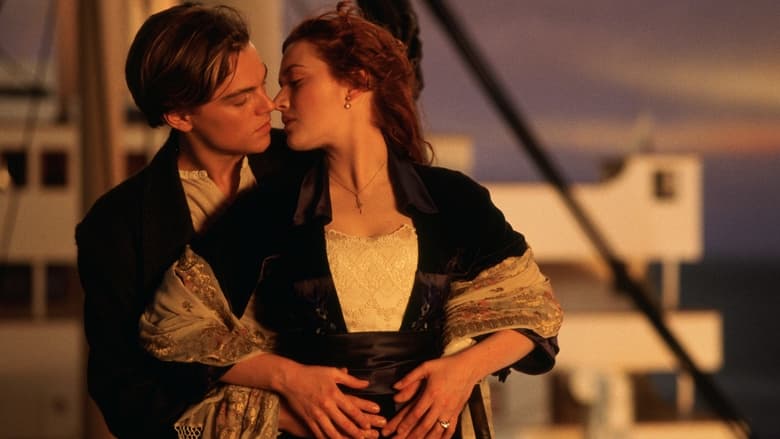
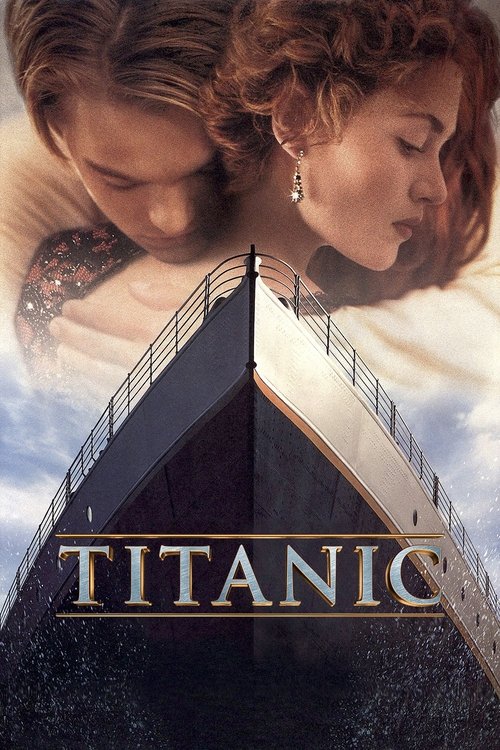
"Nothing on earth could come between them."
Titanic - Ending Explained
⚠️ Spoiler Analysis
The central plot twist of "Titanic" isn't a surprise event, as the audience knows from the outset that the ship will sink. The true narrative suspense lies in the fate of its fictional protagonists, Jack and Rose. The film meticulously builds their forbidden romance, making the audience invest deeply in their survival as a couple.
The film's most devastating turn is the death of Jack Dawson. After the ship sinks, he secures a floating piece of wreckage for Rose but remains in the freezing water himself. He dies of hypothermia, his ultimate sacrifice allowing Rose to survive. This moment is the emotional core of the film's tragedy, revealing that while their love was powerful enough to break social barriers, it could not overcome the cruel randomness of fate and the laws of physics. Rose, upon being rescued, takes on his last name, 'Dawson', effectively erasing her old identity and starting a new life built on the freedom he showed her.
The story's final reveal comes in the present-day narrative. The elderly Rose, after finishing her story, walks to the stern of the research vessel. It is revealed that she has possessed the 'Heart of the Ocean' diamond all along, having found it in Cal's coat pocket after being rescued. She drops the priceless jewel into the ocean, a symbolic gesture of returning it to the site of her true love's resting place. The film concludes with a shot of the elderly Rose in her bed, surrounded by photographs of a long, adventurous life—proof that she kept her promise to Jack. The camera then fades into a final, dreamlike sequence where a young Rose walks up the Grand Staircase of the restored Titanic, greeted by all who died, and finally reunites with Jack. This ambiguous ending can be read as her peaceful death and reunion with him in the afterlife, providing a poignant and spiritually fulfilling conclusion to their epic love story.
Alternative Interpretations
While the film presents a straightforward love story, viewers and critics have proposed several alternative interpretations over the years.
1. Jack is a Time Traveler: A popular fan theory suggests that Jack is a time traveler sent back to save Rose from committing suicide, which would have altered the timeline. Evidence cited includes Jack's anachronistic hairstyle and rucksack, his mention of ice fishing on Lake Wissota (a man-made lake created five years after the Titanic sank), and his promise to take Rose on the Santa Monica Pier rollercoaster (which was built after 1912). In this reading, his mission is not just to win her heart but to ensure her survival.
2. Jack is a Figment of Rose's Imagination: Another theory posits that Jack was a manifestation of Rose's subconscious, created to give her the courage to escape her miserable life. Proponents point to the treasure hunters finding 'no record' of Jack Dawson and old Rose's line, 'He exists now only in my memory.' In this view, her interactions with Jack are an internal struggle, and the romance is a psychological coping mechanism that ultimately empowers her to save herself. However, this theory is often contested by pointing to Jack's interactions with other characters.
3. The Ending is Rose's Afterlife: The final scene where a young Rose reunites with Jack on the Grand Staircase is often debated. The most common interpretation is that the elderly Rose has passed away peacefully in her sleep, and this is her spirit's arrival in the afterlife, where she is welcomed by Jack and all the other souls who perished in the disaster. The clock striking 2:20, the time of the sinking, supports this idea. James Cameron, however, has stated he prefers to leave this open to the audience's interpretation, allowing for it to be either a dream or a spiritual reunion.