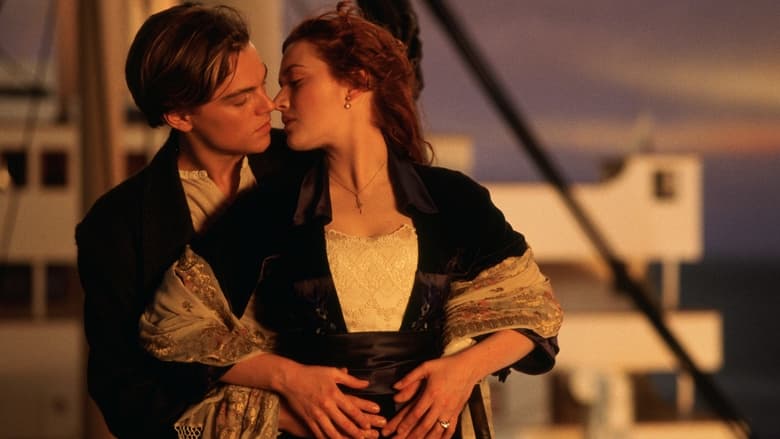
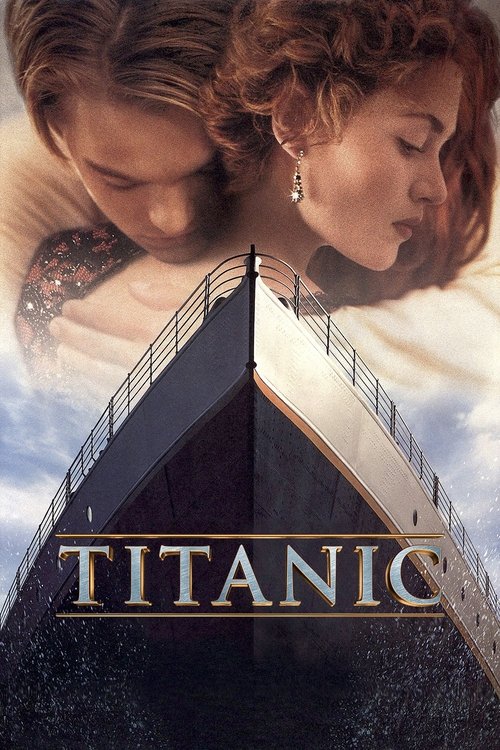
"Nothing on earth could come between them."
Titanic - Symbolism & Philosophy
Symbols & Motifs
The Heart of the Ocean
The fictional blue diamond necklace is a powerful, multi-faceted symbol. For Cal, it represents wealth, power, and his possessive ownership of Rose. For Rose, it initially symbolizes her confinement but transforms into a symbol of her love for Jack and her newfound freedom. It is a witness to their most intimate moment—the nude sketch—and becomes a tool Cal uses to frame Jack, representing the corrupting power of wealth. Ultimately, when the elderly Rose drops it into the ocean, it symbolizes her letting go of the past, returning her 'heart' to Jack, and fulfilling the cycle of their eternal love.
The necklace is introduced as a gift from Cal to Rose. Rose wears only the necklace when Jack draws her. Cal's valet plants it on Jack to accuse him of theft. In the present day, the search for the necklace frames the entire story. The film concludes with the elderly Rose revealing she has had it all along and dropping it over the wreck site.
The RMS Titanic (The Ship)
The ship itself is a major symbol. Initially, it represents human achievement, modernity, and the height of luxury—a 'ship of dreams'. However, it also symbolizes the rigid social hierarchy of the Edwardian era, with its physically segregated classes. For Rose, it is a 'slave ship' and a prison. Ultimately, its tragic sinking symbolizes the fallibility of human pride and technology, and the idea that in the face of nature and death, social distinctions become meaningless. It becomes a vessel of both grand dreams and devastating loss.
The ship is the setting for the entire 1912 narrative. Its grandeur is showcased in the opening scenes and during Jack and Rose's exploration. Its social stratification is evident in the different decks and dining halls. Its vulnerability and eventual destruction form the basis of the film's second half, where it transforms from a luxurious palace into a terrifying vertical deathtrap.
The Clock on the Grand Staircase
The ornate clock where Jack and Rose agree to meet serves as a powerful symbol of time. It represents the precious, limited time they have together, a whirlwind romance condensed into a few days. The clock is a place of promise and a waypoint in their love story. In the film's final dream (or afterlife) sequence, Rose is reunited with Jack at this very clock, where the time is frozen at 2:20 AM, the moment the ship sank. This suggests their love has transcended time, existing eternally in that pivotal moment.
Jack leaves a note for Rose asking her to meet him at the clock on the Grand Staircase, a central and elegant location on the ship. This is where she decides to defy her family and choose him. The film's poignant final scene returns to this location, as the young Rose approaches Jack, who is waiting for her by the clock, surrounded by those who perished.
Jack's Drawings
Jack's art portfolio represents his soul, his perception of the world, and his focus on the truth of the human condition rather than superficial appearances. His drawings capture the real lives and struggles of people, which is what initially fascinates Rose. The act of drawing Rose nude is a pivotal moment of trust, intimacy, and liberation for her. It is an act of seeing her for who she truly is, beyond her socialite facade. The drawing itself becomes the physical evidence that connects the past to the present, initiating Rose's entire narrative.
Rose is first drawn to Jack after seeing his sketchbook filled with portraits of Parisian life. The most significant use of this symbol is the scene where Jack sketches a nude portrait of Rose wearing only the Heart of the Ocean. This drawing is recovered from a safe by the treasure hunters in 1996, leading them to the elderly Rose and setting the entire flashback in motion.
Philosophical Questions
Does true freedom come from rejecting societal expectations or from within?
The film deeply explores the concept of freedom through Rose's journey. She is materially privileged but spiritually and emotionally imprisoned by her social class. Jack, who has nothing, is presented as the freest character. The film poses the question of whether freedom is an external state achieved by breaking rules and leaving one's environment, or an internal state of mind. Jack's philosophy suggests it is internal ('I got air in my lungs, a few blank sheets of paper'), but he is also the catalyst who facilitates Rose's external break from her confining world. Her journey suggests that internal liberation must be accompanied by the courage to make external, life-altering choices.
Can love truly transcend social class and even mortality?
The entire narrative is built around this question. The love between Jack and Rose is a direct assault on the rigid class barriers of their time. Their relationship suggests that human connection is more profound and valuable than any social or economic status. The film's ending pushes this question further. Jack's physical death does not end their love story; Rose keeps his memory alive for 84 years, and he remains the defining force in her life. The final scene, whether interpreted as a dream or the afterlife, suggests that their love achieves a form of immortality, reuniting them beyond the confines of time and death, making a powerful statement on the enduring nature of a profound spiritual bond.
What is the relationship between human ambition, technology, and nature?
The Titanic itself is a monument to human ambition and technological achievement, hailed as 'unsinkable'. The film questions the hubris inherent in believing that humanity can conquer nature. The characters who place their faith in the ship's technological superiority are ultimately proven tragically wrong. The iceberg, a simple, powerful force of nature, effortlessly defeats the pinnacle of modern engineering. The disaster serves as a cautionary tale about the dangers of unchecked pride and the illusion of control, suggesting a need for humility and respect for the natural world that technology cannot replace.
Core Meaning
At its core, "Titanic" is an exploration of the enduring power of love and the human spirit against the backdrop of a monumental tragedy. Director James Cameron stated his goal was to create a love story interspersed with human loss to convey the emotional impact of the disaster. He wanted to honor those who died by making the audience experience the history, not just as a morality tale, but as a lived, subjective event. The fictional love story of Jack and Rose serves as the vehicle for this emotional journey, making the historical event accessible and deeply personal.
The film's message transcends the disaster itself, focusing on themes of liberation and self-determination. Jack's philosophy of 'making each day count' and living an authentic life becomes a powerful force that liberates Rose from her gilded cage of social expectation and familial duty. Jack's ultimate sacrifice is not just a tragic end to a romance, but a transfer of energy that allows Rose to break free and live a full, adventurous life as she promised him she would. The story posits that love can transcend social class, time, and even death, becoming a timeless memory that gives life meaning.