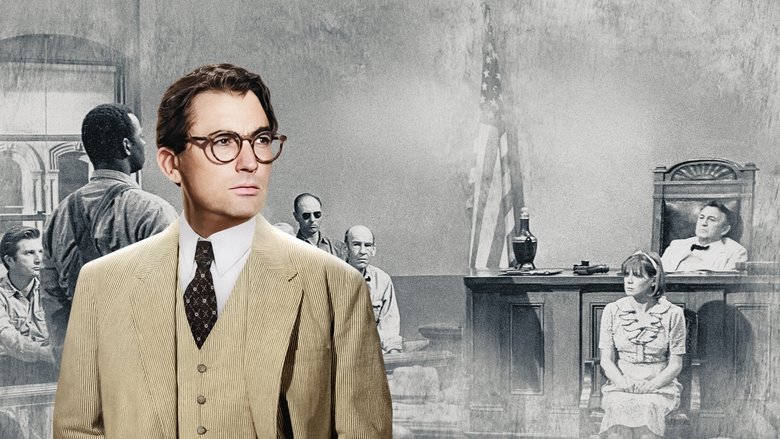
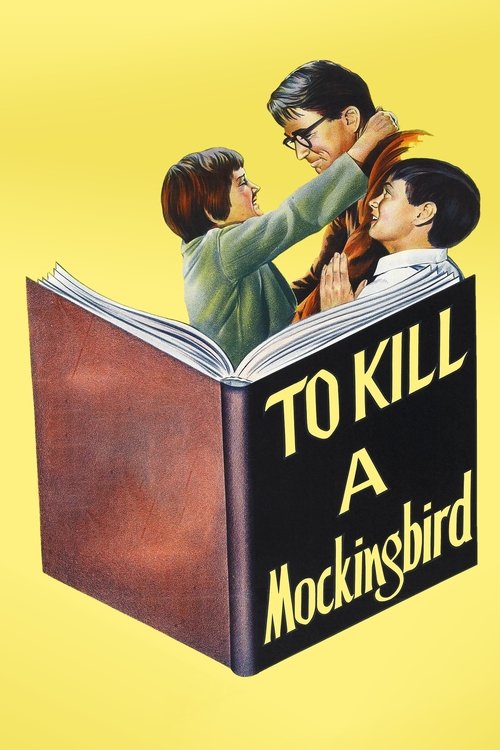
"A father must expose his children to a small town's outraged passions… and can only protect them with his love."
To Kill a Mockingbird - Symbolism & Philosophy
Symbols & Motifs
The Mockingbird
The mockingbird symbolizes innocence and goodness. As explained by Miss Maudie and Atticus, it is a sin to kill a mockingbird because they do nothing but create beautiful music for people to enjoy; they cause no harm. In the film, characters like Tom Robinson and Boo Radley are symbolic mockingbirds—innocent and harmless individuals who are victimized by society's cruelty and prejudice.
The title of the film and novel is a direct reference to this symbol. Atticus gives his children air rifles for Christmas but warns them that while they can shoot all the bluejays they want, they must never kill a mockingbird. This advice becomes a central moral tenet that Scout reflects upon throughout the story, especially in relation to Tom's fate and Boo's quiet acts of kindness.
Boo Radley and the Radley House
Boo Radley and his dilapidated house symbolize fear of the unknown, prejudice, and the dangers of judgment based on rumor. To the children, he is initially a monstrous figure, a 'malevolent phantom' born from town gossip. However, Boo ultimately represents kindness and protection, proving that appearances can be deceiving and that goodness can exist where it is least expected.
Throughout the film, the Radley house is a source of both terror and fascination for the children. They dare each other to touch the house and create stories about its occupant. Boo's quiet presence is felt through the small gifts he leaves for the children in the knothole of a tree, his first attempts at connection. He becomes a physical presence only at the climax, saving the children from Bob Ewell's attack.
The Rabid Dog (Tim Johnson)
The rabid dog, Tim Johnson, represents the pervasive and irrational nature of racism and prejudice within Maycomb. The dog's madness is a metaphor for the town's 'sickness' of racism, which makes it a dangerous place for innocent people like Tom Robinson. Atticus is the only one willing to confront this danger directly, just as he is the only one willing to take on Tom's case and fight against the town's prejudice.
In a tense scene, Atticus is called upon by the sheriff to shoot the rabid dog that is staggering down the main street. He does so with a single, precise shot, revealing a skill his children were unaware of. This act symbolically positions Atticus as the town's protector, the one who must face the ugliness that others are unwilling or unable to confront.
Philosophical Questions
Can one person's moral integrity truly make a difference in a deeply prejudiced society?
The film explores this question through the character of Atticus Finch. He single-handedly defends Tom Robinson, facing the scorn and threats of his community. While he loses the case, his unwavering commitment to justice profoundly impacts his children and offers a glimmer of hope. The film suggests that even in defeat, the act of standing up for what is right has inherent value, planting seeds of change for the next generation and preserving one's own humanity.
How does society define and treat 'the other'?
"To Kill a Mockingbird" examines this through two key 'others': Tom Robinson, who is ostracized and ultimately destroyed because of his race, and Boo Radley, who is demonized because of his reclusiveness. The film demonstrates how fear, rumor, and prejudice lead communities to dehumanize those who are different. It forces the audience to question the foundations of their own judgments and the societal structures that create and persecute outsiders.
What is the relationship between justice and the law?
The film presents a scenario where the legal system fails to deliver justice. Tom Robinson is convicted despite a complete lack of evidence, demonstrating that the law can be manipulated by societal prejudice. Conversely, at the end of the film, Sheriff Tate and Atticus bend the law to protect the innocent Boo Radley, suggesting that true justice sometimes requires acting outside of formal legal structures. This raises complex questions about whether the law is always synonymous with what is morally right.
Core Meaning
"To Kill a Mockingbird" is a profound exploration of morality, justice, and human decency. The film, through the lens of childhood innocence, posits that true courage is not the absence of fear but the willingness to stand for what is right, even in the face of overwhelming opposition. Director Robert Mulligan, through Horton Foote's faithful screenplay, conveys Harper Lee's central message: that prejudice and hatred are learned behaviors that can be challenged by empathy and understanding. The film ultimately carries a message of hope, suggesting that while society may be flawed, the individual's capacity for compassion and integrity can illuminate the darkest of times.