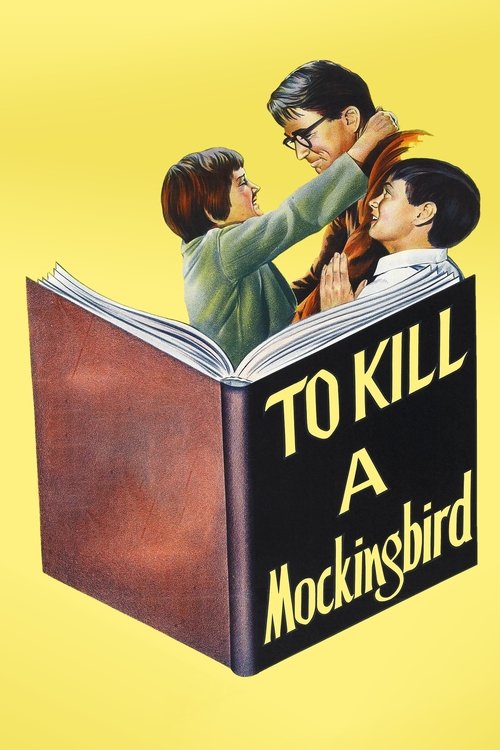
To Kill a Mockingbird
A poignant Southern Gothic drama that captures the bittersweet loss of childhood innocence against the stark backdrop of racial injustice, rendered in haunting black and white.
To Kill a Mockingbird

To Kill a Mockingbird

"A father must expose his children to a small town's outraged passions… and can only protect them with his love."

20 December 1962 United States of America 129 min ⭐ 8.0 (2,736)
Director: Robert Mulligan
Cast: Mary Badham, Gregory Peck, Phillip Alford, John Megna, Frank Overton
Drama
Racial Injustice Loss of Innocence Courage and Morality Empathy and Understanding
Budget: $2,000,000
Box Office: $13,129,846

Overview

Set in the fictional town of Maycomb, Alabama, during the 1930s, "To Kill a Mockingbird" is a powerful drama told through the eyes of a young girl, Jean Louise "Scout" Finch (Mary Badham). Scout, her older brother Jem (Phillip Alford), and their friend Dill (John Megna) spend their summers absorbed in childhood games and fascinated by their mysterious, reclusive neighbor, Boo Radley (Robert Duvall).

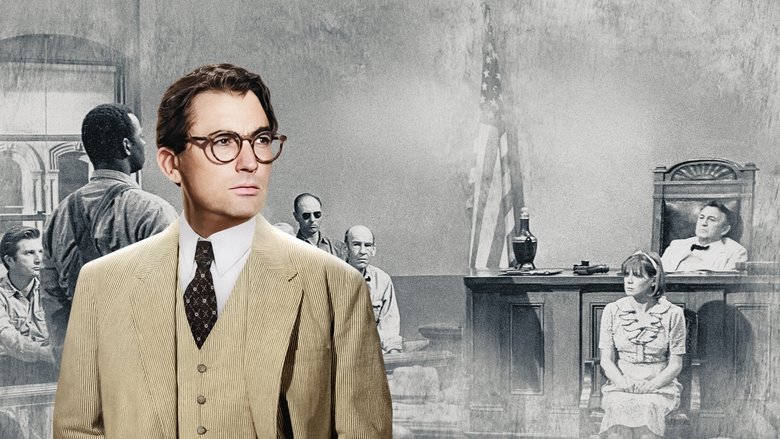
Their idyllic world is shattered when their widowed father, Atticus Finch (Gregory Peck), a principled lawyer, is appointed to defend Tom Robinson (Brock Peters), a Black man falsely accused of raping a white woman, Mayella Ewell (Collin Wilcox). As Atticus takes on the case, he and his children face the deep-seated racism and prejudice of their community, forcing Scout and Jem to confront the harsh realities of the adult world and the complexities of good and evil.

Core Meaning

"To Kill a Mockingbird" is a profound exploration of morality, justice, and human decency. The film, through the lens of childhood innocence, posits that true courage is not the absence of fear but the willingness to stand for what is right, even in the face of overwhelming opposition. Director Robert Mulligan, through Horton Foote's faithful screenplay, conveys Harper Lee's central message: that prejudice and hatred are learned behaviors that can be challenged by empathy and understanding. The film ultimately carries a message of hope, suggesting that while society may be flawed, the individual's capacity for compassion and integrity can illuminate the darkest of times.

Thematic DNA

Racial Injustice 35%
Loss of Innocence 30%
Courage and Morality 25%
Empathy and Understanding 10%

Racial Injustice

This is the central theme of the film, embodied by the trial of Tom Robinson. Despite clear evidence of his innocence, Tom is convicted by an all-white jury, a stark depiction of the deeply ingrained racism of the 1930s American South. The film confronts prejudice head-on, showing how systemic racism denies justice and destroys innocent lives. Atticus Finch's defense of Tom, and the community's hostile reaction, exposes the poisonous nature of racial bigotry.

Loss of Innocence

The story is a coming-of-age narrative for Scout and Jem, who begin the film in a world of childhood games and superstitions. Through the events of Tom Robinson's trial and Bob Ewell's subsequent attack, they are forced to witness the ugliness of hatred and injustice in their community. This journey from innocence to experience is a core element of the film, as the children learn that the world is not as simple as they once believed and that good and evil can coexist.

Courage and Morality

Atticus Finch serves as the film's moral compass, embodying a quiet, principled courage. He teaches his children that courage isn't about physical strength but about fighting for one's convictions, even when you know you might lose. His decision to defend Tom Robinson, despite the personal cost, is the ultimate act of moral courage. The film explores different forms of bravery, from Mrs. Dubose's fight against her addiction to Boo Radley's decision to protect the children.

Empathy and Understanding

A key lesson Atticus imparts to his children is the importance of empathy—of climbing into someone's skin and walking around in it. This idea is central to the film's message. Scout's journey is one of learning to see the world from others' perspectives, most notably Boo Radley's. She moves from childish fear to understanding and compassion for the reclusive man, realizing he is not a monster but a kind and vulnerable human being.

Character Analysis

Atticus Finch

Gregory Peck

Archetype: Mentor / Hero
Key Trait: Integrity

Motivation

Atticus is driven by a profound sense of justice and a deep-seated belief in doing what is right, regardless of public opinion or personal cost. His primary motivation is to live with a clear conscience and to set a proper example for his children, whom he is raising to be compassionate and just individuals. He defends Tom Robinson because he believes in the principle of equality before the law and his own moral duty.

Character Arc

Atticus is a largely static character, serving as the film's unwavering moral center. He does not undergo a significant personal transformation but instead remains a pillar of integrity and justice from beginning to end. His role is to guide his children's moral development and to challenge the deeply ingrained prejudices of his community. His consistency in the face of adversity is his defining characteristic.

Jean Louise 'Scout' Finch

Mary Badham

Archetype: Initiate / Protagonist
Key Trait: Inquisitive

Motivation

Scout's motivation is primarily driven by childhood curiosity and a desire to understand the world around her. She is fascinated by the mystery of Boo Radley and perplexed by the adult world's contradictions, particularly the injustice she witnesses during the trial. Her journey is one of seeking answers and trying to reconcile her father's teachings with the harsh realities she observes.

Character Arc

The film is told from Scout's perspective, and her arc is one of classic coming-of-age. She begins as an innocent, curious, and tomboyish six-year-old. Over the course of the film, her experiences—observing the trial, witnessing the town's racism, and finally meeting Boo Radley—strip away her naivete. She learns to see the complexity of human nature and develops a mature understanding of empathy and justice, culminating in her ability to see the world from Boo Radley's point of view.

Jeremy Atticus 'Jem' Finch

Phillip Alford

Archetype: Brother / Initiate
Key Trait: Idealistic

Motivation

Jem is motivated by a desire to be brave and to emulate his father, Atticus, whom he deeply admires. He has a strong sense of justice and responsibility, particularly in his role as Scout's older brother and protector. His actions are often driven by a need to prove his courage, whether by touching the Radley house or by standing with his father against the lynch mob.

Character Arc

Jem's arc mirrors Scout's but is marked by a more profound and painful disillusionment. As he enters adolescence, he struggles to reconcile his idealistic belief in justice, inherited from his father, with the unfair verdict of the trial. The outcome leaves him deeply shaken and cynical. However, the attack by Bob Ewell and Boo Radley's intervention force him to confront true evil and heroism, ultimately pushing him further along the path to maturity and a more nuanced understanding of courage.

Arthur 'Boo' Radley

Robert Duvall

Archetype: Outcast / Guardian Angel
Key Trait: Reclusive

Motivation

Boo's motivation appears to be a simple, pure-hearted desire for connection and a protective affection for the Finch children. Having been isolated for years, he watches them from his window and reaches out in the only ways he can. His ultimate motivation is to protect the innocent, which he does when he saves Jem and Scout from Bob Ewell, acting as a true guardian angel.

Character Arc

Boo Radley's development happens almost entirely in the perception of the other characters, particularly the children. He transforms from a monstrous legend into a human being. For most of the film, he is an unseen presence, communicating only through gifts left in a tree. His arc culminates in a single, decisive act of heroism where he saves Jem and Scout. In the final scenes, he is revealed to be a shy, gentle, and profoundly kind man, completing his transformation from a figure of fear to a symbol of compassion and protection.

Symbols & Motifs

The Mockingbird

Meaning:

The mockingbird symbolizes innocence and goodness. As explained by Miss Maudie and Atticus, it is a sin to kill a mockingbird because they do nothing but create beautiful music for people to enjoy; they cause no harm. In the film, characters like Tom Robinson and Boo Radley are symbolic mockingbirds—innocent and harmless individuals who are victimized by society's cruelty and prejudice.

Context:

The title of the film and novel is a direct reference to this symbol. Atticus gives his children air rifles for Christmas but warns them that while they can shoot all the bluejays they want, they must never kill a mockingbird. This advice becomes a central moral tenet that Scout reflects upon throughout the story, especially in relation to Tom's fate and Boo's quiet acts of kindness.

Boo Radley and the Radley House

Meaning:

Boo Radley and his dilapidated house symbolize fear of the unknown, prejudice, and the dangers of judgment based on rumor. To the children, he is initially a monstrous figure, a 'malevolent phantom' born from town gossip. However, Boo ultimately represents kindness and protection, proving that appearances can be deceiving and that goodness can exist where it is least expected.

Context:

Throughout the film, the Radley house is a source of both terror and fascination for the children. They dare each other to touch the house and create stories about its occupant. Boo's quiet presence is felt through the small gifts he leaves for the children in the knothole of a tree, his first attempts at connection. He becomes a physical presence only at the climax, saving the children from Bob Ewell's attack.

The Rabid Dog (Tim Johnson)

Meaning:

The rabid dog, Tim Johnson, represents the pervasive and irrational nature of racism and prejudice within Maycomb. The dog's madness is a metaphor for the town's 'sickness' of racism, which makes it a dangerous place for innocent people like Tom Robinson. Atticus is the only one willing to confront this danger directly, just as he is the only one willing to take on Tom's case and fight against the town's prejudice.

Context:

In a tense scene, Atticus is called upon by the sheriff to shoot the rabid dog that is staggering down the main street. He does so with a single, precise shot, revealing a skill his children were unaware of. This act symbolically positions Atticus as the town's protector, the one who must face the ugliness that others are unwilling or unable to confront.

Memorable Quotes

You never really understand a person until you consider things from his point of view... until you climb into his skin and walk around in it.

— Atticus Finch

Context:

Atticus says this to Scout early in the film after she has had a difficult first day of school. He is teaching her how to deal with the different kinds of people she will encounter in life, encouraging her to look beyond surface-level judgments and try to understand their perspectives and motivations.

Meaning:

This quote encapsulates one of the film's central themes: the importance of empathy. It is Atticus's core philosophy, which he strives to instill in his children. The line serves as a moral guidepost for Scout and for the audience, advocating for compassion and understanding over prejudice and judgment.

Remember it's a sin to kill a mockingbird.

— Atticus Finch

Context:

Atticus gives this instruction to Jem and Scout after they receive air rifles for Christmas. Confused by the statement, Scout later asks their neighbor, Miss Maudie, who explains that mockingbirds don't do anything to harm anyone; they only sing, making them a symbol of pure, harmless innocence.

Meaning:

This line introduces the film's most important symbol. It is a moral instruction that defines innocence as something sacred that must be protected. The quote frames the persecution of harmless individuals like Tom Robinson and Boo Radley as a profound moral wrong.

Miss Jean Louise, stand up. Your father's passin'.

— Reverend Sykes

Context:

This is said to Scout by Reverend Sykes in the courtroom immediately after the guilty verdict is read and Tom Robinson has been led away. As a dejected Atticus prepares to leave, the entire Black population in the segregated balcony silently stands up as a gesture of respect as he walks out, and Reverend Sykes prompts Scout to do the same.

Meaning:

This powerful line signifies the immense respect and gratitude the Black community has for Atticus Finch. Despite the verdict, they recognize his courageous and principled defense of Tom Robinson. It is a moment of profound honor and a testament to Atticus's moral victory in the face of legal defeat.

Philosophical Questions

Can one person's moral integrity truly make a difference in a deeply prejudiced society?

The film explores this question through the character of Atticus Finch. He single-handedly defends Tom Robinson, facing the scorn and threats of his community. While he loses the case, his unwavering commitment to justice profoundly impacts his children and offers a glimmer of hope. The film suggests that even in defeat, the act of standing up for what is right has inherent value, planting seeds of change for the next generation and preserving one's own humanity.

How does society define and treat 'the other'?

"To Kill a Mockingbird" examines this through two key 'others': Tom Robinson, who is ostracized and ultimately destroyed because of his race, and Boo Radley, who is demonized because of his reclusiveness. The film demonstrates how fear, rumor, and prejudice lead communities to dehumanize those who are different. It forces the audience to question the foundations of their own judgments and the societal structures that create and persecute outsiders.

What is the relationship between justice and the law?

The film presents a scenario where the legal system fails to deliver justice. Tom Robinson is convicted despite a complete lack of evidence, demonstrating that the law can be manipulated by societal prejudice. Conversely, at the end of the film, Sheriff Tate and Atticus bend the law to protect the innocent Boo Radley, suggesting that true justice sometimes requires acting outside of formal legal structures. This raises complex questions about whether the law is always synonymous with what is morally right.

Alternative Interpretations

While the film is widely seen as a straightforward parable of good versus evil and a condemnation of racism, some alternative interpretations exist. One perspective focuses on the limitations of Atticus Finch's heroism. Some modern critics argue that Atticus works within a flawed system rather than seeking to dismantle it, representing a form of well-intentioned white paternalism that ultimately does not challenge the racist status quo. His belief in the inherent goodness of his neighbors, despite their actions, can be seen as naive.

Another interpretation views the story less as a social commentary and more as a Southern Gothic tale. This reading emphasizes the elements of mystery, the grotesque (the Ewells), the decaying setting of the Radley house, and the focus on secrets and hidden sins within the community. From this viewpoint, the trial is just one element in a larger narrative about the darkness that lurks beneath the surface of a seemingly idyllic small town.

Cultural Impact

Released in 1962, "To Kill a Mockingbird" arrived at a critical moment in American history, during the height of the Civil Rights Movement. The film's direct confrontation with racial injustice in the South was both timely and courageous. It brought the themes of Harper Lee's Pulitzer Prize-winning novel to a wide audience, sparking conversations about race, justice, and morality across the country. The film received overwhelmingly positive reviews and was a box office success, earning more than six times its budget.

Gregory Peck's Oscar-winning performance as Atticus Finch created one of cinema's most enduring heroes; in 2003, the American Film Institute named Atticus Finch the greatest movie hero of the 20th century. The character became a benchmark for integrity and moral fortitude. The film's influence is vast; it is considered one of the greatest movies ever made and is a staple in school curricula for its powerful lessons on empathy and social justice. In 1995, it was selected for preservation in the National Film Registry by the Library of Congress as being "culturally, historically, or aesthetically significant." Even decades later, the film's themes remain deeply relevant, though modern critics sometimes point out that the story is told through a white perspective and that the Black characters are not fully developed—a critique that reflects evolving conversations about race and narrative in the 21st century.

Audience Reception

Upon its release, "To Kill a Mockingbird" was met with widespread critical acclaim and was a significant commercial success. Audiences and critics praised the film for its faithful and sensitive adaptation of Harper Lee's novel, Horton Foote's powerful screenplay, and the masterful direction of Robert Mulligan. Gregory Peck's performance as Atticus Finch was universally lauded, earning him an Academy Award and cementing the character as an iconic screen hero. The performances of the child actors, particularly Mary Badham as Scout, were also highly praised for their naturalism and authenticity. The film's bold confrontation of racism during the Civil Rights era was seen as both courageous and important. While a minor criticism from some was that the film slightly underdeveloped the relationship between Atticus and his children compared to the novel, the overall verdict was that it was a masterpiece and a timeless classic.

Interesting Facts

  • Harper Lee, the author of the novel, was very pleased with the film adaptation and became lifelong friends with Gregory Peck. She gave him her father's pocket watch, as the character of Atticus was based on him.
  • This was Robert Duvall's film debut. To prepare for the role of the pale, reclusive Boo Radley, he stayed out of the sun for six weeks and dyed his hair blond.
  • The child actors who played Jem (Phillip Alford) and Scout (Mary Badham) did not get along off-camera, often fighting like real siblings, which some believe translated into a realistic on-screen dynamic.
  • The film was shot entirely on a backlot at Universal Studios in California because the racial climate in Alabama in the early 1960s was considered too volatile for filming there. The fictional town of Maycomb was meticulously recreated, winning an Academy Award for its art direction.
  • Gregory Peck was the first and only choice of producer Alan J. Pakula and director Robert Mulligan for the role of Atticus Finch.
  • Gregory Peck believed so strongly in the film's message that he agreed to a much lower salary than usual to ensure it was made.
  • Mary Badham, who played Scout, was the youngest actress ever nominated for an Academy Award in the Best Supporting Actress category at the time.

⚠️ Spoiler Analysis

Click to reveal detailed analysis with spoilers

Frequently Asked Questions

Explore More About This Movie

Dive deeper into specific aspects of the movie with our detailed analysis pages

Comments (0)

Leave a comment

No comments yet. Be the first to share your thoughts!