Tokyo Godfathers
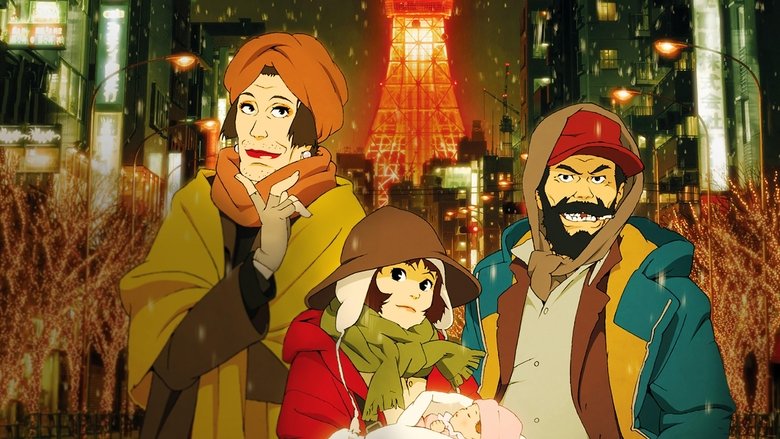
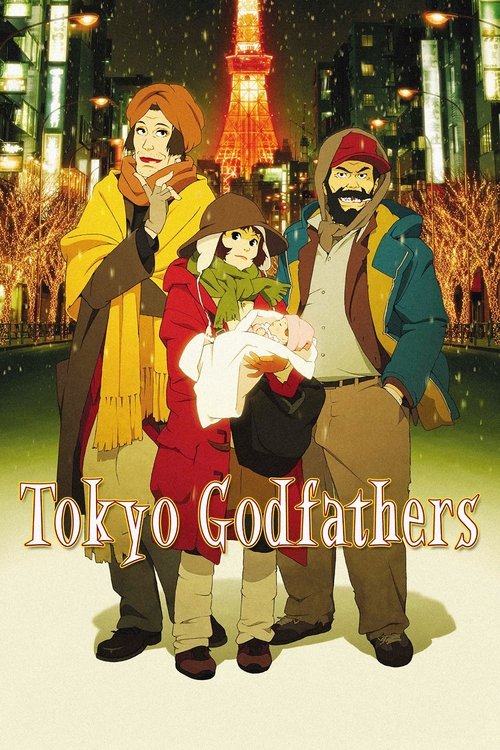
A heartfelt tragicomedy painted across a snowy Tokyo, where a chance discovery of life in the trash becomes a miraculous quest for redemption for three souls discarded by society.
Tokyo Godfathers
Tokyo Godfathers

東京ゴッドファーザーズ

"Meet the ultimate dysfunctional family."

05 December 2003 Japan 92 min ⭐ 7.9 (1,405)
Director: Satoshi Kon
Cast: Aya Okamoto, Yoshiaki Umegaki, Tohru Emori, Satomi Korogi, Mamiko Noto
Drama Animation Comedy
The Nature of Family Coincidence and Miracles Redemption and Forgiveness Social Commentary on Homelessness
Box Office: $607,735

Tokyo Godfathers - Ending Explained

⚠️ Spoiler Analysis

The plot of Tokyo Godfathers is a cascading series of revelations and coincidences. The trio's search leads them to a club where they learn the baby's mother's name is Sachiko. This leads them to a wedding, where the groom is the man Gin owes money to, and the bride's father is the yakuza boss they saved earlier. A hitman attempts an assassination, kidnapping Miyuki and Kiyoko. Miyuki befriends the hitman's wife, confessing she stabbed her own father.

Meanwhile, Gin is taken in by the owner of Hana's old drag club and reunites with his own estranged daughter, Kiyoko, who is a nurse. He discovers his entire story about his family being dead was a lie. The woman they believed was the mother, Sachiko, is revealed to not be the baby's mother at all. Her own baby died, and in her grief, she stole Kiyoko from the hospital and intended to commit suicide with her.

The climax is a frantic chase across rooftops, culminating in Sachiko jumping from a building. Hana leaps after her, catching the baby in mid-air just as a gust of wind miraculously slows their fall, allowing them to land safely in a banner held by Gin and Miyuki below. The real parents are found, and they ask the homeless trio to be Kiyoko's godparents. In the final scene, Miyuki's policeman father arrives, revealing he has been searching for her. As a final miracle, the lottery ticket an old homeless man gave to Gin before dying is revealed to be the winning ticket. The ending reaffirms the film's central theme: their selfless journey has led each of them to their own personal salvation and a miraculous new beginning.

Alternative Interpretations

The central point of debate in interpreting Tokyo Godfathers is the nature of the film's many coincidences. One perspective is that these events are genuine miracles—divine interventions orchestrated by a higher power, fitting the Christmas theme and Hana's devout perspective. The film is filled with Christian allegory, from the nativity parallels to themes of salvation, supporting this reading.

A more secular interpretation suggests that the events are simply a highly improbable, but not impossible, chain of coincidences. In this view, the film is not about divine fate, but about the interconnectedness of human lives in a vast metropolis like Tokyo. It's a celebration of luck and the idea that by putting good out into the world, good things will eventually come back around. Satoshi Kon himself referred to the city of Tokyo as a character, suggesting an almost animistic force at play—the city itself creating these connections. Ultimately, the film leaves it ambiguous, allowing the viewer to decide whether the events are guided by God, fate, or sheer, extraordinary luck.