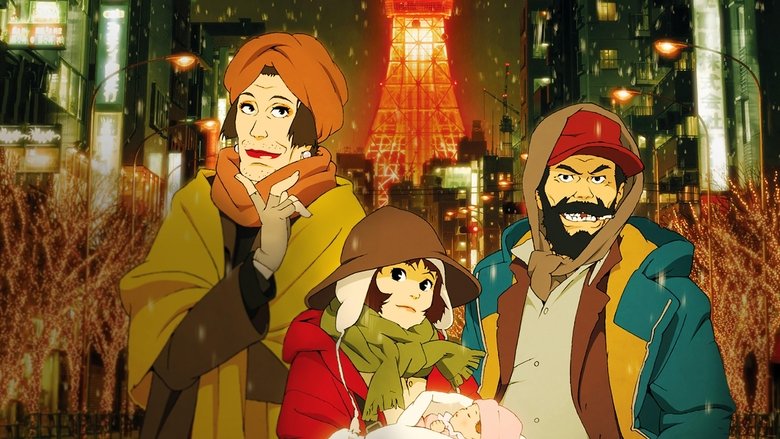
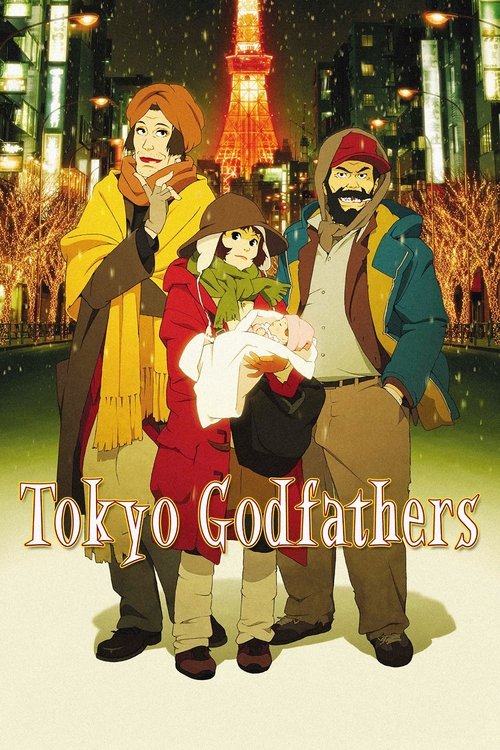
東京ゴッドファーザーズ
"Meet the ultimate dysfunctional family."
Tokyo Godfathers - Symbolism & Philosophy
Symbols & Motifs
Kiyoko (The Baby)
Kiyoko, whose name means "pure child," is a symbol of hope, innocence, and divine grace. She acts as a catalyst for change, a "Christmas present from God" that forces the protagonists to confront their pasts and find their better selves. Her presence initiates the series of miracles that guide the trio toward redemption, representing a chance for a new beginning not just for her, but for her godparents as well.
Found in a pile of trash on Christmas Eve, her discovery parallels the birth of Jesus in the nativity story, a theme established in the film's opening scene at a church. Throughout the film, her uncanny ability to survive and bring about fortunate coincidences reinforces her symbolic role as a miracle worker.
Tokyo Cityscape
The city of Tokyo is portrayed as a character in itself, a dual-natured entity that is both cruel and nurturing. Its dark alleys and garbage dumps represent societal decay and indifference, where people are discarded like trash. However, the city also provides the means for survival and is the backdrop for all the film's miracles, suggesting it has a soul that watches over the protagonists.
The film contrasts the glittering neon lights of affluent districts with the squalid shelters of the homeless. Key locations like Shinjuku and its backstreets are rendered with gritty realism, grounding the fantastical events in a tangible, complex urban environment.
The Key
The locker key found with Kiyoko symbolizes the unlocking of the past and the path to the future. It is the first tangible clue that sets the entire quest in motion. It represents the potential for discovery and the hope that answers can be found, motivating the trio to move forward instead of remaining stagnant in their despair.
The key is found with the baby in the garbage dump. It leads them to a coin locker containing photos and information about Kiyoko's supposed parents, launching their detective-like journey across Tokyo. The key physically opens a lock, but metaphorically it opens the door for each character to begin addressing their own locked-away pasts.
Philosophical Questions
What constitutes a 'family'?
The film deconstructs the traditional definition of family. The central trio, unrelated by blood and from vastly different backgrounds, form a more loving and functional family unit than the biological ones they fled. Through their shared struggles and unwavering loyalty to each other and Kiyoko, the film powerfully argues that the bonds of love, choice, and shared experience are more significant than bloodlines in creating a true family.
Is redemption possible for those who have abandoned their responsibilities?
All three protagonists are running from past mistakes where they hurt their loved ones and shirked responsibility. Their journey is a path of atonement. By taking on the ultimate responsibility—caring for a helpless infant—they are forced to become selfless. This act of grace allows them to find the courage to face their pasts and seek forgiveness, suggesting that redemption is not only possible but is earned through selfless action and confronting one's personal demons.
Do we live by chance or by design?
The narrative is built on a series of incredible coincidences that stretch believability. This central mechanic forces the audience to question whether life is a series of random events or if there is a guiding force—be it God, fate, or the 'soul' of the city—that connects everything. Hana believes it's God's plan, while Gin is more cynical. The film never explicitly answers, leaving the viewer to ponder the mysterious interplay of luck, choice, and potential destiny in shaping our lives.
Core Meaning
At its core, Tokyo Godfathers is a profound exploration of family, forgiveness, and redemption. Director Satoshi Kon shifts from his usual themes of blurred reality to tell what he called a "twisted sentimental story" grounded in realism. The film posits that family is not defined by blood, but by love, choice, and shared experience, as demonstrated by the powerful bond formed between Gin, Hana, and Miyuki.
The central message is one of hope, suggesting that even those on the lowest rungs of society—the "invisible" and "discarded"—possess an inherent goodness and capacity to bring about positive change. Through a series of events that blur the line between coincidence and divine intervention, the film argues for the possibility of miracles in everyday life and the idea that confronting one's past, no matter how painful, is the only path to salvation and reconnecting with society.