The series' greatest twists revolve around the existence of multiple time-leapers. It is eventually revealed that Mikey's older brother, Shinichiro, was the original time-leaper who acquired the power to save Mikey from a childhood accident. This act of 'staling' the power from a previous user created a curse known as the Dark Impulses, which has haunted Mikey throughout every timeline. Tetta Kisaki’s manipulation is revealed to be rooted in a deep resentment of Takemichi's influence over Hinata, making him a 'voluntary' antagonist who understands the mechanics of fate without needing to leap. The series finale sees Takemichi and Mikey making a final, cosmic leap back to their childhood, successfully saving everyone at the cost of erasing the memories of their journey for most of their friends, culminating in a world where Toman is never corrupted and Hinata survives.
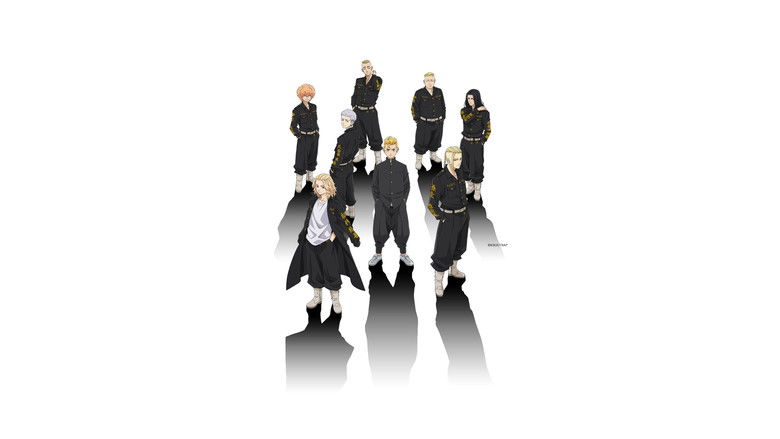

東京リベンジャーズ
"I'm not gonna let you die."
Cast: Yuuki Shin, Azumi Waki, Ryota Osaka, Yuu Hayashi, Tatsuhisa Suzuki
Tokyo Revengers — Ending Explained
⚠️ Spoiler Analysis
Alternative Interpretations
Critics have often debated the nature of the time-leap as a metaphorical representation of trauma processing. One interpretation suggests that Takemichi is not literally traveling through time, but is in a 'death dream' or psychological state where he is re-evaluating his past mistakes. Another popular reading focuses on Mikey's Dark Impulses as a personification of hereditary depression or generational trauma, with Takemichi acting as a 'surrogate therapist' rather than a physical savior. Some fans also interpret the ending as a commentary on the futility of total control, suggesting that true peace only comes when characters relinquish the power to manipulate time and accept their mortality.
Explore More About This Movie
Dive deeper into specific aspects of the movie with our detailed analysis pages