Skip to content
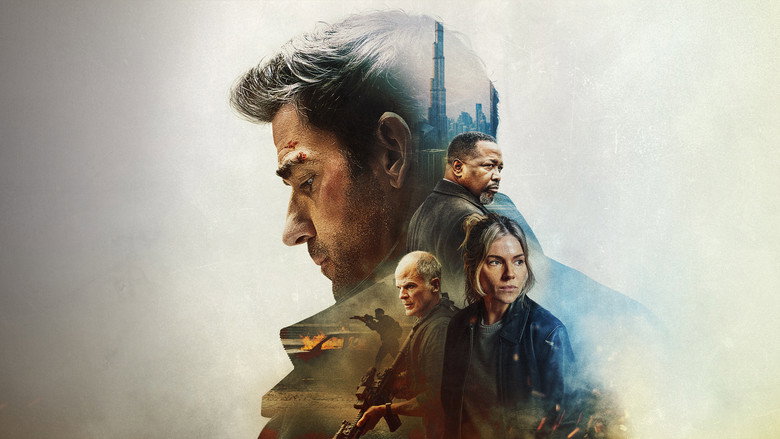
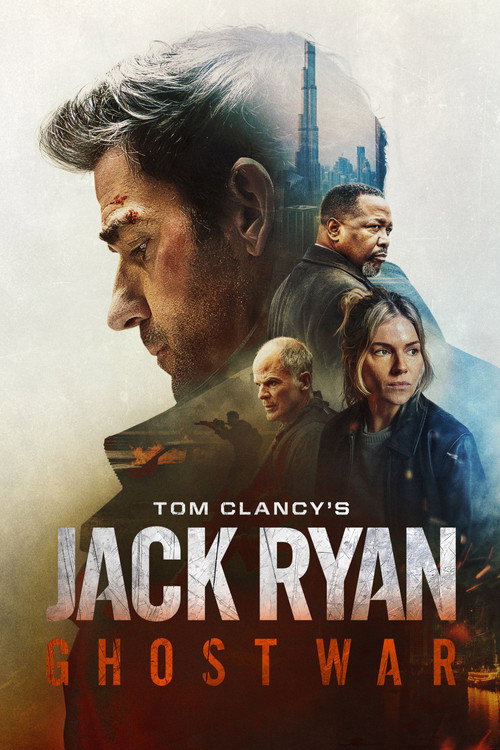
Tom Clancy's Jack Ryan: Ghost War
Draped in high-stakes political paranoia and lingering post-9/11 regret, this tense espionage thriller cuts like a cold blade through shadows of past sins as veteran operatives clash across sun-drenched sky-towers and rain-slicked metropolis streets.
Tom Clancy's Jack Ryan: Ghost War

Tom Clancy's Jack Ryan: Ghost War

"No operation stays dark forever."

20 May 2026 United States of America 107 min 7.0 (710)

Director: Andrew Bernstein

Cast: John Krasinski, Wendell Pierce, Sienna Miller, Michael Kelly, Max Beesley

Action Thriller Sins of the Past & Institutional Accountability Duty vs. Personal Morality The Shadow Economy of Espionage ("Ghost Wars") Trust, Comradeship, and Agency Betrayal The Toll of the Spy Life / Reluctant Heroism

Overview

Tom Clancy's Jack Ryan: Ghost War picks up after the events of Prime Video’s four-season television series. Jack Ryan (John Krasinski) has stepped away from CIA field operations, attempting to live a quiet civilian life working on Wall Street. However, his peaceful routine is shattered when his former boss, CIA Deputy Director James Greer (Wendell Pierce), and security contractor Mike November (Michael Kelly) recruit him for a seemingly simple pickup mission in Dubai.

What begins as a routine contact drop quickly spirals into chaos when their informant is assassinated. Jack finds himself detained alongside razor-sharp MI6 officer Emma Marlowe (Sienna Miller), uncovering the resurfacing of "Project Starling"—an illegal, unsanctioned post-9/11 black-ops network thought to have been disbanded decades ago. Led by rogue operative Liam Crown (Max Beesley), Starling is systematically eliminating intelligence figures to keep its ghost operations active.

Racing across international hubs from London to Dubai, Jack, Greer, Mike, and Marlowe must navigate high-level intelligence betrayals and personal moral reckonings before Crown’s untraceable black-ops unit triggers a devastating global conspiracy.
Core Meaning

Directed by Andrew Bernstein and co-written by John Krasinski and Aaron Rabin, the film explores the moral hangover and institutional fallout of post-9/11 counterterrorism extrajudicial practices.

The primary message centers on systemic accountability and the dangers of uncontained state power: when intelligence institutions construct off-the-books "ghost" programs to circumvent rule of law, those shadow programs inevitably return as monsters to destroy the very institutions that created them. It emphasizes that true leadership requires moral courage and transparency over institutional self-preservation.

Thematic DNA

Sins of the Past & Institutional Accountability 30%
Duty vs. Personal Morality 25%
The Shadow Economy of Espionage ("Ghost Wars") 20%
Trust, Comradeship, and Agency Betrayal 15%
The Toll of the Spy Life / Reluctant Heroism 10%

Sins of the Past & Institutional Accountability

The primary driver of the narrative is how secret post-9/11 black-ops programs (Project Starling) resurface in the present day, demonstrating that moral shortcuts taken in the name of national defense create unmanageable long-term blowback.

Duty vs. Personal Morality

Greer and Ryan wrestle with loyalty to their country versus upholding legal and ethical boundaries. Greer’s past involvement in creating Starling forces a painful confrontation regarding where civilization ends and extrajudicial savagery begins.

The Shadow Economy of Espionage ("Ghost Wars")

The film highlights modern warfare's shift toward stateless, non-ideological private contractors and rogue black-ops units operating in international grey zones beyond government oversight.

Trust, Comradeship, and Agency Betrayal

The core dynamic rests on the tight-knit trust between Jack, Greer, and Mike November as they contend with internal treason within MI6 and bureaucratized paralysis at Langley.

The Toll of the Spy Life / Reluctant Heroism

Jack’s persistent desire for normal civilian life collides with his inescapable sense of moral responsibility when his mentors and allies are endangered.

Character Analysis

Jack Ryan

John Krasinski

Archetype: Reluctant Hero / Analyst-Operative Key Trait: Sharp analytical intellect coupled with decisive tactical action.

Motivation

Protect his friends and stop rogue black-ops networks from destabilizing international security.

Character Arc

Transitions from Wall Street civilian life back to the field, accepting his permanent duty within senior CIA leadership.

James Greer

Wendell Pierce

Archetype: Burdened Mentor / Veteran Director Key Trait: Pragmatic, weary, deeply protective leadership.

Motivation

Atone for past extrajudicial overreaches and safeguard his agency's integrity.

Character Arc

Confronts his past mistakes in establishing Project Starling and steps up as Director of the CIA following a tragic loss.

All 5 characters and cast

Symbols & Motifs

Project Starling / The Starling Bird

Meaning:

Symbolizes clandestine surveillance, dark autonomy, and operatives carrying out lethal tasks in unison without individual moral accountability.

Context:

Used as the codename and central concept for the illegal post-9/11 black-ops unit.

The Glass Skyscraper (Dubai Climax)

Meaning:

Symbolizes modern technological transparency contrasting with dark secrets hidden in high-altitude corporate spaces.

Context:

Featured during the film's climax in Dubai where Starling's encrypted master server is located and infiltrated.

Car Bombs / Diversions

Meaning:

A recurring motif representing sudden, disruptive violence that shatters manufactured institutional security.

Context:

Used by Liam Crown as tactical diversions, such as the attack near the CIA convoy in London.

Greer's Official Letter to the President

Meaning:

Represents moral confession, systemic reform, and choosing institutional truth over bureaucratic self-preservation.

Context:

Written and sent by James Greer at the conclusion of the film after assuming the CIA Directorship.

Civilian Suit vs. Tactical Gear

Meaning:

Symbolizes Jack Ryan’s internal tension between his civilian identity and his instinctual role as a CIA field operative.

Context:

Visualized as Jack transitions from his Wall Street attire at the start back to combat gear during field missions.

Memorable Quotes

If the ideals we seek to uphold are based on lies, then our institutions begin to crumble, making us susceptible to division, even infiltration.
— James Greer

Context

Spoken in Greer's written reflection letter to the President.

Meaning

Delivered in Greer’s final reflection letter, capturing the core philosophical struggle of the film regarding systemic integrity.

No operation stays dark forever.
— Tagline / Spoken in dialogue

Context

Used as the main promotional tagline and spoken within key film dialogue.

Meaning

Highlights the inevitability of secret black-ops coming to light.

All 4 quotes

Philosophical Questions

Do extraordinary national security threats justify extrajudicial means?

Explored through Project Starling's initial counterterrorism mission versus its degeneration into rogue violence.

Can a democratic government maintain moral legitimacy while harboring secret black-ops units?

Explored through James Greer's internal guilt and final written confession to the President.

What separates a dedicated patriot from a radicalized rogue agent?

Explored through the ideological conflict between Jack Ryan's institutional ethics and Liam Crown's extrajudicial crusade.

Alternative Interpretations

The Pro-Institutional Reading: Upholds classic Tom Clancy heroics—showing that while corrupt elements exist, noble operators like Jack Ryan restore systemic integrity and validate the CIA's core necessity.The Anti-Interventionist Reading: Highlights how Western intelligence agencies generate their own blowback: Project Starling shows how extrajudicial programs create self-perpetuating "ghost wars"...

Full ending explanation

Cultural Impact

Released in 2026, the movie reflects ongoing cultural debates surrounding post-9/11 counterterrorism oversight, autonomous black-ops units, and international intelligence transparency.

It demonstrates Amazon MGM Studios' strategy of converting popular streaming TV series into event feature films. While receiving mixed reviews from critics (holding a ~40–43% score on Rotten Tomatoes) who called it a routine spy thriller, it achieved high viewership, remaining in Prime Video's global top-streaming charts for seven consecutive weeks.

Audience Reception

Praised Aspects: High-velocity real-time pacing, chemical rapport between Krasinski, Pierce, and Kelly, Sienna Miller’s strong introduction as Emma Marlowe, and slick action choreography.

Main Criticisms: By-the-numbers, predictable plot; feeling like an extended TV episode rather than a cinematic blockbuster; and underutilizing certain dramatic stakes.

Controversial Moments: The sudden death of CIA Director Elizabeth Wright via car bomb in London.

Overall Verdict: A functional, action-packed popcorn thriller that satisfies dedicated TV series fans while offering a safe entry in the Jack Ryan cinematic legacy.

Interesting Facts

  • Ghost War marks the first Jack Ryan feature-length film since 2014’s Jack Ryan: Shadow Recruit, serving as a direct continuation of the Prime Video series.
  • John Krasinski starred as Jack Ryan, co-wrote the screenplay alongside Aaron Rabin, and co-created the story with Noah Oppenheim.
  • Director Andrew Bernstein, who previously helmed episodes of Ozark, Mad Men, and the Jack Ryan TV series, made his feature directorial debut with this film.
  • Filming took place on real locations across London and Dubai, avoiding green-screen environments for major action sequences.
  • Director Bernstein revealed the movie was shot as a large-scale theatrical action film, but Amazon MGM Studios ultimately opted for a worldwide Prime Video streaming release.
  • Krasinski noted in interviews that fans at airports now address him as 'Jack' more frequently than 'Jim' from The Office.

Easter Eggs

Harrison Ford / Franchise Homage

Jack Ryan's rise toward top-level CIA leadership by the film's conclusion pays homage to Harrison Ford's classic portrayal of Jack Ryan rising to Deputy Director in Clear and Present Danger (1994).

"A Few Good Men" Paraphrase

A heated argument between Greer and Ryan over covert military ethics directly paraphrases Jack Nicholson’s famous monologue in A Few Good Men.

Tom Clancy Novel Canon

The script includes specific nods to Clancy's literary canon, including references to Langley's T-FAD (Tactical Field Analysis Division) and analyst Patrick Klinghoffer.

"The Office" Visual Nod

An early scene showing Jack working on financial spreadsheets at a desk serves as a subtle, visual nod to Krasinski's famous comedy role.

Frequently Asked Questions

Explore More About This Movie

Dive deeper into specific aspects of the movie with our detailed analysis pages

Comments (0)

Leave a comment

No comments yet. Be the first to share your thoughts!

Similar Movies