Totò, Peppino e la... malafemmina
Toto, Peppino, and the Hussy - Symbolism & Philosophy
Symbols & Motifs
Milan
Milan symbolizes modernity, progress, and the alienating nature of the new, post-war Italy for those left behind by the economic miracle. It is a world of fast-paced traffic, sophisticated people, and different social codes that the brothers cannot comprehend. It represents the "North" not just geographically, but as a cultural and economic force that is both alluring and intimidating.
The city is a constant source of confusion and comedy from the moment the brothers arrive. Their interactions with a Milanese traffic cop, their wandering through the Piazza del Duomo, and their general bewilderment at the city's scale and pace all serve to emphasize how out of their element they are.
The Fur Coats
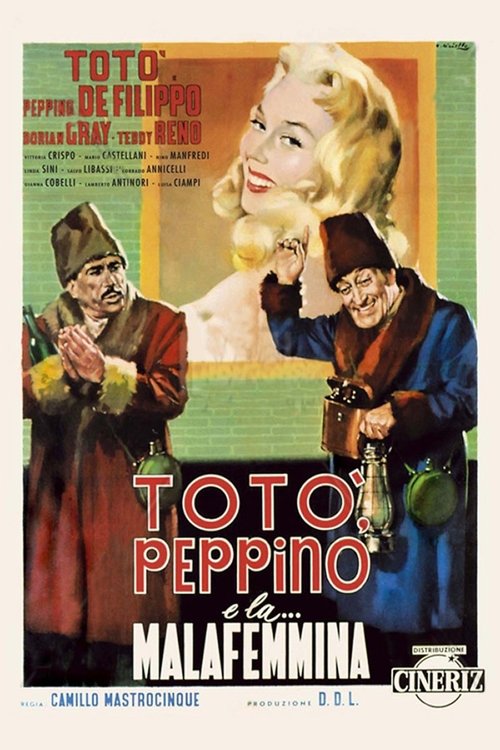
The heavy, dark fur coats and hats the brothers wear upon arriving in Milan symbolize their provincialism and complete lack of worldly knowledge. They've been told the North is cold and foggy, so they dress for a Siberian winter, making them look utterly ridiculous and instantly marking them as outsiders.
This is one of the film's most iconic visual gags. They arrive at the bustling Milan train station and proceed to walk through the city, sweltering in their absurd outfits, immediately establishing their status as "cafoni" (country bumpkins) in the urban landscape.
The Letter
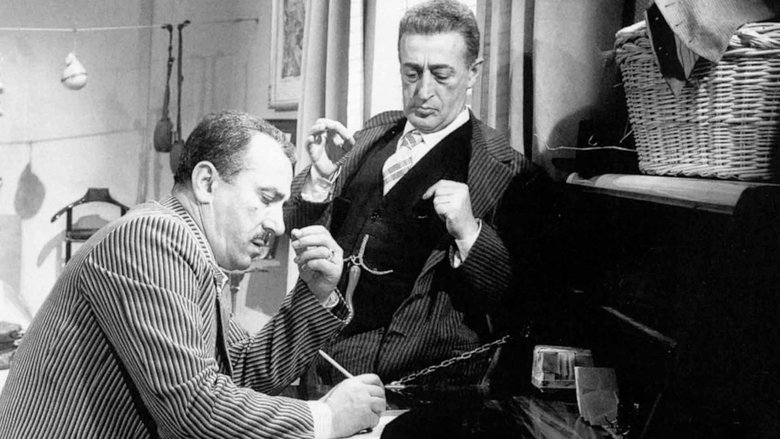
The letter the brothers compose is a symbol of their attempt to impose their traditional authority in a world whose language—both literal and figurative—they do not speak. The resulting gibberish symbolizes the communication breakdown between their world and Marisa's. It is a physical manifestation of their ignorance, pride, and misguided intentions.
The scene where Totò dictates the grammatically catastrophic letter to Peppino is the film's comedic centerpiece. It is an extended, brilliantly performed sequence that encapsulates the movie's core themes of ignorance and the North-South divide in a single, unforgettable moment.
Philosophical Questions
How do preconceived notions shape our reality?
The film is a case study in how prejudice dictates perception. The Caponi brothers build an entire narrative about Marisa based on a single piece of information: her job. Their journey to Milan is a physical manifestation of their journey away from prejudice. The film explores how their "reality" of Marisa as a "malafemmina" is a complete fabrication, which hilariously and poignantly collapses when confronted with the actual person. It asks the viewer to consider how often we construct elaborate, false realities about others based on stereotypes.
Can ignorance be a form of innocence?
Antonio and Peppino are profoundly ignorant, which is the source of the film's comedy. However, the film treats their ignorance not as a moral failing but as a state of rustic innocence. Their intentions are good—they want to protect their nephew—even if their methods are absurd. The film poses the question of whether their lack of sophistication shields them from the cynicism of the modern world. Their eventual success comes not from becoming smarter, but from allowing their innate, good-hearted familial love to triumph over their learned prejudices.
Core Meaning
At its heart, the film is a comedic exploration of the cultural and social divide between the rural, traditional South and the modern, industrial North of Italy during the post-war economic boom. Director Camillo Mastrocinque uses the bumbling journey of the Caponi brothers to satirize prejudice, the clash between appearance and reality, and the anxieties of a nation undergoing rapid transformation. The core message is one of empathy and understanding, suggesting that deeply held stereotypes collapse upon genuine human interaction. The film champions the idea that family honor and love are universal values, but that judging others based on prejudice and ignorance is a recipe for absurdity and error. Ultimately, it's a celebration of overcoming biases to see the good in people, regardless of their background or profession.