"The strangest vengeance ever planned!"
Touch of Evil - Symbolism & Philosophy
Symbols & Motifs
The Ticking Bomb
Symbolizes inevitable doom and the destabilization of order. It represents the explosive consequences of corruption that lurk beneath the surface of the town.
Used in the famous opening tracking shot, the bomb's ticking creates immediate tension and sets the fatalistic tone for the entire narrative.
Quinlan's Cane
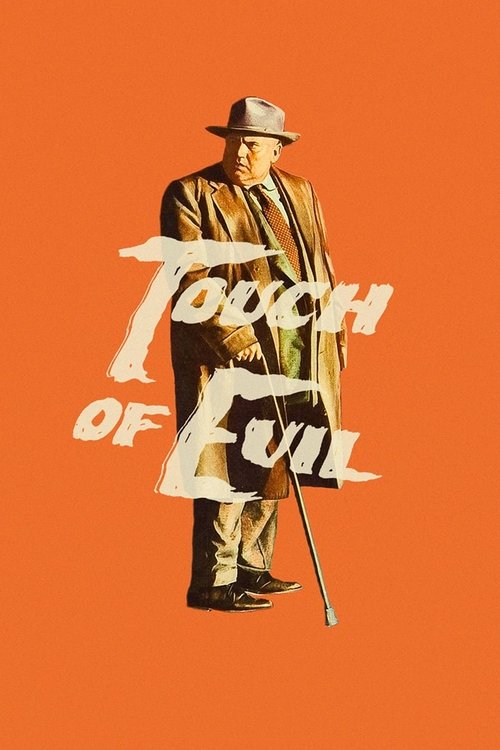
Represents Quinlan's power and his crutch—both physical and psychological. It is a phallic symbol of authority that he leaves behind at the scene of his crime, ultimately implicating him.
Quinlan forgets his cane in the hotel room where he murders Uncle Joe Grandi, a slip that allows Menzies to realize his mentor's guilt.
The Audio Recorder
Symbolizes the objective truth and modern surveillance technology that dismantles Quinlan's old-world intuition and lies.
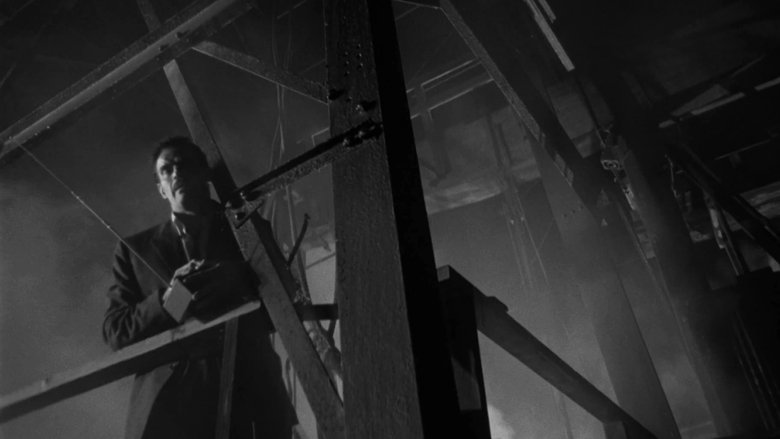
Vargas uses the wire on Menzies to capture Quinlan's confession during the final stalking sequence across the bridge.
The Border
A liminal space where jurisdictions and moralities blur. It represents the arbitrary lines men draw to define 'us' vs. 'them' and 'good' vs. 'evil'.
The characters constantly cross the physical border between the U.S. and Mexico, mirroring their crossing of moral lines.
Philosophical Questions
Do the ends justify the means?
The film challenges the viewer with the fact that Quinlan framed a man who actually committed the crime. Does the fact that the 'bad guy' was caught excuse the corruption used to catch him? Welles suggests that the process of justice is as important as the outcome.
Can authority exist without corruption?
Quinlan believes that honest police work is impossible in a chaotic world ('easy only in a police state'). The film explores whether absolute power inevitably rots the holder, physically and morally.
Core Meaning
The Death of the Old World: Touch of Evil functions as a tombstone for the classic film noir era. Orson Welles presents a world where the romanticized, intuitive "hero" cop (Quinlan) is revealed to be a corrupt monster, yet he possesses a tragic humanity that the righteous, modern bureaucrat (Vargas) lacks. The film questions whether the cold letter of the law is superior to a flawed human instinct, ultimately concluding that corruption, no matter how effective, poisons everything it touches.