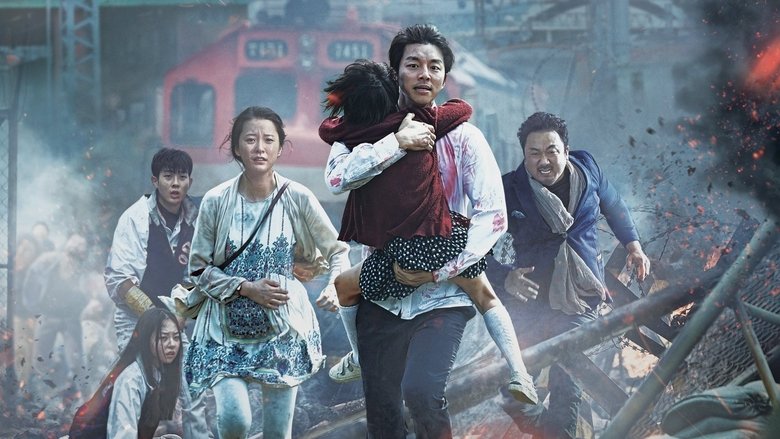

부산행
"Life-or-death survival begins."
Train to Busan - Symbolism & Philosophy
Symbols & Motifs
The Train
Symbolizes the relentless forward momentum of life and modern society. It is a sealed metal tube of social hierarchy from which there is no escape, forcing different classes to collide.
The entire film is set on the KTX train, representing a linear journey from the corruption of Seoul to the potential sanctuary of Busan.
Tunnels
Represent periods of darkness, uncertainty, and trial. They are thresholds where the rules change (zombies go blind), testing the survivors' adaptability and courage.
The survivors use the darkness of the tunnels to sneak past zombies, turning a terrifying obstacle into a strategic advantage.
Aloha 'Oe (Song)
Symbolizes lost innocence, mourning, and ultimately, hope. It connects the daughter to her parents and serves as a beacon of humanity that saves her life.
Su-an tries to sing it at her recital but fails; she sings it again at the end while walking through the tunnel, which prevents the soldiers from shooting her.
Philosophical Questions
Is survival worth the cost of one's humanity?
The film contrasts Yon-suk, who survives by sacrificing others, with Sang-hwa, who dies saving others. It asks if a life bought with the blood of the innocent is a life worth living.
What is the responsibility of the individual to the collective?
Through Seok-woo's transformation, the film explores the tension between protecting one's immediate family versus the greater good of the community.
Core Meaning
At its heart, Train to Busan is a searing critique of modern individualism and corporate greed, juxtaposed against the traditional virtues of sacrifice and family. Director Yeon Sang-ho uses the zombie disaster as a catalyst to expose the rot in social hierarchies, asking whether humanity can survive without empathy. The film argues that in the face of catastrophe, the true measure of a person is not their status or wealth, but their willingness to protect others at the cost of themselves.