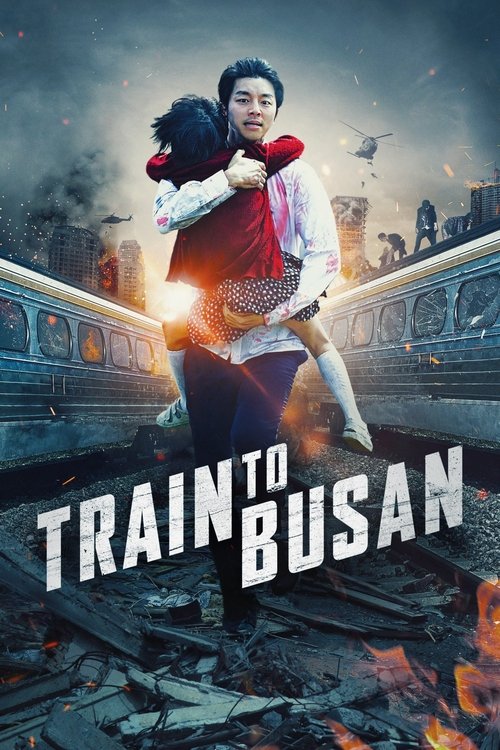
Train to Busan
부산행
"Life-or-death survival begins."
Overview
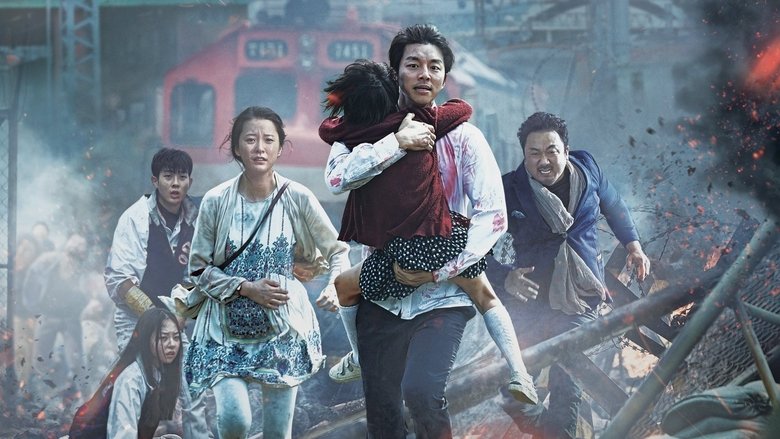
Train to Busan is a harrowing South Korean zombie apocalypse thriller that takes place almost entirely within the confines of a high-speed KTX train traveling from Seoul to Busan. The story follows Seok-woo, a cynical and workaholic fund manager, who reluctantly agrees to take his estranged young daughter, Su-an, to see her mother for her birthday. As the train departs, a convulsing young woman boards unnoticed, sparking a rapid and brutal outbreak that turns passengers into flesh-eating monsters.
As the infection spreads through the carriages, the survivors are forced to band together, navigating through locked doors and hordes of the infected. The film masterfully blends intense, claustrophobic action with deep emotional stakes, pitting the selfishness of the elite against the altruism of the working class. Seok-woo must evolve from a self-interested businessman into a protector and hero, learning the value of sacrifice from a tough-as-nails expectant father, Sang-hwa, and his own daughter's moral compass.
Core Meaning
At its heart, Train to Busan is a searing critique of modern individualism and corporate greed, juxtaposed against the traditional virtues of sacrifice and family. Director Yeon Sang-ho uses the zombie disaster as a catalyst to expose the rot in social hierarchies, asking whether humanity can survive without empathy. The film argues that in the face of catastrophe, the true measure of a person is not their status or wealth, but their willingness to protect others at the cost of themselves.
Thematic DNA
Selfishness vs. Altruism
This is the central conflict of the film. Seok-woo initially advises his daughter to only look out for herself, mirroring the cutthroat corporate world he inhabits. This worldview is challenged by the selfless actions of Sang-hwa and Su-an. The villainous COO, Yon-suk, represents the extreme of selfishness, sacrificing others to save himself, ultimately leading to his own demise and the deaths of many.
Class Struggle and Social Hierarchy
The train serves as a microcosm of South Korean society. The conflict between the First Class passengers (led by Yon-suk) and the survivors from the lower-class carriages highlights societal divisions. The elites' refusal to open the door to the survivors is a scathing commentary on how the upper class often abandons the vulnerable during crises to protect their own interests.
Fatherhood and Redemption
Seok-woo's character arc is defined by his journey to become a 'real' father. He starts as an absentee parent who buys affection with gifts, but the crisis forces him to become a physical and emotional protector. His final sacrifice is the ultimate act of paternal love, redeeming his past failures.
Trust in Authority
The film critiques blind trust in government and media. Broadcasts constantly downplay the disaster as 'riots' and urge citizens to stay put, a direct parallel to real-world mismanagement of disasters. The characters who survive are those who question official narratives and take action.
Character Analysis
Seok-woo
Gong Yoo
Motivation
Initially motivated by self-preservation and professional success; later driven by a desperate need to protect Su-an and atone for his neglect.
Character Arc
Starts as a cold, selfish fund manager who neglects his daughter. Through the trauma of the journey and the influence of Sang-hwa, he learns empathy and sacrifice. He dies a hero, throwing himself from the train to protect his daughter.
Sang-hwa
Ma Dong-seok
Motivation
To protect his pregnant wife, Seong-kyeong, and the innocent.
Character Arc
Remains consistent as a pillar of strength and moral integrity. He acts as a foil to Seok-woo, showing him what true masculinity and fatherhood look like. He sacrifices himself to hold back the horde, buying time for others.
Su-an
Kim Su-an
Motivation
To see her mother and to help those in need.
Character Arc
She remains the ethical heart of the film. While she is physically vulnerable, her refusal to abandon others challenges her father's cynicism and ultimately saves the group's soul.
Yon-suk
Kim Eui-sung
Motivation
Pure survival at any cost.
Character Arc
A flat arc of escalating villainy. He begins as an arrogant executive and devolves into a murderous coward who throws others to the zombies to extend his own life by mere minutes.
Symbols & Motifs
The Train
Symbolizes the relentless forward momentum of life and modern society. It is a sealed metal tube of social hierarchy from which there is no escape, forcing different classes to collide.
The entire film is set on the KTX train, representing a linear journey from the corruption of Seoul to the potential sanctuary of Busan.
Tunnels
Represent periods of darkness, uncertainty, and trial. They are thresholds where the rules change (zombies go blind), testing the survivors' adaptability and courage.
The survivors use the darkness of the tunnels to sneak past zombies, turning a terrifying obstacle into a strategic advantage.
Aloha 'Oe (Song)
Symbolizes lost innocence, mourning, and ultimately, hope. It connects the daughter to her parents and serves as a beacon of humanity that saves her life.
Su-an tries to sing it at her recital but fails; she sings it again at the end while walking through the tunnel, which prevents the soldiers from shooting her.
Memorable Quotes
Dad, you only care about yourself. That's why mommy left.
— Su-an
Context:
Spoken early in the film on the train when Seok-woo tells her not to give up her seat to an elderly woman.
Meaning:
A crushing truth that establishes the central flaw Seok-woo must overcome. It highlights the emotional distance between them.
I'll take you to mom no matter what.
— Seok-woo
Context:
Seok-woo reassuring a terrified Su-an as the situation on the train deteriorates.
Meaning:
A promise that drives the entire narrative. It transforms from a logistical task to a solemn vow of protection.
Look at the clouds... the rain is coming... until we meet again...
— Su-an (Singing 'Aloha 'Oe')
Context:
The final scene where Su-an walks through the dark tunnel towards the soldiers.
Meaning:
The lyrics emphasize parting and farewell, foreshadowing the father's death but also serving as a life-saving signal of humanity.
Just think about yourself. You understand?
— Seok-woo
Context:
Seok-woo giving advice to Su-an, which she rejects.
Meaning:
Encapsulates Seok-woo's initial selfish philosophy, which the film spends its runtime deconstructing.
Philosophical Questions
Is survival worth the cost of one's humanity?
The film contrasts Yon-suk, who survives by sacrificing others, with Sang-hwa, who dies saving others. It asks if a life bought with the blood of the innocent is a life worth living.
What is the responsibility of the individual to the collective?
Through Seok-woo's transformation, the film explores the tension between protecting one's immediate family versus the greater good of the community.
Alternative Interpretations
The Korean War Allegory: Some critics view the journey as a metaphor for the Korean War. The train represents the fleeing refugees, the zombies represent the mindless violence of the invading forces, and Busan represents the 'Pusan Perimeter,' the last line of defense.
Critique of Neoliberalism: The zombies can be seen not just as monsters, but as the inevitable result of a cutthroat capitalist system (represented by the biotech firm). The 'infection' is the spread of a dog-eat-dog mentality that destroys community, where only those who learn to cooperate (socialism/collectivism) deserve to survive.
Cultural Impact
Train to Busan revitalized the zombie genre globally by injecting it with distinctly Korean melodrama and social commentary. Domestically, it struck a powerful chord due to its release shortly after the 2014 Sewol Ferry disaster. Audiences saw direct parallels between the film's incompetent authorities—who tell passengers to 'stay put' while they die—and the real-life tragedy where student passengers were ordered to remain in their cabins as the ferry sank. The film sparked discussions about intergenerational conflict, the failure of the 'Hell Joseon' socio-economic system, and the moral responsibilities of the upper class.
Audience Reception
The film was a massive critical and commercial success, holding a 94% rating on Rotten Tomatoes. Audiences praised the emotional depth, specifically the character development of Seok-woo and the heartbreaking performance of Ma Dong-seok. The action sequences were lauded for their creativity within a confined space. Criticism was minor but focused on some melodramatic moments typical of Korean cinema and the somewhat two-dimensional nature of the villain, Yon-suk. Western audiences were particularly impressed by the fast-moving zombies and the lack of firearms, which forced creative combat solutions.
Interesting Facts
- The first infected girl who boards the train is played by Shim Eun-kyung, who voiced the main character in the animated prequel 'Seoul Station'.
- Director Yeon Sang-ho hired a team of breakdancers to play the zombies, giving them their unique, bone-breaking movements.
- The film was the first Korean movie of 2016 to break the audience record of over 10 million theatergoers.
- The word 'zombie' is only mentioned once in the entire film.
- Ma Dong-seok (Don Lee), who plays the tough husband, was actually Gong Yoo's personal trainer before becoming an actor.
- There are no actual zombies in the film; all crowds were created using real actors and digital multiplication, not full CGI creatures.
- The film's massive success led to a bidding war for Hollywood remake rights, with titles like 'Last Train to New York' being considered.
Easter Eggs
Shim Eun-kyung Cameo
The actress playing the first zombie on the train is the voice of the runaway girl in the animated prequel Seoul Station, creating a direct narrative link between the two films.
1950s War Parallels
The route from Seoul to Busan mirrors the retreat of the South Korean government during the Korean War. Busan was the only major city not captured by the North Korean army, serving as the last bastion of safety.
Biotech Company Connection
It is revealed that the outbreak originated from a biotech plant that Seok-woo's firm insisted on saving from bankruptcy. This hidden detail makes Seok-woo indirectly responsible for the apocalypse.
⚠️ Spoiler Analysis
Click to reveal detailed analysis with spoilers
Frequently Asked Questions
Explore More About This Movie
Dive deeper into specific aspects of the movie with our detailed analysis pages
Comments (0)
No comments yet. Be the first to share your thoughts!