The film's emotional climax hinges on the reveal of Hyun-woo's secret: as a teenager, he and his friends were on a rooftop when one of them, Jyeong-hyeop, fell to his death. Though it was an accident, Hyun-woo's group was blamed, and he served time in juvenile detention. This incident haunts him throughout the film, causing him to disappear every time his old friends reappear to extort him or remind him of the guilt. The 'forgotten email password' plot point keeps them apart for years until 2000, when Hyun-woo finally logs in to find a treasure trove of messages from Mi-soo. The ending occurs in 2005; Mi-soo has left him after learning about his past, but she hears his 'shout-out' on Yoo Yeol's final radio broadcast. She realizes he has finally found his voice and a stable life, and she runs to the studio. They reunite as the 'Music Album' show concludes, symbolizing that they have finally tuned into the same frequency at the right moment.
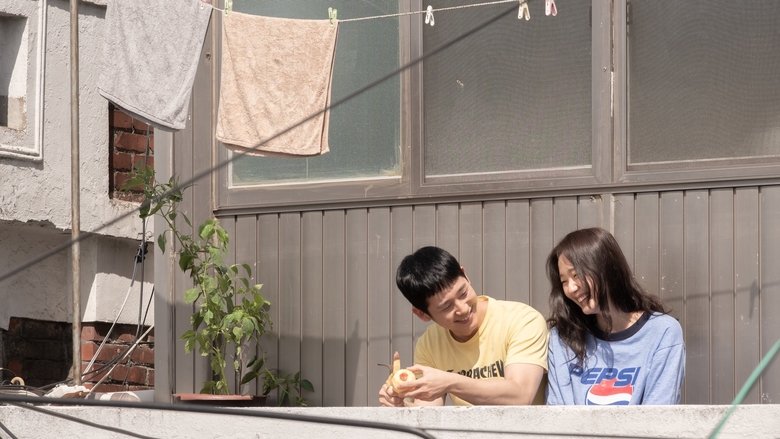

유열의 음악앨범
"Let me get what I want."
Director: Jung Ji-woo
Cast: Kim Go-eun, Jung Hae-in, Park Hae-joon, Kim Guk-hee, Jung Yoo-jin
Tune in for Love — Ending Explained
⚠️ Spoiler Analysis
Alternative Interpretations
While many viewers see the film as a straightforward happy ending, some critics interpret the final scene as more ambiguous. The 'Visual Radio' setting at the end suggests that while they have found their 'frequency' for now, their relationship is fundamentally tied to a nostalgic medium that is itself fading away. Another interpretation suggests that the film is not about love at all, but about the impossibility of ever truly escaping one's social class and past in Korea; despite their love, the characters spend more time apart than together, suggesting that their 'timing' is permanently fractured by the social forces surrounding them.
Explore More About This Movie
Dive deeper into specific aspects of the movie with our detailed analysis pages