La ciociara
"Suddenly, Love Becomes Lust… Innocence becomes shame… As two women are trapped by violent passion and unforgettable terror!"
Two Women - Symbolism & Philosophy
Symbols & Motifs
The Church
Traditionally a symbol of sanctuary, safety, and divine protection, the church in "Two Women" is inverted to represent the ultimate violation and the absence of salvation. It symbolizes the complete collapse of moral and spiritual order in the face of war's brutality.
Seeking refuge on their journey back to Rome, Cesira and Rosetta stop to rest in a bombed-out, abandoned church. It is within this sacred space that they are brutally gang-raped by soldiers. The act occurring in a house of God, a place they believed would be safe, powerfully symbolizes that nothing is sacred or safe from the horrors of war.
The Journey/Road
The physical journey Cesira and Rosetta undertake symbolizes their internal, emotional journey from hope to despair, and from innocence to traumatic experience. The road represents the illusion of escape and the harsh reality that war is inescapable.
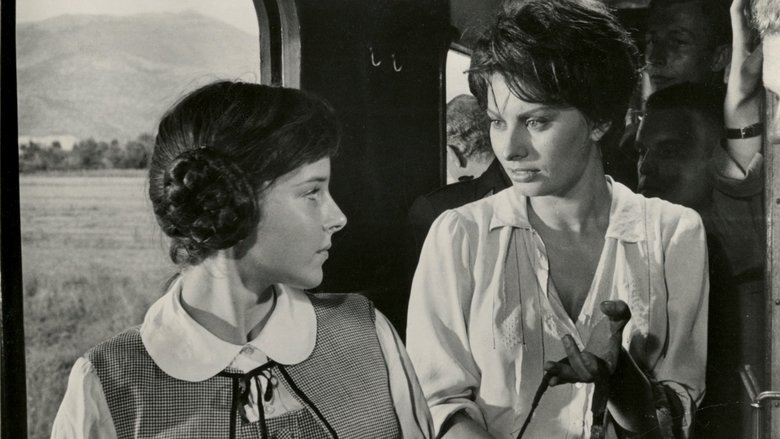
The film follows the two women as they travel from the city to the countryside and back again, first by train and then mostly on foot. Their initial trip is filled with a sense of hope for safety, but their return journey is marked by the devastating assault, transforming the road from a path to safety into a landscape of trauma.
Rosetta's Silence and Silk Stockings
Rosetta's emotional withdrawal and silence after the assault symbolize the death of her childhood spirit. The silk stockings, which she accepts from a truck driver, represent her attempt to process the trauma by prematurely adopting a distorted version of womanhood, replacing her lost innocence with a cynical transaction.
After the rape, Rosetta becomes emotionally numb and unresponsive to her mother. Later, she disappears for a night and returns with silk stockings given to her by a man. Cesira's horrified reaction highlights the tragic transformation of her daughter from an innocent girl into someone who has been irrevocably altered by her experience.
Philosophical Questions
Can morality exist in a state of total war?
The film relentlessly questions the foundations of morality when society collapses. Characters are forced into impossible choices for survival. Cesira's pragmatism contrasts with Michele's idealism, which ultimately proves fatal. The rape in the church, a place of supposed moral certainty, serves as the ultimate negation of a moral order. Rosetta's subsequent amorality, as she puts it, suggests that war creates its own brutal set of rules where traditional concepts of right and wrong become meaningless luxuries.
What is the true nature of survival?
"Two Women" explores survival as more than just physical endurance. Cesira successfully keeps herself and Rosetta alive, but the film asks what the cost is. After the assault, Rosetta is physically alive but emotionally and spiritually dead. Cesira's cry that her daughter is "worse than dead" suggests that survival without one's humanity, innocence, or soul is not survival at all. The film forces the audience to consider what parts of ourselves must be preserved to be truly considered 'survivors'.
Can innocence, once lost, ever be regained?
Rosetta's story is a tragic exploration of this question. Her character is irrevocably changed by a single event, and the film provides no easy answers about her future. The ending, where she finally cries, offers a glimmer of hope that she may be able to reconnect with her emotions and, by extension, her mother. However, the film leaves it ambiguous whether this is the beginning of recovery or simply a brief respite in a lifetime of trauma. It suggests that while the pure innocence of childhood is gone forever, the capacity for grief and love may offer a path toward a different, more wounded form of existence.
Core Meaning
Vittorio De Sica's "Two Women" serves as a devastating indictment of war, stripping away any heroic pretenses to expose its true cost on the innocent. The film's core message is that in conflict, there is no sanctuary; the physical destruction of cities is horrifically mirrored by the spiritual and psychological destruction of individuals. De Sica, alongside screenwriter Cesare Zavattini, moves beyond the grand narratives of battles and politics to focus on the intimate, personal tragedies that define the civilian experience. The film argues that the deepest wounds of war are not inflicted by bombs, but by the collapse of morality and the violation of humanity, which leaves scars that can never truly heal. It is a profound statement on the loss of innocence and the agonizing struggle to find a way forward after unimaginable trauma.