Two Women
La ciociara
"Suddenly, Love Becomes Lust… Innocence becomes shame… As two women are trapped by violent passion and unforgettable terror!"
Overview
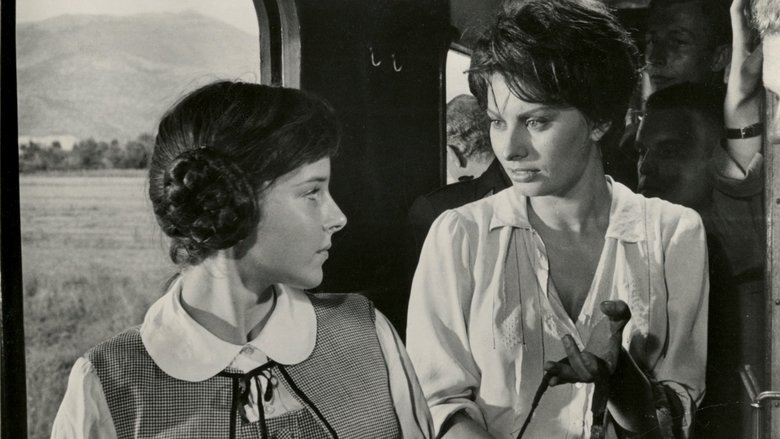
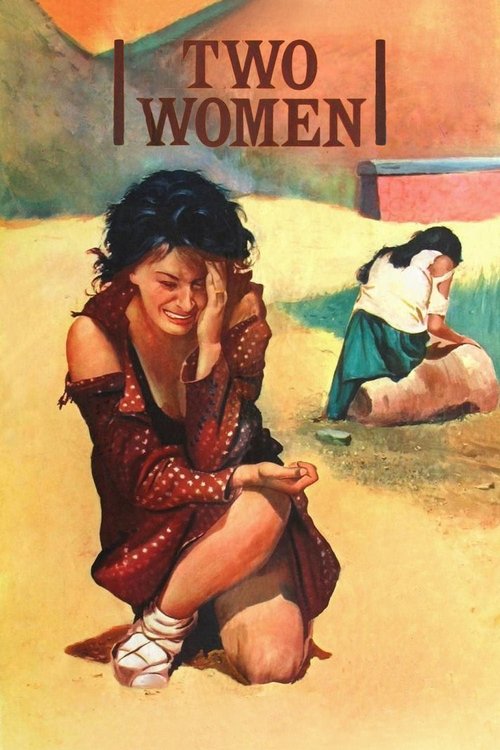
"Two Women" (La ciociara) is a powerful Italian drama directed by Vittorio De Sica, set in Italy during the final years of World War II. The story follows Cesira (Sophia Loren), a widowed Roman shopkeeper, who decides to flee the Allied bombing of Rome with her devoutly religious 12-year-old daughter, Rosetta (Eleonora Brown). They travel to her native rural village in Ciociaria, hoping to find safety in the mountains.
In the seemingly peaceful countryside, they face scarcity and the constant, underlying threat of the conflict. Cesira navigates the complexities of survival, forming a connection with Michele (Jean-Paul Belmondo), a young, idealistic intellectual who becomes a father figure to Rosetta. However, the belief that they have escaped the war proves to be a tragic illusion.
As the front line moves closer, their journey to return to a liberated Rome takes a devastating turn. The film unflinchingly portrays the brutal impact of war on civilians, particularly women, culminating in a traumatic event that irrevocably shatters their lives and their relationship, forcing them to confront a reality far more horrific than the bombings they fled.
Core Meaning
Vittorio De Sica's "Two Women" serves as a devastating indictment of war, stripping away any heroic pretenses to expose its true cost on the innocent. The film's core message is that in conflict, there is no sanctuary; the physical destruction of cities is horrifically mirrored by the spiritual and psychological destruction of individuals. De Sica, alongside screenwriter Cesare Zavattini, moves beyond the grand narratives of battles and politics to focus on the intimate, personal tragedies that define the civilian experience. The film argues that the deepest wounds of war are not inflicted by bombs, but by the collapse of morality and the violation of humanity, which leaves scars that can never truly heal. It is a profound statement on the loss of innocence and the agonizing struggle to find a way forward after unimaginable trauma.
Thematic DNA
The Horrors and Indiscriminate Cruelty of War
The film relentlessly portrays war not as a conflict between armies, but as a plague upon civilians. Cesira and Rosetta's flight from Rome is a futile attempt to escape a danger that permeates every corner of their country. The threat is omnipresent, from aerial bombardments to the predatory actions of soldiers on all sides. The narrative culminates in the horrific "Marocchinate," the historical mass rapes committed by colonial troops of the French Expeditionary Corps, depicted in the film when Cesira and Rosetta are assaulted in a church. This event underscores the theme that in war, the greatest atrocities are often inflicted upon the most vulnerable, far from any battlefield.
The Destruction of Innocence
Rosetta's character arc is the embodiment of this theme. She begins the film as a sweet, devout, and naive child, shielded by her mother's fierce protection. The traumatic assault in the church violently ends her childhood, leaving her emotionally catatonic and detached. Her subsequent behavior—accepting silk stockings from a truck driver and becoming emotionally distant—is a tragic manifestation of her lost innocence. The film posits that war's most profound tragedy is the theft of youth and the forced, brutal entry into a cynical and cruel world.
The Mother-Daughter Bond and Maternal Protection
The film's emotional core is the relationship between Cesira and Rosetta. Cesira is a pragmatic and resilient mother whose every action is driven by the desire to protect her child. She endures hardship, navigates danger, and makes moral compromises for Rosetta's sake. The ultimate tragedy is her failure to shield Rosetta from the war's worst horror, a failure that temporarily shatters their bond. Their eventual reconciliation, born from shared grief over Michele's death, suggests that while innocence is lost, their love can endure and become the foundation for healing.
The Collapse of Social and Moral Order
De Sica illustrates how war erodes the fabric of society. In the countryside, hunger and fear turn neighbors against each other. Ideals and political allegiances become secondary to the basic struggle for survival. The character of Michele, the intellectual idealist, stands in stark contrast to the pragmatic, often cynical, survival instincts of the other villagers. His eventual death at the hands of the Germans signifies the death of intellect and reason in a world governed by brute force. The assault in a church, a supposed place of sanctuary, is the ultimate symbol of this moral collapse.
Character Analysis
Cesira
Sophia Loren
Motivation
Cesira's primary motivation is the unwavering, instinctual need to protect her daughter, Rosetta, from the physical and moral dangers of the war. Every decision she makes, from leaving Rome to her interactions with others, is driven by the goal of preserving Rosetta's safety and innocence.
Character Arc
Cesira begins as a fiercely protective and resourceful mother, confident in her ability to navigate the world and shield her daughter from harm. She is pragmatic, making difficult choices for their survival. Her journey transforms her from a capable protector into a grieving witness to her daughter's destruction. The trauma forces her to confront the limits of her strength and the horrifying reality that her love is not enough to prevent suffering. Her final arc is one of shared grief and a desperate attempt to reconnect with and heal her shattered daughter.
Rosetta
Eleonora Brown
Motivation
Initially, Rosetta is motivated by love for her mother and a simple, childlike desire for safety and normalcy. After her trauma, her motivation becomes confused and internalized; she withdraws completely, her actions driven by a profound and unspoken pain and a shattered worldview she cannot articulate.
Character Arc
Rosetta starts the film as a symbol of pure innocence: a devout, gentle, and sheltered 12-year-old. Her world is defined by her mother's love and her simple faith. The brutal rape in the church marks a violent and abrupt end to her childhood. She transforms into a catatonic, emotionally detached adolescent who is unable to connect with her mother or her past self. Her arc is a tragic journey from innocence to trauma, culminating in a flicker of her former self when she finally cries upon hearing of Michele's death, offering a fragile hope for healing.
Michele
Jean-Paul Belmondo
Motivation
Michele is motivated by his political and moral convictions. He believes in a better world beyond the war and is frustrated by the political ignorance of those around him. He is also motivated by a genuine affection for Cesira and Rosetta, offering them kindness and intellectual companionship in a world that has little of either.
Character Arc
Michele is an educated, sensitive intellectual with communist sympathies who represents reason, kindness, and hope amidst the chaos. He is the film's moral compass, speaking out against the apathy and ignorance of his fellow villagers. He develops a gentle affection for Cesira and becomes a caring father figure to Rosetta. His arc is tragically cut short when he is forcibly taken by German soldiers to be their guide, and is later killed. His death symbolizes the destruction of idealism and decency in a world consumed by war.
Giovanni
Raf Vallone
Motivation
Giovanni is motivated by lust and opportunism. He uses Cesira's desperation to leave Rome as leverage to seduce her, promising to look after her shop in her absence. His motivations are entirely self-serving.
Character Arc
Giovanni is a minor but significant character who appears at the beginning of the film. A married coal merchant and friend of Cesira's late husband, he takes advantage of her vulnerability. He has no discernible arc, serving instead as an early indicator of the predatory nature of men in the chaotic wartime environment, where social contracts are breaking down.
Symbols & Motifs
The Church
Traditionally a symbol of sanctuary, safety, and divine protection, the church in "Two Women" is inverted to represent the ultimate violation and the absence of salvation. It symbolizes the complete collapse of moral and spiritual order in the face of war's brutality.
Seeking refuge on their journey back to Rome, Cesira and Rosetta stop to rest in a bombed-out, abandoned church. It is within this sacred space that they are brutally gang-raped by soldiers. The act occurring in a house of God, a place they believed would be safe, powerfully symbolizes that nothing is sacred or safe from the horrors of war.
The Journey/Road
The physical journey Cesira and Rosetta undertake symbolizes their internal, emotional journey from hope to despair, and from innocence to traumatic experience. The road represents the illusion of escape and the harsh reality that war is inescapable.
The film follows the two women as they travel from the city to the countryside and back again, first by train and then mostly on foot. Their initial trip is filled with a sense of hope for safety, but their return journey is marked by the devastating assault, transforming the road from a path to safety into a landscape of trauma.
Rosetta's Silence and Silk Stockings
Rosetta's emotional withdrawal and silence after the assault symbolize the death of her childhood spirit. The silk stockings, which she accepts from a truck driver, represent her attempt to process the trauma by prematurely adopting a distorted version of womanhood, replacing her lost innocence with a cynical transaction.
After the rape, Rosetta becomes emotionally numb and unresponsive to her mother. Later, she disappears for a night and returns with silk stockings given to her by a man. Cesira's horrified reaction highlights the tragic transformation of her daughter from an innocent girl into someone who has been irrevocably altered by her experience.
Memorable Quotes
Isn't there some safe place in the world?
— Cesira
Context:
The line is spoken during a moment of relative peace in the countryside, yet the threat of war is ever-present with planes flying overhead and soldiers passing through. Cesira's question reflects her dawning realization that her journey from Rome may not have brought the safety she sought for her daughter.
Meaning:
This question, posed by Cesira to Michele, encapsulates the film's central theme. It is a desperate, rhetorical plea that highlights the futility of trying to escape the pervasive reach of war. The answer, which the film brutally provides, is no.
Now she's worse than dead.
— Cesira
Context:
Cesira screams these words at American soldiers shortly after she and Rosetta have been assaulted. It is a moment of pure, unfiltered agony as she cradles the catatonic Rosetta, realizing the full, irreversible extent of the damage that has been done.
Meaning:
This raw cry of anguish expresses Cesira's profound grief and horror. To her, the spiritual and psychological death of her daughter—the destruction of her innocence and soul—is a fate more terrible than physical death. It signifies the ultimate failure of her role as a protector.
Philosophical Questions
Can morality exist in a state of total war?
The film relentlessly questions the foundations of morality when society collapses. Characters are forced into impossible choices for survival. Cesira's pragmatism contrasts with Michele's idealism, which ultimately proves fatal. The rape in the church, a place of supposed moral certainty, serves as the ultimate negation of a moral order. Rosetta's subsequent amorality, as she puts it, suggests that war creates its own brutal set of rules where traditional concepts of right and wrong become meaningless luxuries.
What is the true nature of survival?
"Two Women" explores survival as more than just physical endurance. Cesira successfully keeps herself and Rosetta alive, but the film asks what the cost is. After the assault, Rosetta is physically alive but emotionally and spiritually dead. Cesira's cry that her daughter is "worse than dead" suggests that survival without one's humanity, innocence, or soul is not survival at all. The film forces the audience to consider what parts of ourselves must be preserved to be truly considered 'survivors'.
Can innocence, once lost, ever be regained?
Rosetta's story is a tragic exploration of this question. Her character is irrevocably changed by a single event, and the film provides no easy answers about her future. The ending, where she finally cries, offers a glimmer of hope that she may be able to reconnect with her emotions and, by extension, her mother. However, the film leaves it ambiguous whether this is the beginning of recovery or simply a brief respite in a lifetime of trauma. It suggests that while the pure innocence of childhood is gone forever, the capacity for grief and love may offer a path toward a different, more wounded form of existence.
Alternative Interpretations
While the film's primary interpretation is a straightforward anti-war tragedy, some critical analysis offers different perspectives. One interpretation views the film through a fatalistic lens, suggesting that screenwriter Cesare Zavattini uses the relentless suffering to argue that evil is an inescapable force, and the only response is a compromise with it for the sake of survival. From this viewpoint, Cesira's initial pragmatism is not just a mother's instinct but a philosophical acceptance of a morally compromised world.
Another interpretation focuses on the ending's ambiguity. When Rosetta finally cries upon hearing of Michele's death, it breaks her catatonic state. Some see this as a hopeful sign of emotional rebirth and the beginning of healing, suggesting that shared grief can bridge the chasm created by trauma and restore their bond. An alternative, more pessimistic reading suggests that this is not a moment of healing but simply a return to a more familiar form of pain. The trauma has not been overcome, but merely overshadowed by a new tragedy, implying that their future will be one of enduring scars rather than true recovery. The final shot, with mother and daughter embracing as they recede into the distance, can be read as either a testament to their enduring bond or a depiction of two small, broken figures overwhelmed by a vast, indifferent world.
Cultural Impact
"Two Women" had a profound cultural impact, both in Italy and internationally. It was a pivotal film in the later period of Italian Neorealism, a movement that sought to portray the unvarnished reality of post-war life. Director Vittorio De Sica, a key figure of neorealism, used the film to force a confrontation with a brutal and often suppressed chapter of Italian history: the "Marocchinate." By giving voice to the civilian victims of war, particularly women, the film challenged the heroic narratives of liberation and exposed the complex, ugly truths of conflict.
Sophia Loren's historic Academy Award win was a watershed moment, shattering the barrier for foreign-language performances at the Oscars and elevating her status from a sex symbol to a highly respected dramatic actress. The film was a commercial and critical success, proving that audiences worldwide were receptive to gritty, realistic, and emotionally devastating stories that departed from Hollywood conventions. Critically, it was lauded for its raw power and Loren's transformative performance, though some contemporary critics found its emotional intensity to border on melodrama, a departure from the purer observational style of earlier neorealist films like "Bicycle Thieves." Over time, "Two Women" has been recognized as a feminist document, a powerful exploration of the female experience of war in a patriarchal society.
Audience Reception
Audiences received "Two Women" with a mixture of profound emotion and shock. The film was an international commercial success, indicating that its powerful, human story resonated deeply despite its bleak subject matter. Viewers were particularly captivated by Sophia Loren's performance, which was widely praised as a raw, honest, and heartbreaking portrayal of motherhood and suffering. Many found the film to be a tough but essential viewing experience. The primary points of praise centered on its emotional impact, the powerful mother-daughter dynamic, and its unflinching realism. The main point of criticism, though minor, came from those who found the film's relentless tragedy almost too overwhelming. The rape scene was, and remains, a controversial and deeply disturbing moment, praised for its bravery and necessity to the story's message but also criticized for its brutal, harrowing nature. The overall verdict from audiences was that it was a masterpiece of Italian cinema, a devastating but unforgettable anti-war statement.
Interesting Facts
- Sophia Loren won the Academy Award for Best Actress for her role as Cesira, making her the first actor to win an Oscar for a foreign-language performance.
- The film is based on the 1957 novel of the same name by Alberto Moravia, which was inspired by his own experiences fleeing Rome during World War II.
- Initially, acclaimed Italian actress Anna Magnani was cast as the mother, Cesira, with Sophia Loren set to play the daughter, Rosetta. However, Magnani dropped out, reportedly because she did not want to be seen as old enough to be Loren's mother.
- With Magnani out, director Vittorio De Sica re-envisioned the film, casting the 25-year-old Loren as the mother and making the daughter character much younger to heighten the poignancy of the story.
- The traumatic rape scene is based on the real-life historical events known as the "Marocchinate," where thousands of Italian civilians, primarily women, were assaulted by Goumiers, colonial Moroccan troops serving in the French army, following the Battle of Monte Cassino in 1944.
- To elicit a genuine crying performance from the young Eleonora Brown for the final scene, director Vittorio De Sica told her that he had just received a telegram saying her parents had died in an accident. He revealed the truth after getting the shot.
- French New Wave star Jean-Paul Belmondo was cast as Michele partly to secure French co-production funding for the film.
- Producer Carlo Ponti, who was Sophia Loren's husband, originally planned for the film to be an American co-production directed by George Cukor.
⚠️ Spoiler Analysis
Click to reveal detailed analysis with spoilers
Frequently Asked Questions
Explore More About This Movie
Dive deeper into specific aspects of the movie with our detailed analysis pages
Comments (0)
No comments yet. Be the first to share your thoughts!