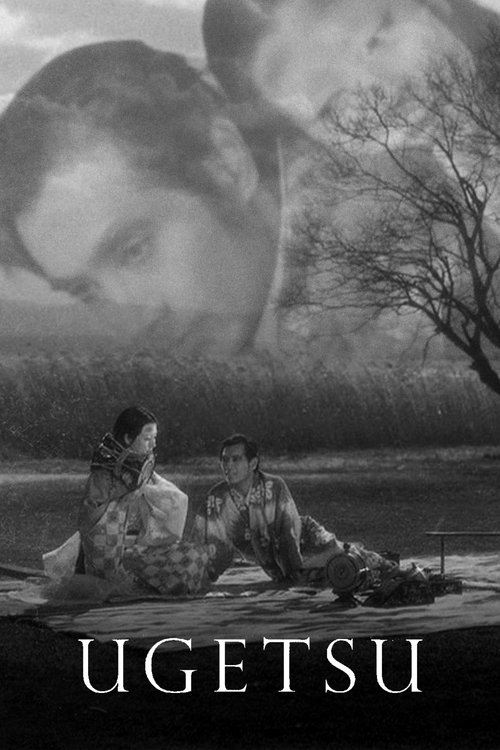
雨月物語
Ugetsu - Ending Explained
⚠️ Spoiler Analysis
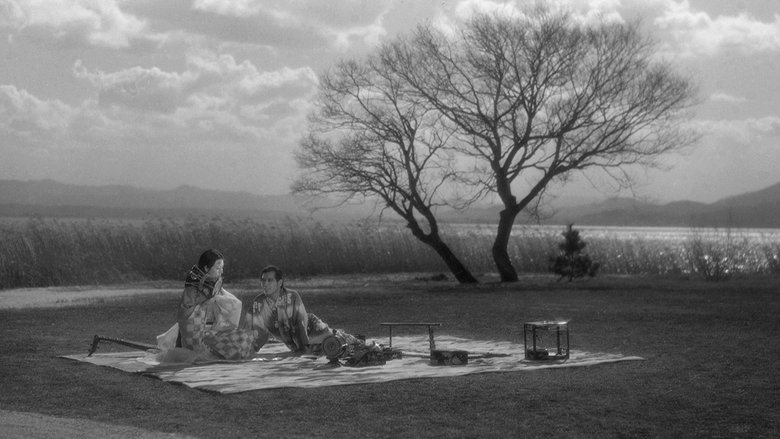
The central twist in "Ugetsu" is the revelation that the alluring Lady Wakasa and her entire opulent existence are an illusion. Genjūrō, a potter blinded by greed, is seduced by her and believes he has married into a noble family. However, a passing priest recognizes that he is bewitched by a spirit and paints protective symbols on his body to break the spell. When Lady Wakasa's spirit attempts to embrace him, she is repelled by the holy script, and her phantom mansion instantly transforms into a burned-out ruin. Genjūrō discovers that the entire Kutsuki clan, including Lady Wakasa, was killed in the ongoing war. He has been living in a ghost's dream.
The film's second, and perhaps more emotionally devastating, spoiler is the fate of Genjūrō's wife, Miyagi. After being left on the lakeshore for her safety, Miyagi and her young son attempt to survive in the war-torn countryside. In a brutal and heart-wrenching scene, she is accosted by starving, rogue samurai who stab her to death for her food, leaving her son crying on her back. The full weight of this tragedy is revealed at the film's conclusion. When Genjūrō finally returns home, broken and impoverished, he finds his house intact and Miyagi waiting for him, as if nothing has happened. They have a tender reunion where he begs for forgiveness, and she comforts him. He falls asleep peacefully. However, when he awakens the next morning, she is gone. A neighbor informs him that Miyagi was killed long ago. He realizes he spent the night with his wife's loving and forgiving ghost. This revelation underscores the film's core meaning: while his pursuit of illusion led to the destruction of his reality, the enduring power of his wife's love transcends even death to offer him a final moment of comfort and guide him toward redemption.
Alternative Interpretations
While "Ugetsu" is widely seen as a cautionary tale about ambition and a critique of war, several alternative and complementary interpretations exist.
A Feminist Reading: Some critics view "Ugetsu" as a fundamentally feminist film. This interpretation suggests that the supernatural elements are manifestations of female power in a patriarchal society that otherwise suppresses them. Lady Wakasa, though a ghost, exerts immense power over Genjūrō, subverting typical gender roles. Miyagi's ghost, in the end, becomes the guiding moral force for her husband. Both female spirits are seen as products of a male-dominated world that led to their deaths, and their ghostly presences represent a form of justice or retribution.
A Buddhist Interpretation: The film can also be read through a Buddhist lens, emphasizing the illusory nature of the material world and the suffering caused by desire. Genjūrō's and Tōbei's pursuits of wealth and fame are forms of attachment that lead them down a path of suffering. Genjūrō's enchantment with Lady Wakasa represents a deep dive into illusion (*maya*), from which he must be awakened by a priest. The film's conclusion, where Genjūrō finds peace in his work and accepts the loss of his wife, can be seen as an attainment of a more enlightened perspective, understanding the transient nature of life and finding meaning in duty and remembrance.
A Psychological Reading: From a psychological standpoint, Lady Wakasa can be interpreted not as a literal ghost, but as a projection of Genjūrō's own desires and repressed fantasies. She represents the ultimate temptation—a life of erotic pleasure, wealth, and artistic appreciation, completely divorced from responsibility. His journey to her mansion is a descent into his own subconscious, and his eventual 'exorcism' is the painful process of confronting his delusions and returning to the harsh reality he tried to escape.