Ugetsu
A haunting, ethereal drama where the fog of war mirrors the deceptive mist between reality and the supernatural, exploring the devastating cost of ambition.
Ugetsu

Ugetsu

雨月物語

26 March 1953 Japan 96 min ⭐ 8.0 (614)
Director: Kenji Mizoguchi
Cast: Machiko Kyō, Mitsuko Mito, Kinuyo Tanaka, Masayuki Mori, Eitarō Ozawa
Drama Fantasy Mystery
The Corrupting Influence of Ambition The Suffering of Women in a Patriarchal Society The Illusory Nature of Reality and the Supernatural War and its Dehumanizing Effects

Overview

Set in 16th-century Japan amidst a brutal civil war, "Ugetsu" follows two peasant villagers, Genjūrō, a potter, and Tōbei, a farmer, who seek fortune and glory. Genjūrō is driven by the desire for wealth, hoping to profit from the war by selling his pottery. Tōbei, his brother-in-law, dreams of becoming a respected samurai. Despite the pleas of their wives, Miyagi and Ohama, to remain safely at home, the men are consumed by their ambitions.

Their journey to the city leads them down divergent paths. Genjūrō's craftsmanship attracts the attention of the enigmatic and beautiful Lady Wakasa, who lures him into a world of sensual pleasure and luxury at her seemingly magnificent estate. Meanwhile, Tōbei, through a stroke of luck, manages to gain a position as a samurai, complete with armor and followers. Both men achieve their desires, but at a great and unforeseen cost to the families they left behind, blurring the lines between their earthly ambitions and a haunting supernatural realm.


Core Meaning

"Ugetsu" serves as a powerful allegory about the destructive nature of human ambition, particularly when it eclipses familial duty and compassion. Director Kenji Mizoguchi uses the backdrop of a war-torn nation to explore how the pursuit of wealth and status can lead to moral decay and immense suffering, especially for women who are often the silent victims of men's follies. The film suggests that true happiness and fulfillment are not found in material gain or societal recognition, but in the simple, profound connections of family and home. It is a cautionary tale, warning that straying from one's responsibilities in pursuit of illusory desires can have tragic, irreversible consequences, and that the greatest treasures are often the ones we leave behind.

Thematic DNA

The Corrupting Influence of Ambition 35%
The Suffering of Women in a Patriarchal Society 30%
The Illusory Nature of Reality and the Supernatural 25%
War and its Dehumanizing Effects 10%

The Corrupting Influence of Ambition

The central theme of "Ugetsu" is the perilous nature of ambition. Both Genjūrō and Tōbei are driven by powerful desires: Genjūrō for wealth through his craft, and Tōbei for the glory and status of a samurai. Their ambitions, fueled by the opportunities presented by the ongoing civil war, blind them to their familial responsibilities and the dangers around them. Genjūrō's greed leads him to abandon his wife and child for a life of luxury with a ghostly apparition, while Tōbei's vanity and lust for honor result in his wife's violation and subsequent life as a prostitute. The film poignantly illustrates that unchecked ambition, particularly in times of chaos, leads to moral compromise and ultimately, profound loss and suffering.

The Suffering of Women in a Patriarchal Society

A recurring motif in Kenji Mizoguchi's work, this theme is central to "Ugetsu". The wives, Miyagi and Ohama, are depicted as the primary victims of their husbands' ambitions and the brutality of war. While the men chase their dreams, the women are left to fend for themselves and their children in a ravaged land, facing starvation, violence, and sexual assault. Miyagi's tragic death and Ohama's forced prostitution underscore the immense sacrifices and suffering endured by women in a society dominated by male desires and conflicts. The film serves as a powerful feminist critique of a patriarchal system that devalues women and disregards their well-being.

The Illusory Nature of Reality and the Supernatural

"Ugetsu" masterfully blurs the line between the tangible world and the supernatural realm. The film's title, which translates to "Tales of Moonlight and Rain," sets a tone of mystery and ephemeral beauty. Genjūrō's affair with Lady Wakasa, who is revealed to be a ghost, is the most prominent example of this theme. Her opulent mansion is an illusion, a phantom paradise that preys on his desires. The famous scene on the misty lake, where a ghostly boatman appears, further enhances this dreamlike and unsettling atmosphere. Mizoguchi uses these supernatural elements to explore the psychological states of his characters and to suggest that the world of spirits and the world of the living are inextricably linked, especially in times of great turmoil.

War and its Dehumanizing Effects

The film is a profound anti-war statement, depicting the chaos and suffering inflicted upon common people during Japan's 16th-century civil war. The conflict is not glorified; instead, it is shown as a backdrop for greed, violence, and the breakdown of social order. The marauding soldiers who loot villages, rape women, and kill indiscriminately represent the dehumanizing effects of war. Mizoguchi uses the historical setting to comment on the follies of militarism and its devastating impact on the innocent, a theme that resonated strongly with post-World War II audiences.

Character Analysis

Genjūrō

Masayuki Mori

Archetype: The Tragic Hero
Key Trait: Ambitious

Motivation

Genjūrō's primary motivation is the pursuit of wealth and artistic recognition. He believes that by selling his pottery, he can provide a better life for his family and achieve a higher social standing, but this desire quickly morphs into self-serving greed.

Character Arc

Genjūrō begins as a humble potter, dedicated to his craft and family. However, the prospect of profiting from the war ignites his ambition and greed. He becomes obsessed with making money, neglecting his wife Miyagi's warnings and desires for a simple, happy life together. His journey takes him into a supernatural affair with the ghostly Lady Wakasa, where he experiences a life of luxury but loses his connection to reality. After being exorcised and discovering the tragic consequences of his actions, including Miyagi's death, he returns home a broken and repentant man, finding solace only in his work and the spiritual presence of his lost wife.

Miyagi

Kinuyo Tanaka

Archetype: The Virtuous Wife/Martyr
Key Trait: Devoted

Motivation

Miyagi's sole motivation is the well-being and unity of her family. She desires a peaceful, simple life with her husband and son, free from the dangers of war and ambition.

Character Arc

Miyagi represents the film's moral center. Her arc is one of selfless love and tragic sacrifice. She consistently prioritizes her family's safety and happiness over material wealth, pleading with Genjūrō to abandon his risky ambitions. Left behind, she endures hardship and violence while trying to protect her son. Ultimately, she is killed by marauding soldiers. Her arc concludes in the spiritual realm, as her ghost returns to welcome her husband home, offering forgiveness and enduring love from beyond the grave, symbolizing her unwavering devotion.

Lady Wakasa

Machiko Kyō

Archetype: The Seductress/Femme Fatale
Key Trait: Enigmatic

Motivation

Lady Wakasa's motivation is to experience the love and companionship she was denied in life. She seduces Genjūrō to escape her lonely existence as a spirit and to fulfill her unrequited desires.

Character Arc

Lady Wakasa is a ghostly noblewoman who died before experiencing love. Her spirit remains in the world, seeking to fulfill her earthly desires. She becomes infatuated with Genjūrō and his pottery, luring him into her phantom mansion with promises of wealth, pleasure, and marriage. Her arc is one of eternal longing and tragic illusion. When Genjūrō is exorcised of her influence, her spectral world crumbles, and she is left to her lonely fate. She is both a temptress and a tragic figure, a victim of her past life whose desires manifest as a dangerous supernatural force.

Tōbei

Eitarō Ozawa

Archetype: The Fool/Anti-hero
Key Trait: Vain

Motivation

Tōbei is motivated by a deep-seated desire for glory, status, and the respect he believes comes with being a samurai. He is tired of his lowly peasant life and yearns for adventure and recognition.

Character Arc

Tōbei starts as a foolish and somewhat comical peasant who dreams of the glory of being a samurai. Driven by envy and a desire for respect, he abandons his wife, Ohama, to pursue his military ambitions. Through dishonorable means—stealing the severed head of a general—he achieves his goal and is rewarded with armor, a horse, and men. However, his pride is shattered when he discovers Ohama working as a prostitute, a direct result of his abandonment. Humbled and filled with remorse, he renounces his samurai status and returns home with Ohama, having learned a bitter lesson about the true meaning of honor.

Ohama

Mitsuko Mito

Archetype: The Victim
Key Trait: Resilient

Motivation

Initially, Ohama is motivated by a desire to keep her husband grounded and safe. After her assault, her motivation shifts to survival in a brutal and unforgiving world.

Character Arc

Ohama initially serves as a practical and somewhat cynical counterpart to her husband Tōbei's foolish dreams. After being abandoned by him, her arc takes a tragic turn. She is brutally raped by soldiers and forced into prostitution to survive. When Tōbei finds her, she confronts him with the horrifying consequences of his actions. Despite her suffering, she ultimately reconciles with her repentant husband, and they return to their village together, her arc highlighting the resilience and suffering of women in wartime.

Symbols & Motifs

The Foggy Lake

Meaning:

The fog-shrouded lake symbolizes the boundary between the mortal world and the supernatural realm. It represents a space of transition and uncertainty, where the characters' fates are altered and the line between reality and illusion becomes blurred.

Context:

This is most evident in the scene where the two families attempt to cross the lake by boat. As they navigate through the thick mist, they encounter a dying boatman who warns them of pirates, foreshadowing the dangers and supernatural encounters that lie ahead. The fog creates a dreamlike, ethereal atmosphere that marks their departure from the familiar and their entry into a world of peril and ghosts.

Genjūrō's Pottery

Meaning:

The pottery represents Genjūrō's ambition, his artistic pride, and ultimately, his connection to the earthly, tangible world. Initially a means of providing for his family, it becomes an obsession that leads him to pursue wealth and recognition at any cost. It is also the object that attracts the ghostly Lady Wakasa, symbolizing how his worldly desires make him vulnerable to supernatural temptation.

Context:

Throughout the film, Genjūrō's focus is on his pottery. He risks his life to save his wares from the kiln during a raid. His exceptional craftsmanship is what draws Lady Wakasa to him, leading to his seduction. In the end, his return to the potter's wheel signifies his acceptance of his true place in the world and his renewed connection to his family, even in the afterlife, as he continues his craft with the spiritual presence of his deceased wife.

Lady Wakasa's Kimonos

Meaning:

The luxurious kimonos worn by Lady Wakasa, and the fine fabrics Genjūrō buys for Miyagi, symbolize the allure of wealth, status, and a life of ease. They represent a world of beauty and refinement that stands in stark contrast to the harsh, impoverished reality of the peasant characters. For Genjūrō, these beautiful garments are tangible proof of his success and a temptation that leads him astray from his family.

Context:

Genjūrō is initially thrilled by the money he earns, buying expensive fabric for his wife, Miyagi, who values his presence more than material gifts. Later, he is captivated by Lady Wakasa's opulent lifestyle, which is epitomized by her exquisite kimonos. This material seduction is a key part of her ghostly allure, representing the tempting but ultimately empty promises of wealth.

Philosophical Questions

What is the true cost of unchecked ambition?

The film relentlessly explores this question through its two male protagonists. Genjūrō's ambition for wealth leads him to abandon his family, fall prey to a deadly illusion, and ultimately lose his wife. Tōbei's ambition for glory leads to the violation of his wife and his own humiliation. "Ugetsu" argues that the cost is not merely personal failure, but the destruction of family, morality, and the very essence of one's humanity. It forces the viewer to question whether any worldly achievement is worth such a devastating price.

Where does the line between reality and illusion lie?

Mizoguchi deliberately blurs this line throughout the film, particularly in Genjūrō's story. The misty lake, the spectral mansion of Lady Wakasa, and the final ghostly reunion with Miyagi all challenge the characters' and the audience's perception of reality. The film suggests that powerful desires and deep traumas can create their own realities, making the boundary between the physical and spiritual worlds permeable. It poses the question of whether our internal worlds of fantasy, greed, and memory are any less real than the external world, especially when they dictate our actions so completely.

Can one find redemption after causing irreparable harm?

Both Genjūrō and Tōbei return home as humbled, broken men, fully aware of the suffering their actions have caused. Tōbei is reconciled with his wife, and they choose to rebuild their lives together, suggesting a path to redemption through mutual forgiveness and shared responsibility. Genjūrō's redemption is more somber and spiritual. He can never bring his wife back, but he finds a form of peace by dedicating himself to his craft and honoring her memory, guided by her forgiving spirit. The film seems to suggest that while true restitution may be impossible, redemption can be found in accepting one's faults, embracing humility, and living a life of purpose and remembrance.

Alternative Interpretations

While "Ugetsu" is widely seen as a cautionary tale about ambition and a critique of war, several alternative and complementary interpretations exist.

A Feminist Reading: Some critics view "Ugetsu" as a fundamentally feminist film. This interpretation suggests that the supernatural elements are manifestations of female power in a patriarchal society that otherwise suppresses them. Lady Wakasa, though a ghost, exerts immense power over Genjūrō, subverting typical gender roles. Miyagi's ghost, in the end, becomes the guiding moral force for her husband. Both female spirits are seen as products of a male-dominated world that led to their deaths, and their ghostly presences represent a form of justice or retribution.

A Buddhist Interpretation: The film can also be read through a Buddhist lens, emphasizing the illusory nature of the material world and the suffering caused by desire. Genjūrō's and Tōbei's pursuits of wealth and fame are forms of attachment that lead them down a path of suffering. Genjūrō's enchantment with Lady Wakasa represents a deep dive into illusion (*maya*), from which he must be awakened by a priest. The film's conclusion, where Genjūrō finds peace in his work and accepts the loss of his wife, can be seen as an attainment of a more enlightened perspective, understanding the transient nature of life and finding meaning in duty and remembrance.

A Psychological Reading: From a psychological standpoint, Lady Wakasa can be interpreted not as a literal ghost, but as a projection of Genjūrō's own desires and repressed fantasies. She represents the ultimate temptation—a life of erotic pleasure, wealth, and artistic appreciation, completely divorced from responsibility. His journey to her mansion is a descent into his own subconscious, and his eventual 'exorcism' is the painful process of confronting his delusions and returning to the harsh reality he tried to escape.

Cultural Impact

"Ugetsu" is considered a landmark of Japanese cinema and a masterpiece of world cinema. Released in 1953, it arrived on the international scene shortly after Akira Kurosawa's "Rashomon" (1950) and, together, these films were instrumental in introducing Western audiences to the richness and artistry of Japanese filmmaking. The film's success at the Venice Film Festival, where it won the Silver Lion, cemented director Kenji Mizoguchi's reputation as one of the great masters of cinema.

Historically, "Ugetsu" was created in a post-WWII Japan still grappling with the trauma of war and militarism. Many critics interpret the film as an allegory for the nation's disastrous wartime ambitions, with the protagonists' pursuit of wealth and glory leading to ruin serving as a critique of Japan's recent past. The suffering of the female characters, particularly the violation of Ohama, has been seen as a reflection on the plight of "comfort women" during the war. Mizoguchi himself made a propaganda film, "The 47 Ronin," during the war, and some see "Ugetsu" as an expression of his regret.

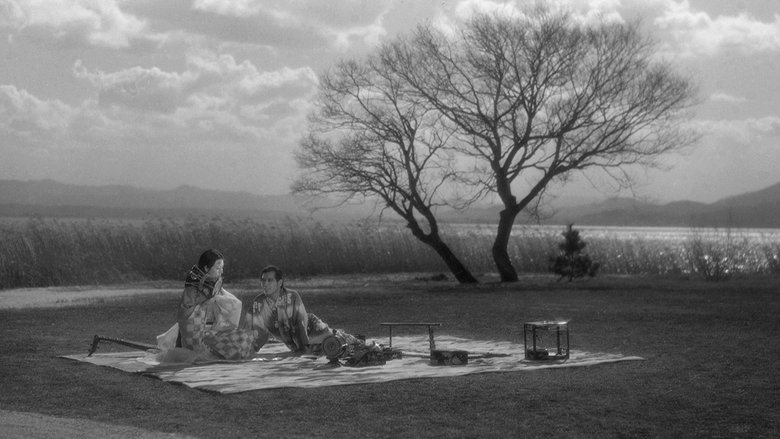
The film's influence on cinema has been profound. Its visual elegance, characterized by long takes, flowing camera movements (often called "scroll shots"), and masterful use of light and shadow, has been studied and admired by filmmakers for decades. It had a notable impact on the French New Wave, with directors like Jean-Luc Godard and François Truffaut citing Mizoguchi as a major influence. Esteemed American directors such as Martin Scorsese and Paul Schrader have also lauded the film, with Scorsese's Film Foundation helping to fund its 4K restoration. Its blend of social realism with supernatural folklore created a unique cinematic language that has inspired countless ghost stories and fantasy films since.

Audience Reception

Upon its release, "Ugetsu" was highly acclaimed by critics, particularly in the West, where it won the Silver Lion at the 1953 Venice Film Festival and helped solidify the international reputation of Japanese cinema. Critics have consistently praised its stunning visual beauty, masterful cinematography by Kazuo Miyagawa, and the seamless blending of stark realism with ethereal, supernatural elements. The film is frequently cited as one of the greatest films ever made, lauded for its poetic, dream-like atmosphere and its profound, humanistic themes.

The main points of praise focus on Mizoguchi's elegant direction, particularly his signature long takes and fluid camera movements that create a hypnotic and immersive experience. The performances, especially by Kinuyo Tanaka as the long-suffering Miyagi and Machiko Kyō as the ghostly Lady Wakasa, are also widely celebrated. While there are few points of significant criticism, some modern viewers might find its pacing deliberate. However, this is generally seen as integral to its haunting, contemplative mood. The film's powerful anti-war message and its poignant exploration of human weakness and the suffering of women continue to resonate deeply with audiences, solidifying its status as a timeless masterpiece.

Interesting Facts

  • The film is based on two stories from Ueda Akinari's 1776 book "Ugetsu Monogatari": "The House in the Thicket" and "The Lust of the White Serpent".
  • A subplot involving Tōbei's quest to become a samurai was inspired by Guy de Maupassant's 1883 short story "How He Got the Legion of Honor" ("Décoré !").
  • Director Kenji Mizoguchi was known for his perfectionism, often demanding hundreds of retakes. However, cinematographer Kazuo Miyagawa noted that "Ugetsu" was the only film for which Mizoguchi praised his work.
  • Mizoguchi was initially pressured by the studio, Daiei Film, to create a less pessimistic ending than he had originally envisioned.
  • The film won the Silver Lion Award at the 1953 Venice Film Festival, which Mizoguchi attended, marking his first trip outside of Japan.
  • "Ugetsu," along with Akira Kurosawa's "Rashomon," is credited with popularizing Japanese cinema in the West.
  • The makeup for Lady Wakasa (Machiko Kyō) was designed to resemble a mask used in traditional Noh theatre, including the practice of *hikimayu*, where eyebrows are shaved and redrawn higher on the forehead.
  • The film had a significant influence on French New Wave directors like Jean-Luc Godard and François Truffaut.
  • Mizoguchi's personal life may have influenced the film's themes. When he was a child, his father's failed business ventures led to his older sister being sold into the geisha trade, which likely informed his recurring focus on the suffering of women.
  • The film's visual style was heavily influenced by traditional Japanese art forms, such as ukiyo-e woodblock prints and scroll paintings (*suiboku-ga*).

⚠️ Spoiler Analysis

Click to reveal detailed analysis with spoilers

Frequently Asked Questions

Explore More About This Movie

Dive deeper into specific aspects of the movie with our detailed analysis pages

Comments (0)

Leave a comment

No comments yet. Be the first to share your thoughts!