Umberto D. - Symbolism & Philosophy
Symbols & Motifs
Flike the Dog
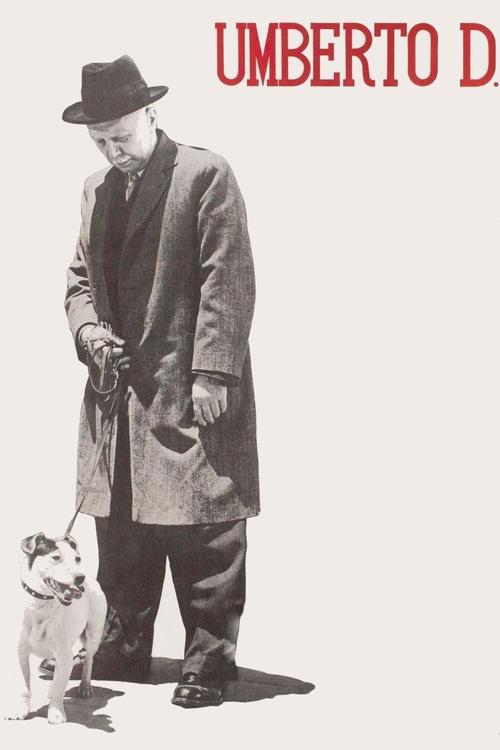
Flike is the most significant symbol in the film, representing unconditional love, loyalty, and Umberto's last connection to life and purpose. In a world that has discarded Umberto, Flike's devotion is the only constant. He is the vessel for Umberto's tenderness and the reason he ultimately chooses to live. Flike symbolizes the non-transactional, pure relationships that stand in contrast to the cold, economic realities of the human world around them.
Flike is present throughout the film, but his importance escalates as Umberto's situation worsens. Key scenes include Umberto sharing his meager food with Flike, his frantic search for the dog at the city pound, and his inability to abandon him. The climax, where Umberto attempts suicide with Flike in his arms, solidifies the dog's role as his anchor to life; Flike's struggle to get free is what pulls Umberto back from the brink.
The Boarding House Room
Umberto's rented room symbolizes his fragile hold on security, identity, and dignity. It is the last private space where he can maintain the semblance of his former life. The landlady's constant intrusions, renting it out to couples and eventually demolishing a wall for renovations, symbolize the relentless invasion and destruction of Umberto's life and autonomy. Being evicted from the room represents his final displacement from society.
The film frequently returns to the room, showing Umberto's attempts to keep it orderly amidst the chaos. The landlady's threats of eviction are a constant source of tension. The moment he returns from the hospital to find a gaping hole in the wall is a powerful visual metaphor for his life crumbling.
The Outstretched Hand
The motif of the outstretched hand symbolizes the act of begging and Umberto's internal battle with shame and pride. It represents the ultimate loss of dignity he is trying to avoid. His inability to complete the gesture, turning it into a check for rain, is a defining moment of his character, showing how deeply ingrained his sense of self-respect is, even in the face of starvation.
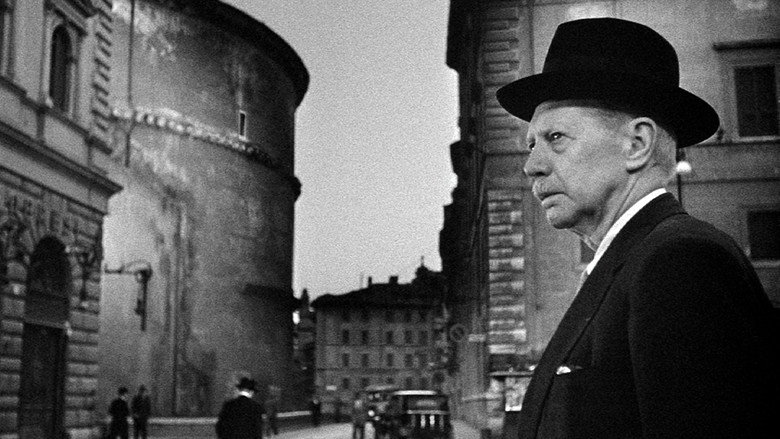
This is most prominent in the scene outside the Pantheon, where Umberto observes another beggar and attempts to mimic him. He practices the gesture, but when a passerby is about to give him money, he pulls back. Later, he attempts to use Flike to beg on his behalf, hiding so he doesn't have to perform the shameful act himself.
Philosophical Questions
What is the true meaning of dignity, and can it be maintained in the face of absolute poverty and societal neglect?
The film relentlessly explores this question through its protagonist. Umberto's struggle is less about acquiring wealth and more about preserving his self-respect. He refuses to beg, maintains his neat appearance, and carries himself with a pride that contrasts sharply with his squalid conditions. The film asks whether dignity is an internal quality or something bestowed by society. It suggests that while society can strip a person of all external markers of status, the core of human dignity lies in one's own choices and the capacity for love, as shown in his relationship with Flike.
In an indifferent society, what is the ultimate source of one's will to live?
"Umberto D." systematically removes every traditional pillar of support from its main character: career, social standing, financial security, and even a home. Faced with utter hopelessness, he contemplates suicide. The film's answer to this question is found in the simple, unwavering loyalty of his dog. It posits that the will to live is not necessarily found in grand purpose or societal validation, but in the profound, elemental need to love and be loved, even by a non-human companion. The bond with Flike becomes the single anchor that keeps Umberto from being swept away by despair.
What is a society's responsibility to its elderly and most vulnerable members?
Through its stark portrayal of Umberto's plight, the film serves as a powerful social critique. The opening scene of pensioners protesting for a livable income immediately establishes this theme. The narrative demonstrates how a society focused on progress and individual wealth can easily discard those who are no longer economically productive. The indifference Umberto faces from his landlady, former acquaintances, and the state itself raises a timeless question about the social contract and our collective moral duty to care for those who have contributed to society throughout their lives.
Core Meaning
At its heart, "Umberto D." is a profound meditation on dignity, loneliness, and the struggle for survival in a society that has become indifferent to the individual. Director Vittorio De Sica, who dedicated the film to his father, sought to expose the plight of the elderly and impoverished in post-war Italy, a demographic rendered invisible and disposable. The film's core message is not a call for political revolution, but a deeply humanistic plea for empathy and connection. It critiques a society that, in its rush toward economic recovery and modernization, forgets its most vulnerable members. Ultimately, the film suggests that in a world stripped of security and status, the simple, unconditional love between a man and his dog can be the last, most powerful reason to endure.