Umberto D.
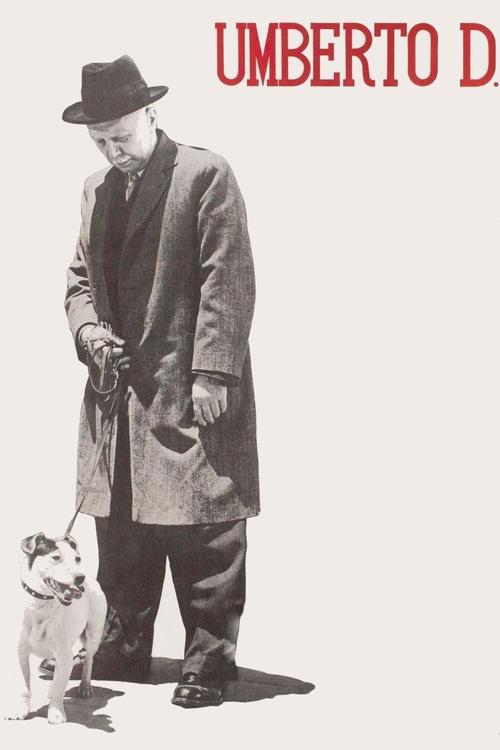
A neorealist hymn of quiet desperation, where the stark poetry of post-war Rome frames an old man's struggle to preserve his dignity, his only companion a small dog against a world of indifference.
Umberto D.

Umberto D.

20 January 1952 Italy 91 min ⭐ 7.9 (718)
Director: Vittorio De Sica
Cast: Carlo Battisti, Napoleone the Dog, Maria Pia Casilio, Lina Gennari, Elena Rea
Drama
The Struggle for Dignity Loneliness and Companionship Societal Indifference Poverty and Survival
Box Office: $71,461

Overview

"Umberto D." (1952), a cornerstone of Italian Neorealism directed by Vittorio De Sica, tells the poignant story of Umberto Domenico Ferrari, a retired government clerk living on a meager pension in Rome. Facing eviction from his callous landlady who is more interested in renovating her apartment for wealthier tenants, Umberto struggles to raise the money for his overdue rent. His pride and dignity prevent him from begging, forcing him to sell his few cherished possessions.

Umberto's world is one of profound loneliness, with his only true companions being his small dog, Flike, and Maria, the boarding house's young, pregnant maid who faces her own uncertain future. Their shared struggles create an understated bond, highlighting a sliver of human solidarity amidst widespread societal indifference. As his situation grows more desperate, Umberto's primary concern shifts from his own survival to ensuring a safe future for his beloved dog, leading him to a heart-wrenching crossroads.

Core Meaning

At its heart, "Umberto D." is a profound meditation on dignity, loneliness, and the struggle for survival in a society that has become indifferent to the individual. Director Vittorio De Sica, who dedicated the film to his father, sought to expose the plight of the elderly and impoverished in post-war Italy, a demographic rendered invisible and disposable. The film's core message is not a call for political revolution, but a deeply humanistic plea for empathy and connection. It critiques a society that, in its rush toward economic recovery and modernization, forgets its most vulnerable members. Ultimately, the film suggests that in a world stripped of security and status, the simple, unconditional love between a man and his dog can be the last, most powerful reason to endure.

Thematic DNA

The Struggle for Dignity 35%
Loneliness and Companionship 30%
Societal Indifference 25%
Poverty and Survival 10%

The Struggle for Dignity

Umberto's primary conflict is not just with poverty, but with the shame that accompanies it. A former civil servant, he clings to the remnants of his middle-class respectability (a clean shirt, proper manners) even as he faces destitution. His inability to beg is a powerful illustration of this theme; he extends his hand, but retracts it at the last moment, pretending to check for rain rather than accept a handout. The film meticulously portrays how societal indifference and economic hardship systematically strip a person of their self-worth, making the preservation of dignity an almost heroic act.

Loneliness and Companionship

Umberto is profoundly isolated in a bustling city. His acquaintances from his former life are distant, and he has no family to turn to. This theme is explored through his two key relationships. His bond with the maid, Maria, is one of mutual, quiet understanding between two marginalized souls. But his most crucial relationship is with his dog, Flike. Flike represents unconditional love and purpose, becoming Umberto's sole reason for living when all else is lost. The film posits that true companionship can be a powerful antidote to societal neglect.

Societal Indifference

The film paints a stark picture of post-war Roman society, where individuals are too preoccupied with their own survival or advancement to notice the suffering of others. This is embodied by the landlady, who remembers Umberto fondly during the war but is now ruthlessly focused on her own social climbing. From the police dispersing the pensioners' protest to friends who turn a deaf ear to his pleas for help, Umberto is met with a wall of apathy. De Sica uses this theme to critique the loss of community and humanity in the face of economic change.

Poverty and Survival

"Umberto D." is a raw depiction of the daily realities of poverty for the elderly on a fixed income. The narrative is driven by Umberto's desperate, and consistently failing, attempts to gather enough money to pay his rent. He sells his books and watch, tries to get admitted to a hospital for free room and board, and contemplates begging. The film avoids melodrama, instead focusing on the mundane, grinding details of survival, making Umberto's plight all the more resonant and universal.

Character Analysis

Umberto Domenico Ferrari

Carlo Battisti

Archetype: The Everyman / The Antihero
Key Trait: Proud

Motivation

Initially, Umberto's motivation is survival with dignity: to pay his rent and maintain his independence. As the film progresses and his situation becomes hopeless, his primary motivation shifts to ensuring the well-being of his dog, Flike. This selfless love for his companion ultimately becomes his motivation to continue living, even when he has lost everything else.

Character Arc

Umberto begins as a proud, if somewhat irritable, old man trying to maintain his bourgeois standards against overwhelming poverty. His journey is a downward spiral into desperation, forcing him to confront the loss of his social standing and pride. He is stripped of everything—his possessions, his home, his health—until only his relationship with his dog remains. His arc is not one of triumph over adversity in a traditional sense. Instead, he moves from quiet desperation and suicidal ideation to a fragile, uncertain reaffirmation of life, choosing to live for the simple bond he shares with Flike, even with no solution to his problems in sight.

Maria

Maria Pia Casilio

Archetype: The Fellow Sufferer
Key Trait: Sympathetic

Motivation

Maria is motivated by a simple need to survive and perhaps find a sliver of happiness or stability. She is kind to Umberto out of innate decency and a shared sense of being trapped. Her primary concern is her own precarious situation, yet she still finds the capacity for empathy, making her a crucial, if subtle, source of warmth in Umberto's cold world.

Character Arc

Maria is a young, kind-hearted maid who is a quiet observer and fellow victim of the boarding house's oppressive environment. She is pregnant and uncertain of the father, facing her own social and economic crisis. Her arc is less about development and more about representing a parallel struggle to Umberto's. She offers Umberto small kindnesses and moments of human connection, and their shared vulnerability creates a gentle, unspoken friendship. She remains trapped in her difficult circumstances at the film's end, representing the ongoing struggles of the powerless.

Flike

Napoleone (the Dog)

Archetype: The Loyal Companion
Key Trait: Loyal

Motivation

Flike is motivated by pure, instinctual loyalty and love for his owner. His actions are driven by a desire to be with Umberto, whether it's following him through the streets of Rome, finding him when he tries to hide, or trusting him even after being frightened.

Character Arc

Flike's arc is intrinsically tied to Umberto's. He begins as a beloved pet and companion. As Umberto's despair deepens, Flike transforms from a source of comfort into Umberto's sole reason for existence. He experiences trauma alongside Umberto, from getting lost and ending up in the dog pound to the terrifying moment at the train tracks. His final act of running away from the train and then cautiously returning to Umberto represents the climax of their bond, pulling his master back to life and re-establishing their pact to face the uncertain future together.

Symbols & Motifs

Flike the Dog

Meaning:

Flike is the most significant symbol in the film, representing unconditional love, loyalty, and Umberto's last connection to life and purpose. In a world that has discarded Umberto, Flike's devotion is the only constant. He is the vessel for Umberto's tenderness and the reason he ultimately chooses to live. Flike symbolizes the non-transactional, pure relationships that stand in contrast to the cold, economic realities of the human world around them.

Context:

Flike is present throughout the film, but his importance escalates as Umberto's situation worsens. Key scenes include Umberto sharing his meager food with Flike, his frantic search for the dog at the city pound, and his inability to abandon him. The climax, where Umberto attempts suicide with Flike in his arms, solidifies the dog's role as his anchor to life; Flike's struggle to get free is what pulls Umberto back from the brink.

The Boarding House Room

Meaning:

Umberto's rented room symbolizes his fragile hold on security, identity, and dignity. It is the last private space where he can maintain the semblance of his former life. The landlady's constant intrusions, renting it out to couples and eventually demolishing a wall for renovations, symbolize the relentless invasion and destruction of Umberto's life and autonomy. Being evicted from the room represents his final displacement from society.

Context:

The film frequently returns to the room, showing Umberto's attempts to keep it orderly amidst the chaos. The landlady's threats of eviction are a constant source of tension. The moment he returns from the hospital to find a gaping hole in the wall is a powerful visual metaphor for his life crumbling.

The Outstretched Hand

Meaning:

The motif of the outstretched hand symbolizes the act of begging and Umberto's internal battle with shame and pride. It represents the ultimate loss of dignity he is trying to avoid. His inability to complete the gesture, turning it into a check for rain, is a defining moment of his character, showing how deeply ingrained his sense of self-respect is, even in the face of starvation.

Context:

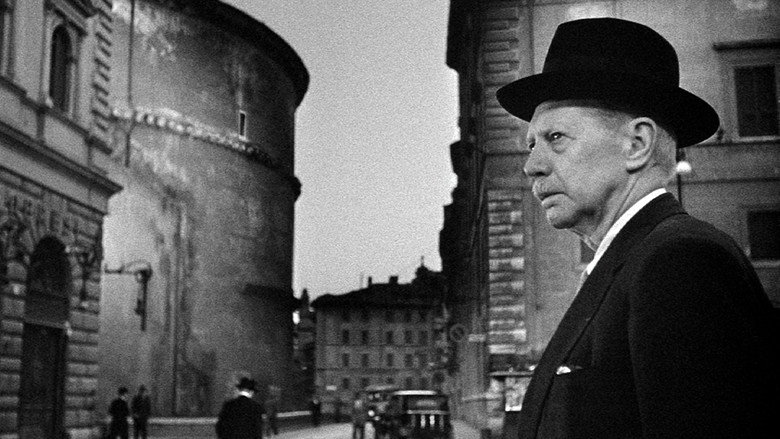
This is most prominent in the scene outside the Pantheon, where Umberto observes another beggar and attempts to mimic him. He practices the gesture, but when a passerby is about to give him money, he pulls back. Later, he attempts to use Flike to beg on his behalf, hiding so he doesn't have to perform the shameful act himself.

Philosophical Questions

What is the true meaning of dignity, and can it be maintained in the face of absolute poverty and societal neglect?

The film relentlessly explores this question through its protagonist. Umberto's struggle is less about acquiring wealth and more about preserving his self-respect. He refuses to beg, maintains his neat appearance, and carries himself with a pride that contrasts sharply with his squalid conditions. The film asks whether dignity is an internal quality or something bestowed by society. It suggests that while society can strip a person of all external markers of status, the core of human dignity lies in one's own choices and the capacity for love, as shown in his relationship with Flike.

In an indifferent society, what is the ultimate source of one's will to live?

"Umberto D." systematically removes every traditional pillar of support from its main character: career, social standing, financial security, and even a home. Faced with utter hopelessness, he contemplates suicide. The film's answer to this question is found in the simple, unwavering loyalty of his dog. It posits that the will to live is not necessarily found in grand purpose or societal validation, but in the profound, elemental need to love and be loved, even by a non-human companion. The bond with Flike becomes the single anchor that keeps Umberto from being swept away by despair.

What is a society's responsibility to its elderly and most vulnerable members?

Through its stark portrayal of Umberto's plight, the film serves as a powerful social critique. The opening scene of pensioners protesting for a livable income immediately establishes this theme. The narrative demonstrates how a society focused on progress and individual wealth can easily discard those who are no longer economically productive. The indifference Umberto faces from his landlady, former acquaintances, and the state itself raises a timeless question about the social contract and our collective moral duty to care for those who have contributed to society throughout their lives.

Alternative Interpretations

While the ending of "Umberto D." is often seen as a small, fragile victory for life, it remains deeply ambiguous and open to interpretation. The final scene shows Umberto playing with Flike in the park, walking away from the camera into a sun-dappled, uncertain future.

A Glimmer of Hope: The most common interpretation is that Umberto has found a reason to live in his bond with Flike. By choosing not to commit suicide, he has achieved a moral victory and affirmed the value of their companionship over the despair of his circumstances. The sunny park and playing children in the background suggest a return to life, however difficult it may be. This reading emphasizes the film's humanist message that love and connection are the ultimate sustenance.

A Temporary Reprieve: A more pessimistic interpretation argues that nothing has fundamentally changed for Umberto. He is still homeless, penniless, and alone in an indifferent world. The joyful moment in the park could be seen as a fleeting reprieve, a temporary distraction from the grim reality that will inevitably return. From this perspective, the ending is not a solution but merely a postponement of his tragedy, making the film's social critique even sharper.

An Existential Choice: Some critics view the ending through an existential lens. Umberto is faced with the ultimate choice between existence and non-existence. By turning away from the train tracks, he is not finding a solution, but rather actively choosing to endure his suffering. The film doesn't offer hope of a better future, but instead affirms the profound, difficult act of choosing to continue living in a meaningless or hostile world, with the simple act of playing with his dog being the one authentic, meaningful action left to him.

Cultural Impact

"Umberto D." is considered by many critics to be the pinnacle and, in some ways, the final chapter of the Italian Neorealist movement. Emerging from the rubble of World War II and the fall of Mussolini's Fascist regime, Neorealism rejected the glossy, studio-bound "white telephone" films of the previous era. It focused instead on the everyday struggles of ordinary people, using real locations, natural lighting, and non-professional actors to capture "life as it is."

The film was poorly received in its native Italy, where a recovering nation was eager for optimism, not stark reminders of poverty and social neglect. Government officials publicly condemned it for presenting a negative image of Italy to the world. However, its influence on international cinema was immense. Its uncompromising realism, focus on mundane detail (like the famous scene of Maria's morning routine), and emotional depth without sentimentality paved the way for future art-house movements. Directors from the French New Wave to independent filmmakers have drawn inspiration from De Sica's humanist approach. While it may not have a widespread pop culture footprint, "Umberto D." remains a cornerstone of film history, celebrated by filmmakers like Martin Scorsese and Ingmar Bergman as one of the most powerful and life-affirming films ever made.

Audience Reception

Upon its initial release in Italy, "Umberto D." was met with a largely negative reception from both the public and the government, leading to it being a box office failure. Audiences in post-war Italy, craving optimism and national pride, were reportedly outraged by the film's perceived pessimism and brutally honest depiction of poverty. Some viewers even demanded their money back.

However, international critics immediately recognized its importance, praising its emotional honesty and masterful execution. Over time, its reputation has grown immensely, and it is now almost universally regarded as a masterpiece. Modern audiences and critics praise its powerful, unsentimental storytelling, the authenticity of the performances (especially by non-professional actor Carlo Battisti), and its profound humanism. While some find its deliberate pacing and focus on mundane detail challenging, most viewers are deeply moved by Umberto's struggle for dignity and his relationship with his dog, Flike. It is often cited as a guaranteed tearjerker, but one that earns its emotion honestly, without manipulation.

Interesting Facts

  • Vittorio De Sica considered "Umberto D." to be his favorite and most personal film, dedicating it to his own father, Umberto.
  • The lead actor, Carlo Battisti, was not a professional actor but a 70-year-old linguistics professor from the University of Florence. He never acted in another film.
  • True to the principles of Italian Neorealism, the film was shot on location in Rome and used many non-professional actors to achieve a sense of authenticity.
  • The film was a commercial failure in Italy upon its release. It was criticized by the government, with figures like Giulio Andreotti (a future Prime Minister) accusing De Sica of slandering the country by presenting such a negative view of post-war life.
  • Despite its poor reception in Italy, the film was highly acclaimed internationally and is now considered a masterpiece of world cinema. Famous directors like Ingmar Bergman and Martin Scorsese have cited it as a major influence, with Bergman claiming to have seen it over a hundred times.
  • The role of Flike the dog was reportedly played by two different dogs.
  • Actress Maria Pia Casilio, who played the maid, was discovered by De Sica when she was an apprentice seamstress. It was her first film role.
  • De Sica reportedly filmed alternative endings, including one where Umberto finds shelter, but chose the more ambiguous and realistic conclusion to stay true to neorealist principles.

⚠️ Spoiler Analysis

Click to reveal detailed analysis with spoilers

Frequently Asked Questions

Explore More About This Movie

Dive deeper into specific aspects of the movie with our detailed analysis pages

Comments (0)

Leave a comment

No comments yet. Be the first to share your thoughts!