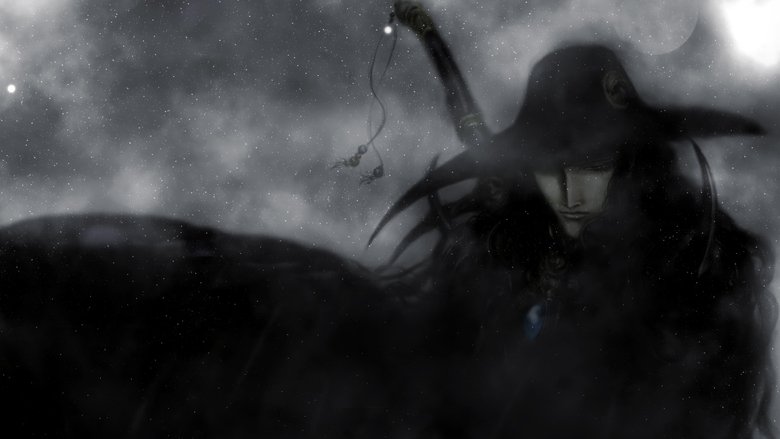

The film's most crucial plot twist subverts the traditional 'damsel in distress' trope. D and the Marcus brothers are initially hired under the assumption that Meier Link violently kidnapped Charlotte. It is later revealed that Charlotte willingly eloped with Meier, deeply in love with him. This revelation transforms the supposed rescue mission into a tragic persecution of two star-crossed lovers.
In the final act, the true antagonist is unmasked as the spirit of Carmilla, the Blood Countess. She feigns offering sanctuary to the lovers but secretly plots to sacrifice the virgin Charlotte to resurrect herself physically. Carmilla uses cruel psychological illusions, including a vision of D's human mother, to disarm him.
Ultimately, Carmilla is destroyed by D and Meier, but she manages to fatally wound Charlotte. In a poignant climax, D breaks his rigid code. Recognizing the purity of their love, D spares Meier and allows the vampire to take Charlotte's body into space. Decades later, a final, touching scene shows an ageless D watching Leila's funeral from afar, fulfilling his promise to bring her flowers and confirming the enduring warmth of his human heart.